

Shorter daylight hours can drain your vitality long before freezing winter temperatures arrive. Recognizing seasonal depression symptoms early empowers you to take proactive control of your emotional health.
According to the National Institute of Mental Health (NIMH), seasonal affective disorder affects roughly 5% of American adults annually. These episodes typically disrupt life for four to five months each year.
While many dismiss these changes as standard winter lethargy, true seasonal depression demands intentional intervention. Learning the signs allows you to seek timely care and restore your emotional balance.
Understanding Seasonal Affective Disorder and the Brain
Seasonal Affective Disorder (SAD) is not an isolated condition; clinicians diagnose it as Major Depressive Disorder with Seasonal Pattern. The diagnostic criteria require depressive episodes to recur at specific times for at least two consecutive years.
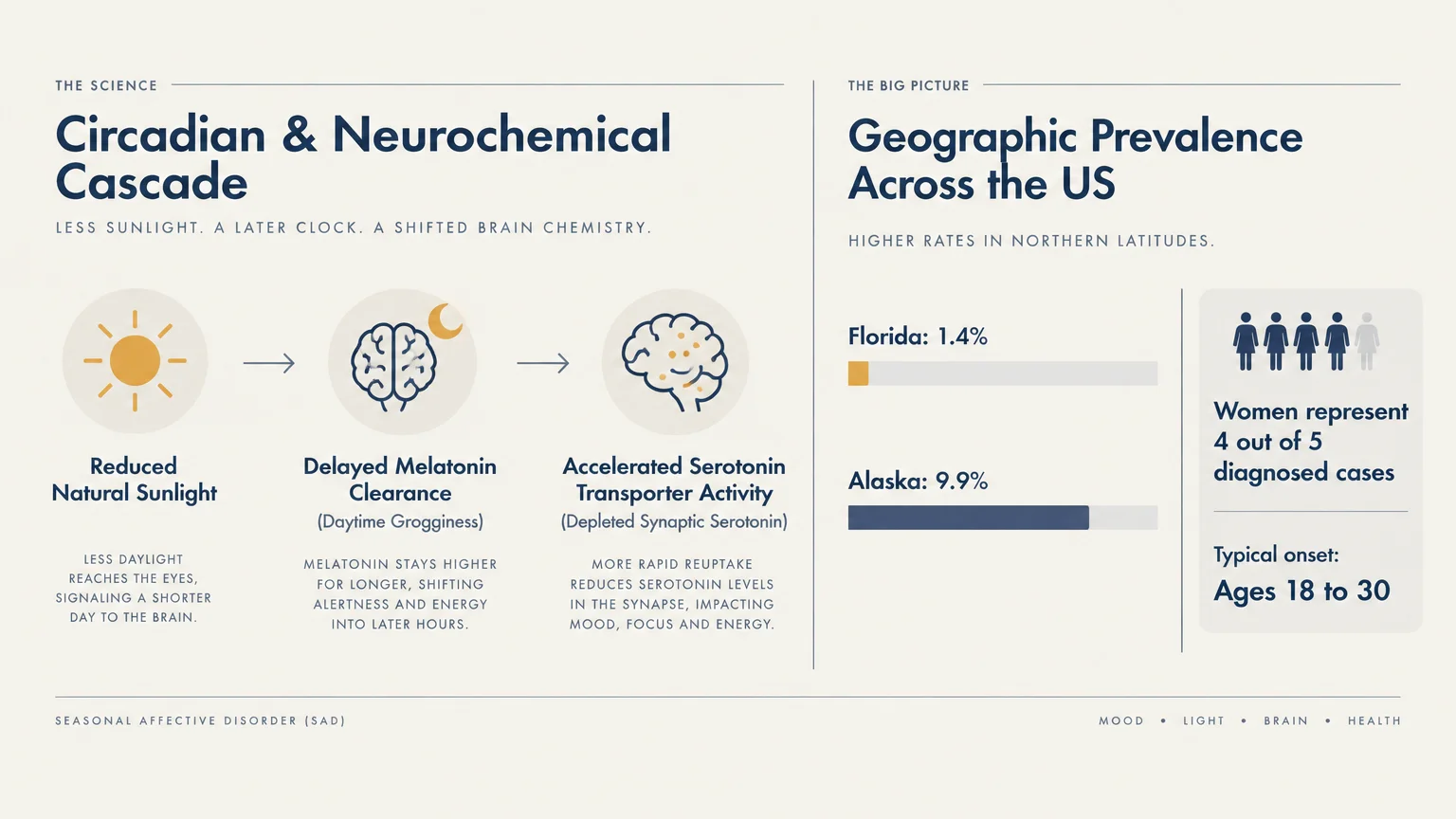
Reduced exposure to natural sunlight directly disrupts your internal biological clock. This circadian misalignment delays the normal release of melatonin, leaving you groggy throughout the daytime hours.
Diminished sunlight also accelerates serotonin transporter activity, which removes vital serotonin from brain synapses too quickly. Consequently, your mood, appetite, and motivation drop as daylight dwindles.
Geography plays an enormous role in your vulnerability to seasonal shifts. Prevalence rates range from 1.4% in southern states like Florida to roughly 9.9% in far northern regions like Alaska.
The American Psychological Association (APA) notes that women represent nearly four out of five diagnosed individuals. Most people experience their first clinical symptoms during early adulthood, typically between ages 18 and 30.
10 Seasonal Depression Symptoms You Should Not Ignore
Winter depression symptoms often emerge quietly in late autumn before peaking during January and February. Identifying these signs early prevents them from compromising your health, work, and personal relationships.
1. Persistent Low Energy and Lethargy (Anergia)
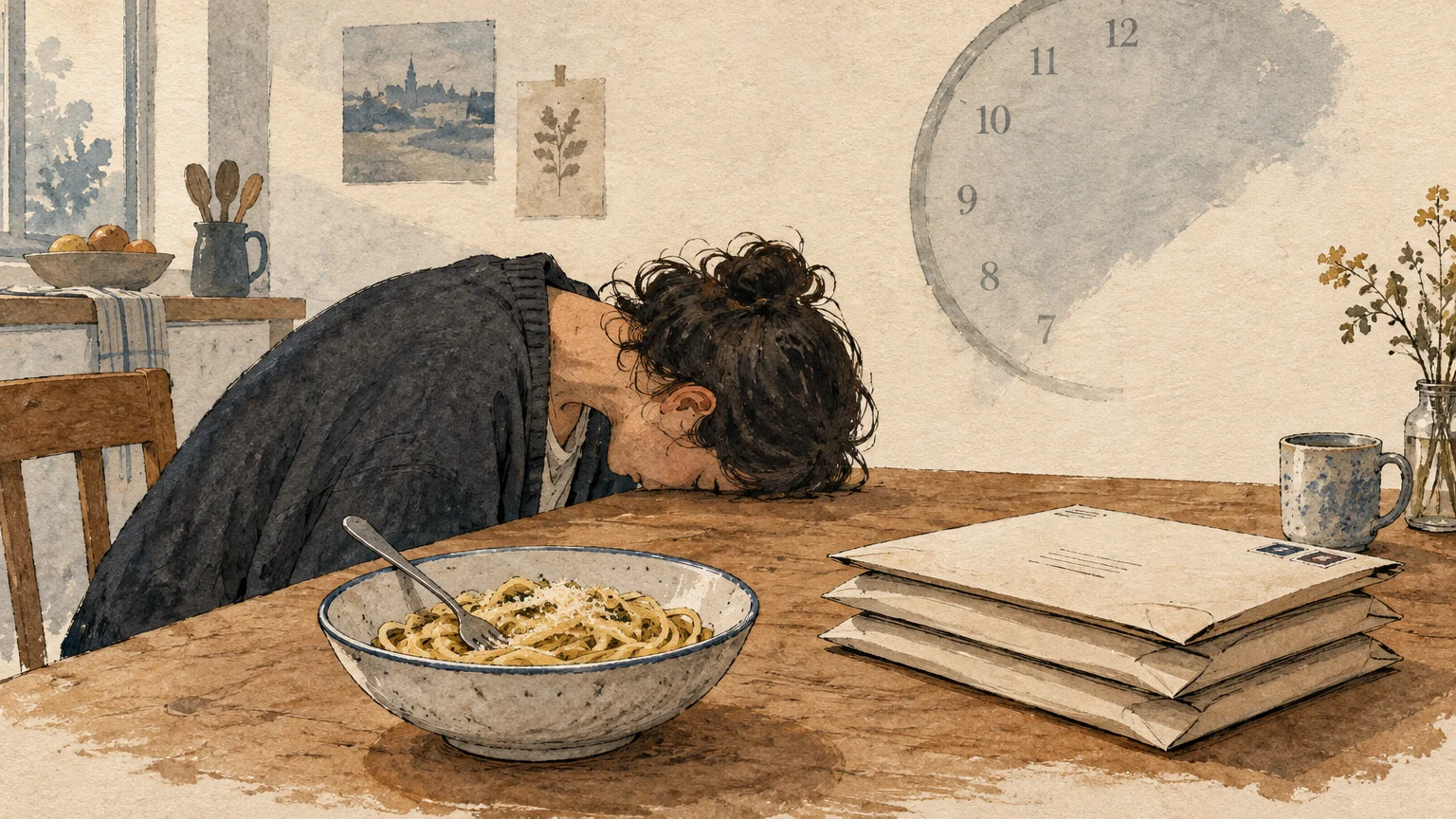
A chronic, pervasive lack of energy represents one of the earliest SAD warning signs. You may wake up feeling completely depleted, even after spending nine or ten hours in bed.
Simple tasks—such as folding laundry or answering an email—suddenly demand immense willpower. This profound fatigue stems directly from circadian disruptions and inadequate daytime dopamine signaling.
2. Excessive Sleep and Morning Inertia (Hypersomnia)
While standard major depression frequently triggers insomnia, seasonal depression usually causes hypersomnia. You might find yourself sleeping ten to twelve hours per night yet remaining profoundly unrefreshed.
Waking up in complete darkness confuses your pineal gland, which prolongs daytime melatonin secretion. This physiological conflict causes severe sleep inertia, making mornings feel like an uphill physical battle.
3. Intense Carbohydrate Cravings and Weight Gain
Seasonal shifts trigger pronounced metabolic changes; you may crave pasta, bread, and sugary sweets constantly. This behavior represents a subconscious attempt by your brain to boost depleted serotonin production through carbohydrate synthesis.
Because physical activity levels drop simultaneously during colder months, these dietary shifts frequently cause noticeable weight gain. Recognizing this cycle helps you choose stabilizing nutritional strategies rather than falling into self-blame.
4. Loss of Pleasure in Favorite Activities (Anhedonia)
You may suddenly lose interest in creative hobbies, sports, or intimacy that normally bring you joy. This pervasive numbness, clinically termed anhedonia, strips everyday life of its color and vitality.
When everyday passions feel like burdensome chores, emotional disconnection quickly follows. This symptom serves as a major clinical boundary separating standard winter blues from genuine seasonal depression.
5. Social Withdrawal and “Hibernation”
Individuals with seasonal depression frequently pull back from their primary social circles. You may avoid answering phone calls, cancel weekend plans, or dread simple conversations with coworkers.
This natural urge to isolate mirrors evolutionary hibernation responses to harsh climates. However, chronic isolation removes positive social feedback, which ultimately deepens depressive thoughts.
6. Leaden Paralysis in the Limbs
Many individuals with winter depression experience a distinct sensation known as leaden paralysis. Your arms and legs may feel physically heavy, as though weights hold you down.
Walking up a flight of stairs or completing household chores requires intense physical exertion. This physiological weight reflects the deep somatic burden that seasonal mood shifts place on your central nervous system.
7. Brain Fog and Diminished Concentration
Shorter days can cloud your working memory and slow cognitive processing speed. You might miss project deadlines, struggle to organize thoughts, or experience unusual indecision during ordinary routines.
This persistent brain fog can spark anxiety regarding your professional competence. In reality, reduced daylight directly hinders prefrontal cortex activation, impairing executive functioning and focus.
8. Excessive Guilt and Feelings of Worthlessness
As your productivity drops, an internal critic often fills the vacuum. You may blame yourself for slowing down, labeling legitimate neurochemical exhaustion as laziness or a lack of character.
These harsh self-evaluations can spiral into overwhelming feelings of failure and unworthiness. Practicing self-compassion protects your self-esteem while you seek effective seasonal depression treatment.
“The curious paradox is that when I accept myself just as I am, then I can change.” — Carl Rogers, Ph.D.
9. Heightened Irritability and Agitation
Depression does not always manifest as passive sadness; it frequently shows up as a short emotional fuse. You might snap at loved ones over minor inconveniences or feel chronically tense.
This irritability often signals profound sensory overload and biological exhaustion. When your nervous system operates without adequate serotonin, emotional regulation requires far more psychological effort.
10. Despair or Passive Suicidal Thoughts
During peak winter months, persistent bleakness can create profound feelings of hopelessness. You may find yourself wondering if winter will ever end, or questioning whether your presence matters.
Passive thoughts—such as wishing you could go to sleep and not wake up—demand immediate attention. These thoughts are treatable medical symptoms, not personal moral failures.
If you or someone you know struggles with thoughts of self-harm, contact the 988 Suicide & Crisis Lifeline immediately by calling or texting 988.
Winter Blues vs. Seasonal Affective Disorder
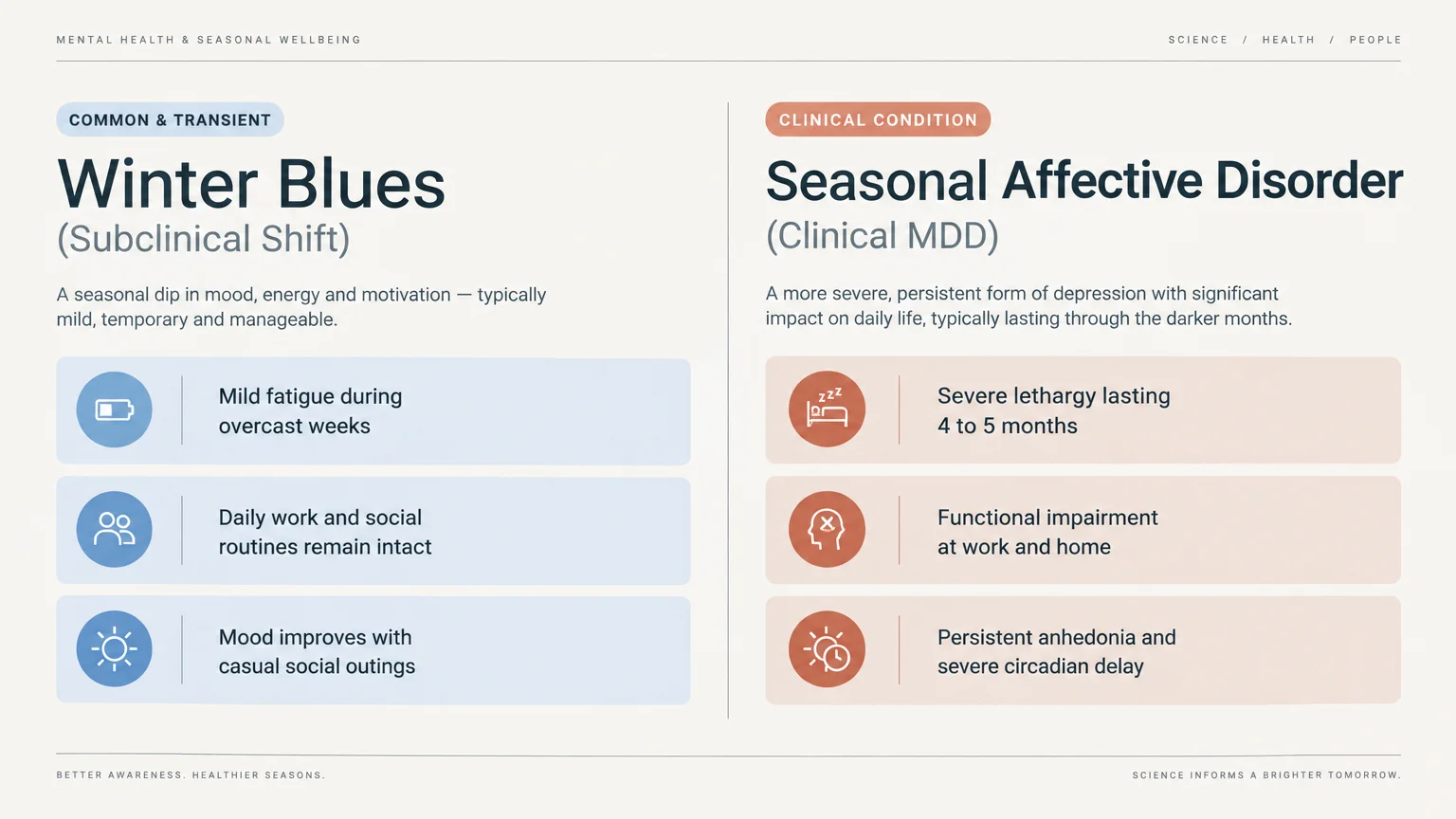
Understanding the distinction between mild seasonal mood changes and clinical depression is vital for choosing the right coping approach. Approximately 10% to 20% of Americans experience mild winter blues, while 5% meet criteria for full clinical SAD.
Use the following comparison table to evaluate the severity and functional impact of your seasonal changes:
| Clinical Dimension | The Winter Blues (Subsyndromal) | Seasonal Affective Disorder (Major Depression) |
|---|---|---|
| Daily Functioning | Manageable; routines feel slower, but you fulfill all major duties. | Severely impaired; work performance slips and parenting feels overwhelming. |
| Sleep Changes | Mild grogginess; you desire 30 to 60 extra minutes in bed. | Severe hypersomnia; you sleep 10+ hours and struggle to get up. |
| Social Life | Slight preference for staying home; social connections remain active. | Complete withdrawal; you actively isolate and avoid contact. |
| Cognitive Focus | Occasional mild distractibility during long work stretches. | Severe executive dysfunction, memory slips, and paralyzing brain fog. |
| Intervention Level | Lifestyle tweaks, outdoor morning walks, and basic routines. | Bright light therapy, specialized psychotherapy, or prescription medication. |

Common Misconceptions About Seasonal Depression
Widespread myths surrounding seasonal affective disorder often prevent individuals from seeking timely clinical help. Clearing away these misconceptions validates your lived experience and encourages prompt, effective action.
Misconception 1: “It is Just Winter Laziness”
Many people mistake biological lethargy for a personal lack of willpower or discipline. In reality, functional neuroimaging reveals genuine decreases in brain glucose metabolism during seasonal episodes.
You cannot simply force yourself to feel motivated when your neurochemical balance shifts so dramatically. Treating SAD requires physiological and psychological interventions, not harsh self-criticism.
Misconception 2: “Any Bright Lamp Works for Light Therapy”
Standard household light bulbs emit only 300 to 500 lux, which cannot suppress daytime melatonin synthesis. Medical-grade phototherapy requires a dedicated box providing 10,000 lux of white light with built-in UV filtration.
Using ordinary bulbs causes eye strain without triggering the retinal pathways that reset your circadian clock. Proper equipment ensures both clinical safety and measurable symptom relief.
Misconception 3: “Seasonal Depression Only Strikes in Winter”
Although winter-pattern SAD is far more common, roughly 10% of seasonal cases occur during summer. Summer-pattern depression often triggers insomnia, diminished appetite, and acute agitation due to extreme heat and humidity.
Acknowledging warm-weather depression prevents individuals from suffering in silence during brighter months. Any recurring, seasonally linked shift in mood warrants comprehensive clinical evaluation.

Evidence-Based Approaches for Managing Seasonal Depression
You do not have to wait passively for spring to regain your emotional well-being. A combination of targeted therapies reliably restores daily functioning and lifts depressive symptoms.
- Bright Light Therapy: Sit before a 10,000-lux light box for 20 to 45 minutes each morning, ideally within an hour of waking up.
- Cognitive Behavioral Therapy for SAD (CBT-SAD): Work with a clinician to challenge winter-related negative beliefs and schedule positive behavioral activations.
- Consistent Sleep Schedules: Maintain identical wake and sleep times every day to reinforce your fragile circadian rhythms.
- Targeted Outdoor Movement: Take a 20-minute walk outside within two hours of sunrise, even under overcast winter skies.
- Nutritional Stabilization: Pair complex carbohydrates with lean proteins to stabilize blood glucose and reduce sudden energy crashes.
The Mayo Clinic emphasizes that consistency remains the single most critical factor in light therapy. Most people notice initial improvements within one to two weeks of sustained morning use.
For individuals with recurring, severe episodes, medical providers may recommend extended-release bupropion hydrochloride. The FDA approved this medication specifically to prevent seasonal depressive episodes before they peak.

Finding the Right Professional Help
While lifestyle adjustments build an excellent foundation, self-care alone is not always enough to manage seasonal depression. Consulting a qualified mental health clinician ensures you receive an accurate diagnosis and an individualized treatment plan.
You should prioritize professional medical or psychological support in any of the following scenarios:
- Your depressive symptoms prevent you from working, attending classes, or caring for your family.
- Two weeks of daily bright light therapy and sleep hygiene fail to yield noticeable relief.
- You find yourself using alcohol, cannabis, or unprescribed substances to numb emotional pain.
- You experience severe emotional detachment, passive death wishes, or active thoughts of self-harm.
A licensed therapist can teach you practical behavioral tools to break the cycle of seasonal withdrawal. Your physician can also run blood panels to rule out thyroid imbalances or severe vitamin D deficiencies.

Moving Forward Through the Darker Months
Shorter days do not have to dictate your vitality, peace of mind, or quality of life. By monitoring these ten critical symptoms, you can respond with compassion and targeted evidence-based strategies.
Take one small, proactive step today—whether that means ordering a light box, booking a therapy session, or taking a morning walk. Consistent, intentional support will guide you through the darkness until the light returns.
This is educational content based on psychological research and general principles. Individual experiences vary significantly. For personalized guidance, consult a licensed therapist, psychologist, or counselor.
Last updated: February 2026. Psychology research evolves continuously—verify current findings with professional sources.








Leave a Reply