

When was the last time you cried?
Crying is good because it helps us let out feelings, be they happiness, sadness, or anger. It’s a typical part of the human experience, occurring when you experience an unexpected live event or when you’re in emotional or physical pain.
Some people rarely cry, and others cry more frequently. There are lots of reasons why someone may cry, and it has to do with the things that trigger each of us.
Stressful events at home or work, touching movies, and even good news like a baby or a wedding may bring on the waterworks. Sometimes, you just need to let the tears flow, and that’s fine. Crying is good. But you might not know that doing that can have a big effect on your mind and body. Check this out!

1. Crying boosts mood
Most people agree that crying makes them feel better because it helps them relieve stress—and that’s what happens sometimes. According to Jonathan Rottenberg, PhD, a psychology professor at the University of South Florida, about two-thirds of people surveyed in a study generally report feeling better after crying.
While crying is good, Rottenberg points out that it’s likely that people are misremembering or overreporting the benefit of letting it out. That’s because when experts elicit crying in a controlled laboratory setting, it’s not as obvious that crying makes people feel better. The study’s conclusion would be that crying helps our mood, but less than we commonly believe.
According to world-renowned crying expert Ad Vingerhoets, how others react to our weeping is one of the most important factors in figuring out how we feel afterward. If they react with succor and understanding, it’s much more likely that you’ll feel better than if they criticize or ridicule you.
2. Crying improves communication
Crying is good because it can also improve communication, especially when it comes to babies. Not surprisingly, crying in humans first evolved as a method for an infant to get its mother’s attention.
Babies are the most helpless creatures, as Dr. Vingerhoets points out—they cannot follow their mother like ducks or cling to fur like other primates. The tears of infants add a visual component to this cry for help and are directed to a specific caregiver who can see them.
For adults, this biological function has turned into an emotional one. Adults tears, like vocal crying, basically convey the message, “Help me, I need you!” According to experts, it’s a reaction to a state of helplessness, which is the opposite of fight-or-flight.
3. Crying is good because it relieves stress
Humans are the only species to cry from emotions, but experts still don’t know exactly how the physical act of weeping is connected to our feelings. What they do know is that you often feel better after letting it out, so in these cases, crying is good.
One of the benefits of blubbering may be that it helps the body and mind release part of the physical tension of feeling upset. According to Lauren Bylsma, PhD, “it seems that crying starts just after the peak of physiological arousal as sympathetic activity begins to decrease and parasympathetic activity rises, helping to bring the body back to homeostasis.”
In a nutshell, weeping happens as our body comes back from an aroused, “fight or flight” state to a “rest and digest” state. When this is the case, crying is good, and it helps you feel better.
By the way, here’s a book that can help you overcome negative-thought patterns to reduce stress in your life.
4. Crying sometimes makes you feel worse
Letting it out in the wrong place at the wrong time or in front of others who react negatively to your crying can definitely make you feel worse. Crying with supportive friends or at home is healthy, but doing it at work may be seen as inappropriate.
Moreover, although weeping may make you feel better in the long run, studies suggest that the immediate effects of letting it out may actually worsen your mood. According to Dr. Vingerhoets, in a lab study with people watching movies, it takes some time before participants feel better after having cried.
He points out that immediately after a sad film, they reported a worse mood, but 20 minutes and, in some cases, 90 minutes later, they reported feeling better than before the movie. So, crying is good, but it may take some time for its mood-boosting effects to kick in.

5. Crying forges bonds
When people communicate with others through tears, they are revealing their own vulnerability. With supportive people, crying is good because it can create an increased feeling of connection and bonding, scientists explain.
Basically, you trust the person enough to cry around them. Letting it out this way is, therefore, an indication that we feel close to someone, and this can promote an emotional connection and an empathetic response. Moreover, crying is good when you’re surrounded by people you trust and feel comfortable with.
Experts say that because we don’t like to display our weaknesses in front of strangers, we try not to cry around them and instead save our tears for those we’re closest to.
6. Crying is a private release
If crying is a key communication tool, why do we weep when we’re alone? According to a poll conducted by the airline Virgin Atlantic, 41% of men hid tears in their blankets while on flights, while women were more likely to pretend they had something in their eye.
Crying is good because if you let it out after a stressful or busy day, when you’re finally alone with your thoughts, it may have to do with the idea mentioned above that the body needs to return to a state of rest.
Some experts also say that crying while alone can also be a way to reach out to the universe, such as by appealing for help from God.
7. Crying may be a natural sanitizer
There’s another reason why crying is good: it can help destroy bacteria. Tears are known to contain lysozyme, a protein that can kill harmful molecules. But before your mind goes into thinking that your tears have some kind of healing power, like the phoenix in Harry Potter, remember that experts have yet to prove this definitively.
Scientists point out that there’s no evidence indicating crying has health benefits. They also say that these ideas persist because there’s almost no science on the physiology of crying, and our popular beliefs, which teach that it’s good for health to cry, fill this void.
8. Crying may get rid of toxins
The biochemist William Frey did some groundbreaking crying research in the late 1970s and early 1980s that indicates that tears help rid the body of unwanted toxins.
Basically, he compared emotional tears to irritant tears (such as from chopping onions) and found that there are some chemical differences. For example, he concluded that there’s a higher content of some proteins in emotional tears, which may be due to the release of stress by-products. In other words, crying is not only good but also healthy.
However, experts point out that Frey’s results haven’t been replicated recently, in part because it’s pretty hard to study this in a lab. According to scientists, it’s really challenging to have people cry naturally to emotional stimuli while having their tears collected, and most of them are actually absorbed in the nasal passages and cannot be collected.
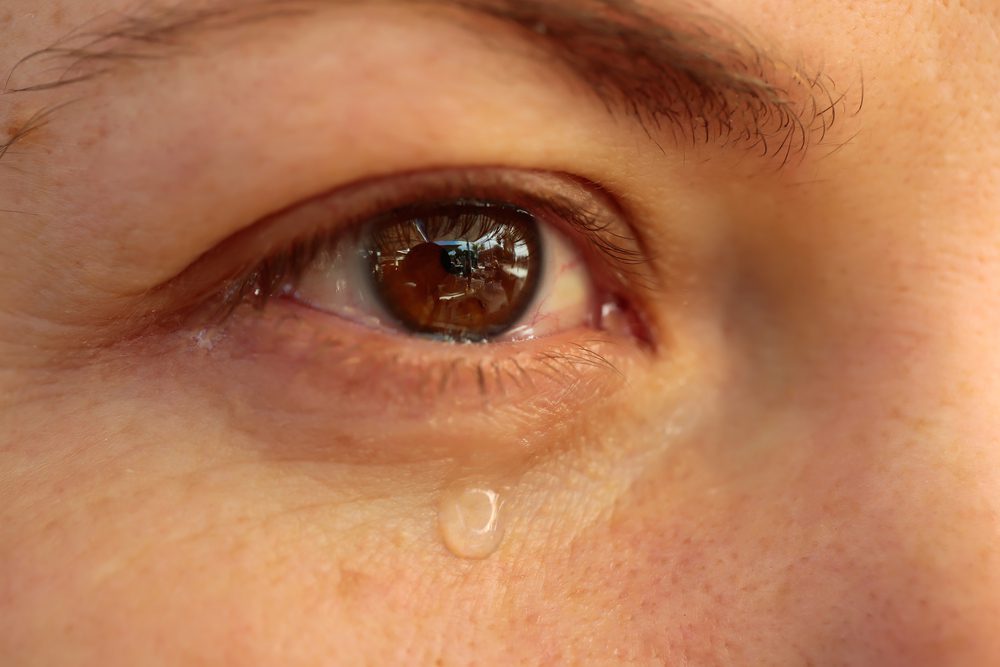
9. Tears help your eyes
Crying is good because tears moisten our eyes and keep them healthy. In fact, that’s the biological function of tears—to keep the eye moist and protect it from debris or fumes that get into the eye.
Experts say that emotional tears have evolved from this basic biological process into something more complex that can happen for purely emotional rather than physical reasons.
Moreover, peepers that aren’t moisturized by tears can lead to “dry eye,” which can be painful and even result in vision loss. However, too much weeping can actually irritate the eyes, which is why they get puffy and red after major crying sessions.
10. Crying has major physical effects
Crying isn’t just an emotional act; it’s also a physical one. A runny nose, blotchy skin, full-body shakes, headaches, and wracking sobs are just some of the effects crying can have on your body. Why is that?
According to experts, it’s related to the high arousal state of the flight-or-fight response. Although crying is good and it can act as a bridge that leads to a more calm state, there’s clear evidence that the act of weeping is highly arousing.
People who cry exhibit increased sweating and elevated heart rates, which made some scientists name crying a “workout” for the body.
If you liked our article on how crying is good and its effects on the body and mind, you may also want to read Do You Have Morning Depression? Here Are 8 Effective Ways to Combat It.





Leave a Reply