

Recognizing controlling behavior early protects your autonomy and emotional health. Subtle manipulation often disguises itself as protective concern or passionate devotion before steadily eroding your self-confidence.
When personal insecurity drives relationship dynamics, a partner uses control to manage their internal anxiety. This pattern suffocates mutual respect and replaces genuine intimacy with persistent fear and compliance.
Identifying these underlying dynamics helps you establish vital boundaries before your independence disappears. Here are eight unmistakable behaviors that signal an unhealthy need for control in relationships.
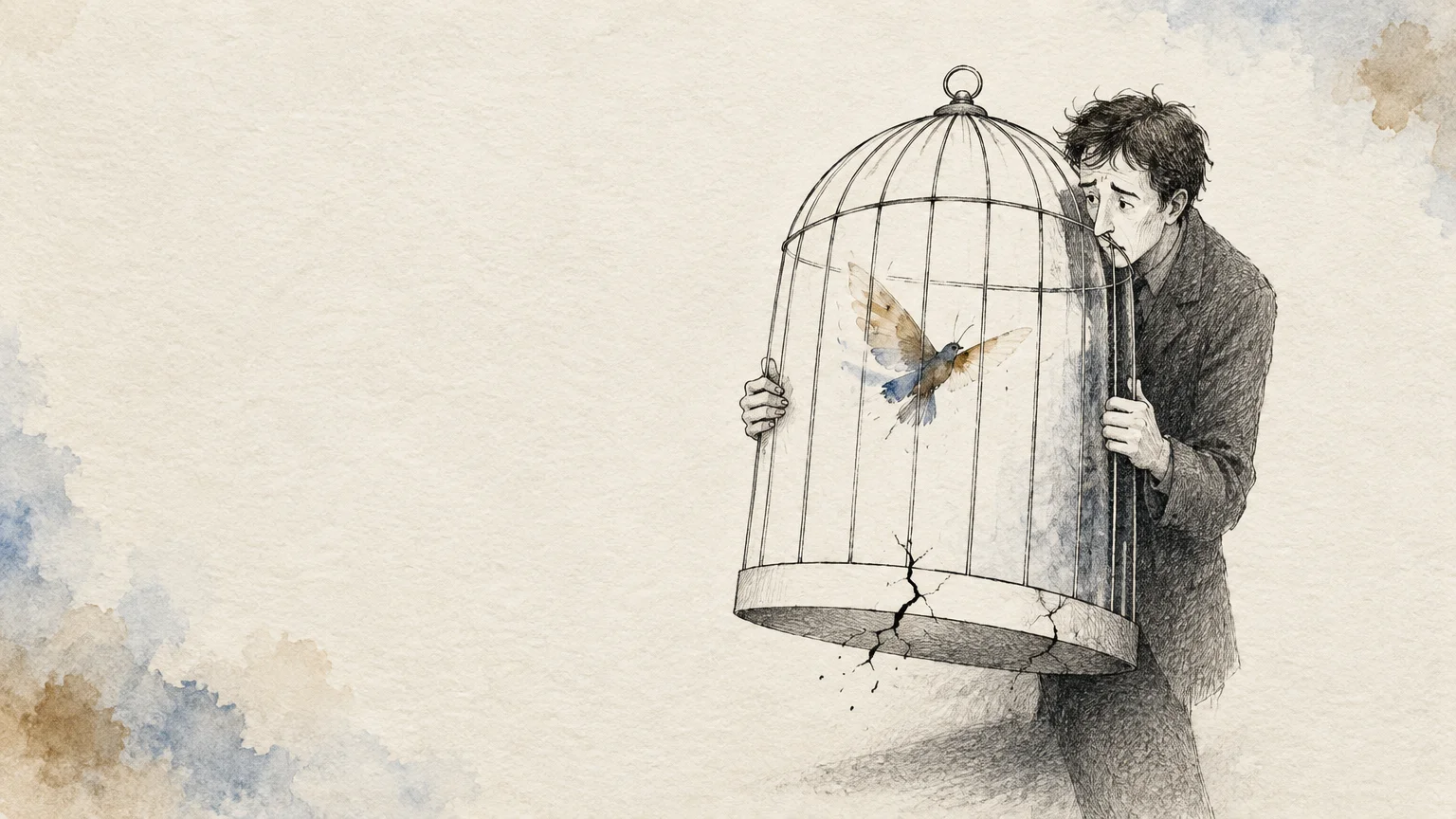
The Psychology Behind the Need for Control in Relationships
Beneath the surface, control issues psychology rarely stems from authentic confidence or superiority. Instead, it almost always originates from deep-seated anxiety and an intense fear of emotional vulnerability.
A controlling partner uses dominance as an emotional shield. By dictating interpersonal outcomes, they attempt to neutralize their overwhelming dread of abandonment or relational rejection.
According to research published by the American Psychological Association (APA), controlling behaviors often correlate with anxious and disorganized attachment styles. These individuals struggle to regulate their internal emotional states without micromanaging their external environment.
When someone cannot tolerate emotional ambiguity, predictability becomes their primary coping mechanism. They treat their partner as an extension of themselves rather than an independent person with autonomous desires.
Renowned relationship researcher Dr. John Gottman emphasizes that long-term relationship stability requires mutual influence. Without balanced decision-making, emotional safety cannot exist.
“A relationship succeeds to the extent that both partners can accept influence and share decision-making power.” — John Gottman, Ph.D.
When one person hoards power, mutual trust inevitably collapses. Recognizing controlling behavior signs early gives you the clarity needed to respond effectively before destructive habits become permanent relationship patterns.
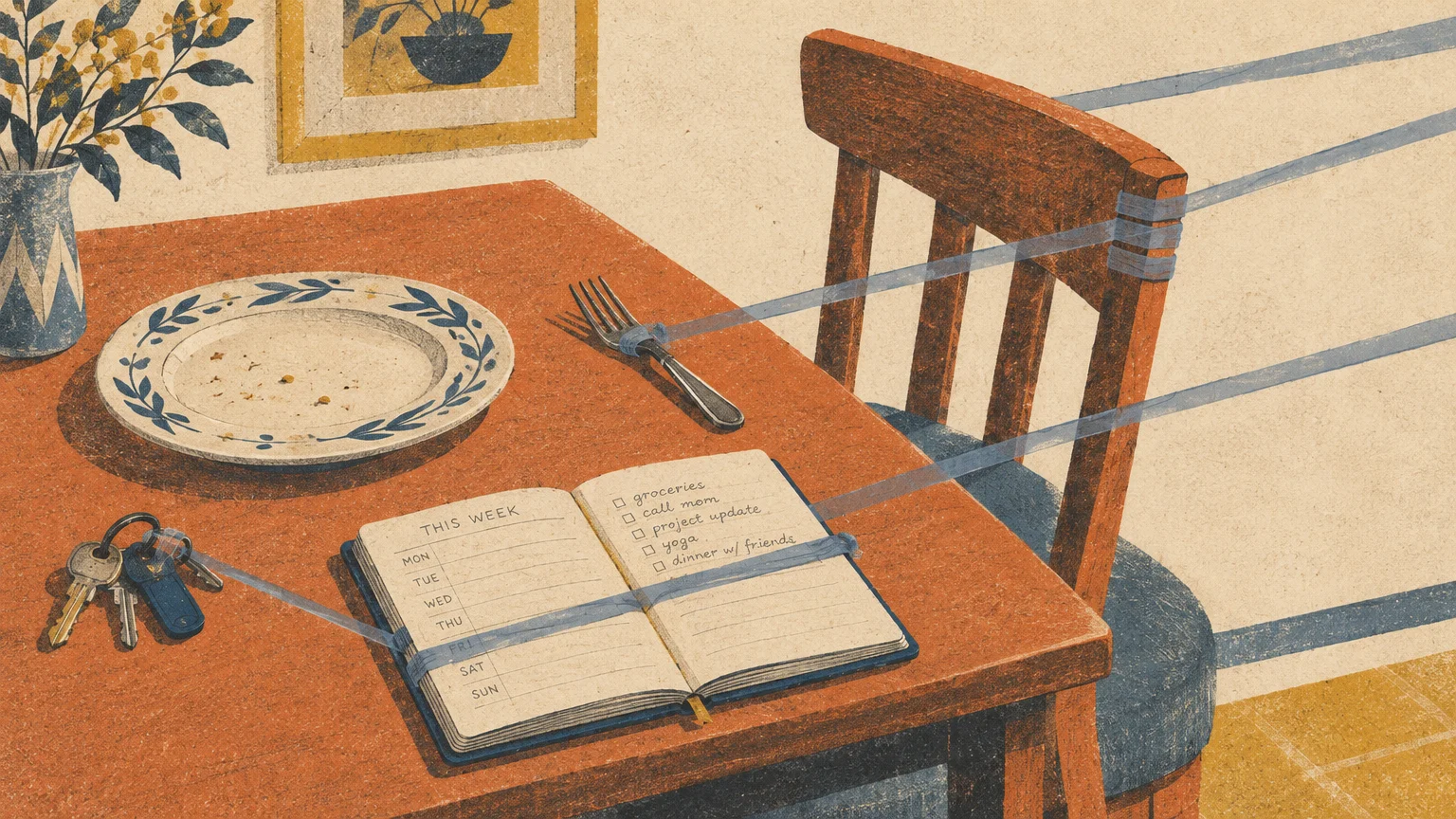
8 Behaviors That Signal a Need for Control
Controlling behavior rarely emerges all at once. It enters a relationship quietly—often wrapped in compliments, concern, or romantic intensity—before expanding into everyday life.
1. Micromanaging Everyday Decisions
A controlling partner rarely starts by dictating major life milestones. Instead, they gradually insert themselves into minor daily choices under the guise of being helpful or efficient.
They might critique your clothing choices, alter your driving routes, or tell you what you should order at a restaurant. Over time, they frame their interference as superior taste or practical wisdom.
While each instance might seem inconsequential, the cumulative impact is debilitating. This relentless critique trains you to doubt your basic judgment and systematically defer to their authority.
When you constantly second-guess your competence, your partner achieves their goal: complete oversight of your everyday existence.
2. Covert Isolation from Friends and Family
Isolation remains one of the most dangerous relationship red flags. Rather than demanding that you abandon loved ones immediately, a controlling partner creates subtle friction around your social connections.
They may claim that your family disrespects your relationship or accuse your friends of being bad influences. Alternatively, they might pout or pick fights right before you attend planned social events.
The clinical resources at Psychology Today identify interpersonal isolation as a cornerstone of emotional coercion. When your support network shrinks, your partner becomes your sole source of validation.
This dynamic leaves you without an objective sounding board. Without outside perspectives, you are far more likely to accept unreasonable behavior as normal.
3. Weaponizing Vulnerability and Past Insecurities
Genuine intimacy requires opening up about your past hurts, mistakes, and fears. A partner with a compulsive need for control collects this sensitive information to use as strategic leverage.
During disagreements, they will unearth your deepest insecurities to invalidate your perspective. If you express sadness, they might mock you by referencing childhood wounds you shared in confidence.
This tactic shatters psychological safety within the partnership. It turns your private emotional disclosures into weapons designed to force your surrender during arguments.
As a result, you learn to suppress your authentic feelings. You stop sharing your inner world because honesty feels dangerous.
4. Relentless Interrogation Masked as Concern
Regular communication fosters intimacy, but surveillance destroys it. Controlling partners often mask invasive tracking as romantic devotion or protective care.
They demand real-time location sharing, inspect your phone logs, and expect immediate responses to text messages. If you take thirty minutes to reply, you face an exhaustive interrogation about your loyalty.
They might say, “I only ask because I worry about your safety.” However, genuine care respects personal autonomy, whereas control treats privacy as betrayal.
This hyper-monitoring keeps you in a state of chronic nervous system arousal. You find yourself preemptively reporting your movements simply to avoid explosive conflicts.
5. Financial Surveillance and Gatekeeping
Financial oversight is one of the most effective methods for establishing unilateral dominance. A controlling partner often takes absolute charge of household finances, claiming superior fiscal responsibility.
They scrutinize your personal spending, demand receipts for minor purchases, or require permission before you spend your own money. In severe cases, they actively discourage you from pursuing career advancement.
According to the National Alliance on Mental Illness (NAMI), financial manipulation severely restricts a person’s ability to leave unhealthy domestic situations. Economic independence provides psychological safety.
When your access to financial resources is restricted, your autonomy disappears. You become trapped in a forced dynamic of complete material reliance.
6. Conditional Warmth and Emotional Stonewalling
Affection should never serve as a transactional bargaining chip. Yet, a partner driven by control dispenses love, physical touch, and attention strictly as rewards for compliance.
The moment you voice disagreement or assert a boundary, they withdraw into prolonged bouts of cold silence. This calculated stonewalling signals that emotional connection is contingent upon total obedience.
Clinical data from The Gottman Institute shows that chronic stonewalling severely elevates physiological stress in both partners. It induces profound panic in the excluded partner.
To end the agonizing emotional freeze, you eventually abandon your complaint and apologize. The controlling partner successfully enforces submission without ever engaging in a fair conversation.
7. Chronic Blame-Shifting and Gaslighting
Controlling individuals possess an extraordinary inability to tolerate personal accountability. Whenever their misbehavior causes friction, they reflexively manipulate the narrative to cast themselves as the injured party.
They rewrite past conversations, deny documented facts, and accuse you of overreacting. If they lose their temper, they insist your behavior provoked their outburst.
This continuous psychological manipulation is known as gaslighting. It systematically erodes your trust in your own memory, perceptions, and sanity.
Over time, you spend your mental energy defending your sanity rather than addressing the actual issue. The controlling partner successfully dodges responsibility while leaving you disoriented.
8. Unilateral Rule-Making and Boundary Trampling
Healthy relationships thrive on mutually agreed-upon boundaries. In a controlling dynamic, however, rules are strictly unilateral mandates handed down by one governing authority.
Your partner may insist on complete transparency from you while keeping their own activities shrouded in secrecy. They demand that you drop everything for them, yet they dismiss your requests as unreasonable.
Whenever you establish a personal boundary, they treat it as an act of defiance or an attack on the relationship. They push past your explicit limits to prove that your boundaries do not apply to them.
This refusal to honor limits reveals a fundamental lack of respect. It demonstrates that they view the relationship as a hierarchy rather than an equal partnership.
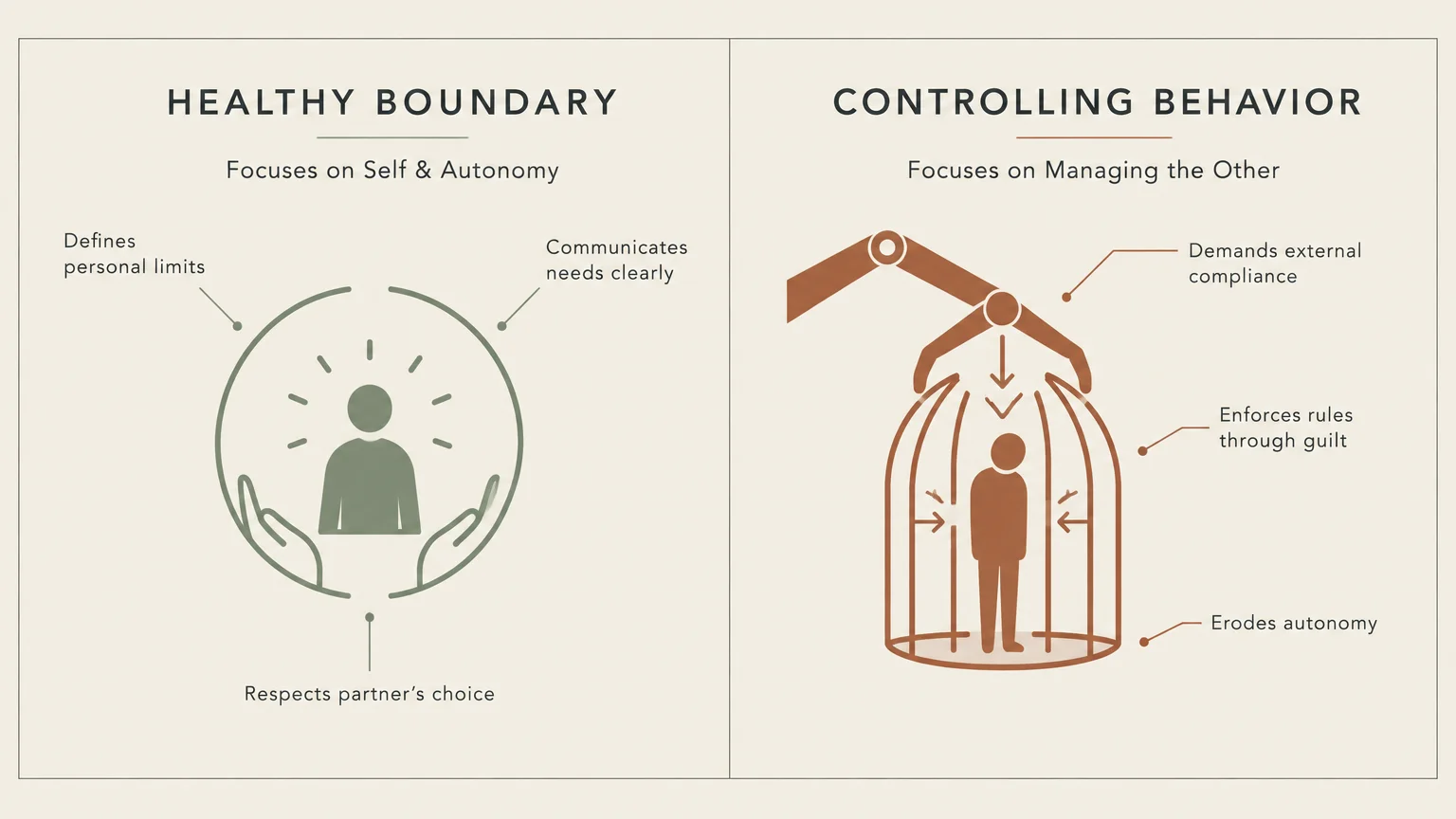
Healthy Boundary vs. Controlling Behavior
Differentiating between healthy relational boundaries and coercive control can feel confusing, especially when manipulation is subtle. The table below illustrates the stark differences between mutual care and controlling behavior.
| Relational Area | Healthy Partnership | Controlling Dynamic |
|---|---|---|
| Social Connections | Encourages independent friendships and values outside support networks. | Manufactures guilt, insults friends, and gradually isolates you from family. |
| Personal Privacy | Respects personal space, individual thoughts, and digital privacy. | Demands passwords, tracks location continuously, and inspects personal devices. |
| Decision-Making | Shares influence collaboratively; respects your final say over your life. | Micromanages everyday choices; demands veto power over your decisions. |
| Handling Conflict | Listens to grievances, validates feelings, and seeks equitable compromises. | Uses stonewalling, guilt-tripping, blame-shifting, and gaslighting to force surrender. |
| Financial Management | Maintains mutual transparency; supports independent financial security. | Monitors spending, hides financial details, or creates complete financial dependency. |
Healthy boundaries protect personal integrity while fostering connection. Controlling tactics, by contrast, subjugate one person’s identity to soothe another’s emotional instability.

What Can Go Wrong: Common Misconceptions About Control
Navigating control issues psychology requires dismantling pervasive cultural myths. Falling for these misunderstandings often keeps people trapped in destructive relationships for years.
One dangerous myth is mistaking intense jealousy and possessiveness for passionate devotion. Pop culture frequently romanticizes obsessive tracking as evidence of deep love.
In clinical reality, possessiveness reflects fear of abandonment and a desire for ownership, not healthy attachment. True love respects autonomy; control seeks possession.
Another common mistake is believing that major relationship milestones will cure controlling tendencies. Many people assume that moving in together, getting married, or having children will provide the reassurance their partner needs.
Unfortunately, milestones usually increase the controlling partner’s perceived stakes. Greater relational entanglement often causes them to tighten their grip rather than relax it.
Finally, do not assume you can love away your partner’s need for control through unconditional compliance. Acquiescing to unreasonable demands never satisfies a controlling person’s underlying anxiety.
Instead, appeasement merely confirms that control works. It teaches the controlling partner that intimidation and emotional manipulation produce their desired outcome.
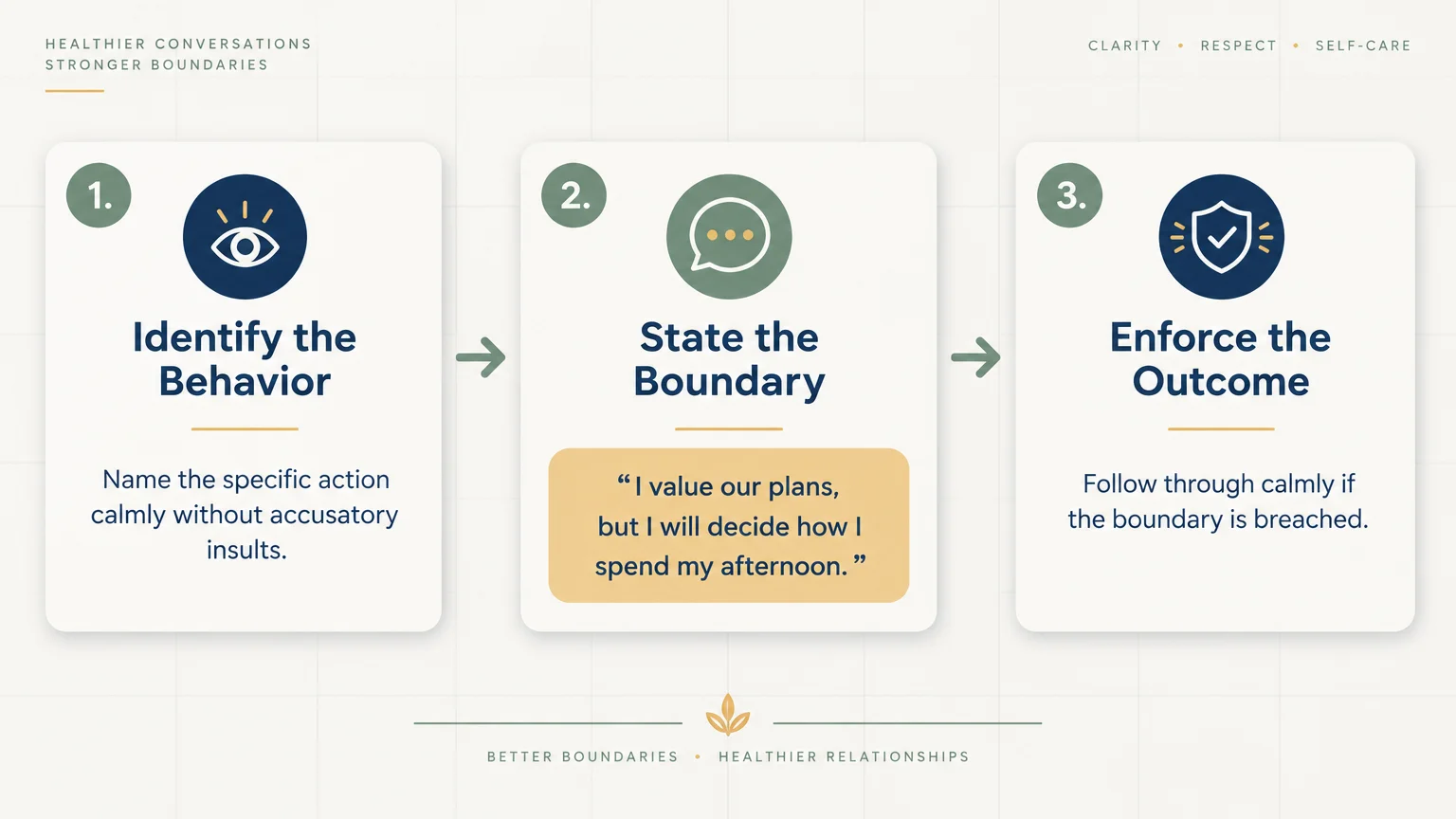
Actionable Scripts for Setting Firm Boundaries
Breaking free from controlling cycles requires clear, assertive communication. When setting boundaries, focus on your decisions and limits rather than attempting to control your partner’s reactions.
- When they demand your digital passwords: “I value transparency between us, but my personal accounts remain private. I will not share my passwords.”
- When they interrogate your daily whereabouts: “I am happy to share how my day went, but I will not participate in an interrogation about my schedule.”
- When they use the silent treatment: “I want to resolve this when you are ready to talk. Until then, I am going to focus on my own day.”
- When they critique your personal wardrobe: “I choose clothes that make me feel confident. My wardrobe decisions belong entirely to me.”
- When they dismiss your feelings as overreactions: “My feelings are valid, and I will not continue this discussion while my perspective is dismissed.”
Deliver these statements calmly without shouting, debating, or over-explaining. State your boundary once, and then adjust your actions accordingly if your boundary is ignored.

When to Seek Professional Support
Not all controlling behavior can or should be resolved through simple interpersonal boundary-setting. When control becomes pervasive, attempting to resolve it alone carries emotional and physical risks.
According to safety guidance from the Mayo Clinic, coercive control often escalates unpredictably over time. Professional intervention provides clarity, safety planning, and objective assessment.
Consider seeking external therapeutic or crisis support if you experience any of the following scenarios:
- Pervasive Fear of Reaction: You constantly modify your behavior, speech, or social life out of dread over your partner’s explosive anger or punitive withdrawal.
- Erosion of Identity: You no longer recognize your own values, have lost contact with loved ones, or experience persistent depression and cognitive fog.
- Intimidation and Property Destruction: Your partner punches walls, throws objects, blocks doorways during disagreements, or uses implicit threats to force compliance.
- Financial or Legal Captivity: You lack independent access to personal funds, legal identification, or transportation, leaving you functionally trapped.
Couples therapy is often ineffective—and occasionally harmful—when severe power imbalances or abusive dynamics exist. In these cases, individual therapy with a licensed trauma-informed clinician is the safest starting point.
Frequently Asked Questions
Can a controlling partner ever genuinely change?
Change is possible, but it requires deep personal accountability and specialized professional therapy. The controlling partner must acknowledge their destructive patterns without blaming their partner or minimizing their impact.
Meaningful change rarely happens while the relationship dynamic remains unchanged. It requires long-term commitment to dismantling anxiety, unlearning entitlement, and practicing authentic vulnerability.
What is the root cause of control issues psychology?
Control issues typically stem from severe internal anxiety, past trauma, or unstable childhood attachments. When individuals grow up in chaotic environments, control becomes their psychological survival mechanism.
In other cases, controlling behavior reflects personality traits such as narcissism, where entitlement and a complete lack of empathy drive an urge to dominate others.
How do I differentiate between genuine concern and controlling behavior?
Genuine concern respects your autonomy, centers your well-being, and accepts your final decisions without punishment. It sounds like an open offer of support rather than a mandatory directive.
Controlling behavior, by contrast, demands obedience, centers the other person’s comfort, and punishes noncompliance through guilt, anger, or emotional withdrawal.
Is controlling behavior considered a form of relationship abuse?
Yes, persistent controlling behavior falls under the psychological framework of coercive control and emotional abuse. When a person systematically restricts your freedom and agency, it constitutes relational abuse.
Coercive control produces profound psychological harm, frequently causing anxiety, depression, and post-traumatic stress in the victimized partner.
Reclaiming Your Autonomy and Peace
Equitable relationships expand your world; they do not shrink it. A healthy partnership honors your individuality, fosters your outside friendships, and celebrates your personal agency.
If you recognize these warning signs in your relationship, begin by reconnecting with your support network and validating your own reality. You deserve a love built on mutual respect, emotional safety, and shared power.
This article provides general educational information about psychology and relationships. It is not a substitute for professional therapy or medical advice. Everyone’s situation is unique—if you’re struggling, please reach out to a licensed mental health professional.
Last updated: February 2026. Psychology research evolves continuously—verify current findings with professional sources.









Leave a Reply