

You notice a subtle shift when your partner laughs at a text message and quickly tilts the phone screen away. Emotional betrayal rarely begins with physical contact; it starts when intimate energy quietly drains from your shared life.
Recognizing emotional infidelity can feel confusing because its boundaries seem invisible at first. When deep vulnerability moves toward someone outside your relationship, the foundation of trust quietly fractures.
Identifying these hidden behavioral shifts helps you address disconnection before lasting damage occurs. Here are eight critical signs of emotional cheating that most couples overlook.
Understanding Emotional Infidelity in Relationship Psychology
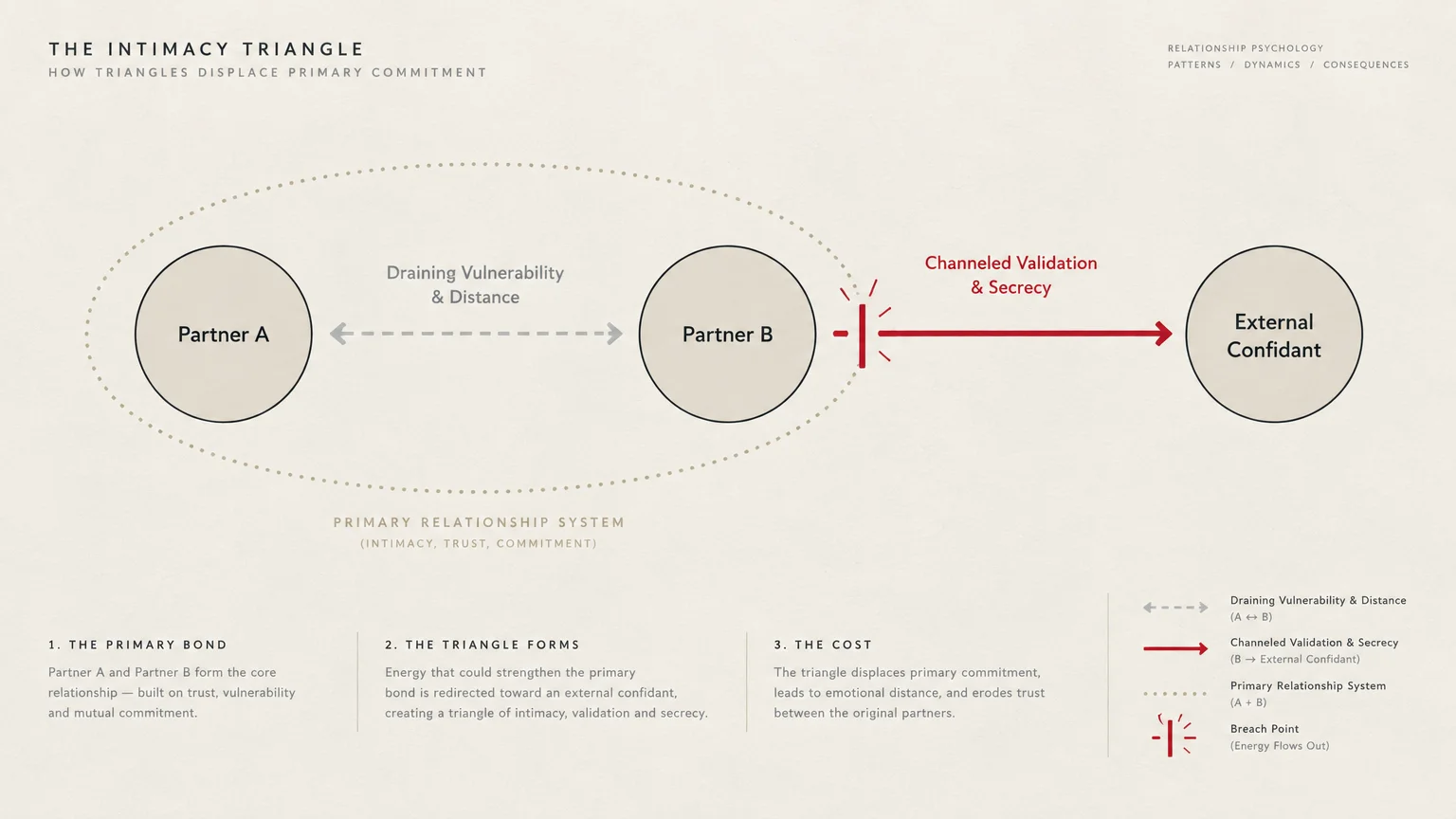
Emotional infidelity occurs when one partner builds a deep, secret emotional connection with an outside person. Unlike casual friendships, this dynamic channels romantic energy, validation, and vulnerability away from the primary commitment.
In relationship psychology, therapists describe emotional affairs as intimacy triangles. One person replaces their partner with an external confidant to fulfill unmet psychological needs.
“Betrayal begins with a failure to connect, turning away from a partner in small moments until emotional distance becomes normal.” — Dr. John Gottman, Relationship Researcher
The defining boundary between a healthy bond and an emotional affair is transparency. When private moments and conversations require concealment, the connection crosses a critical line.

Sign 1: You Become the Secondary Confidant
Think about who hears your partner’s good news first. When a major promotion, personal crisis, or funny incident happens, their instinct should lead them to you.
If they consistently vent to a colleague or online friend before mentioning anything to you, an emotional shift has occurred. You gradually become a spectator in your own partner’s inner life.
This dynamic drains emotional intimacy from your household. Over time, you receive only filtered updates rather than their raw, immediate reactions.

Sign 2: Defensive Secrecy and Screen Inversion
Privacy in a relationship is healthy, but sudden secrecy signals danger. You might notice your partner keeping their phone face-down or tilting their screen away as you walk by.
They may change passcodes abruptly or guard notifications with disproportionate anxiety. When innocent inquiries about a text spark sharp irritation, defensiveness often masks guilt.
According to researchers at the American Psychological Association, digital boundaries play a pivotal role in maintaining marital trust. Digital secrecy frequently acts as the primary incubator for emotional infidelity.

Sign 3: Unfavorable Comparisons Enter Everyday Life
Partners involved in emotional affairs often construct an idealized fantasy of the third person. They view their new confidant through a flattering lens while magnifying your ordinary human flaws.
You might hear subtle critiques comparing your reactions, appearance, or sense of humor to this individual. Remarks like “They always listen without judging” create painful emotional wedges.
These unfair contrasts ignore reality. Real partnerships carry domestic stress and routines, whereas an emotional affair exists within an artificial bubble devoid of daily chores.

Sign 4: Emotional Withdrawal and Silent Distancing
Emotional cheating siphons psychological availability away from your shared bond. Your partner may sit beside you physically while their mental attention wanders elsewhere.
They stop asking about your day, showing minimal curiosity regarding your emotional well-being. This disengagement often mimics depression or burnout, causing partners to miss the underlying cause.
When someone invests deep empathy elsewhere, they rarely have leftover bandwidth for you. The resulting silence feels cold, confusing, and profoundly lonely.

Sign 5: You Sense an Exclusive Inner World Between Them
Healthy friendships welcome partners into the conversation rather than excluding them. In an emotional affair, the dynamic feels deliberately walled off from your presence.
You may encounter coded language, inside jokes, and knowing glances that leave you feeling alienated. When you enter the room, their conversation abruptly halts or shifts topics.
This exclusion creates a private world where you are not welcome. It establishes an intimate boundary between them while pushing you outside the perimeter.
Sign 6: Downplaying and Gaslighting Your Instincts
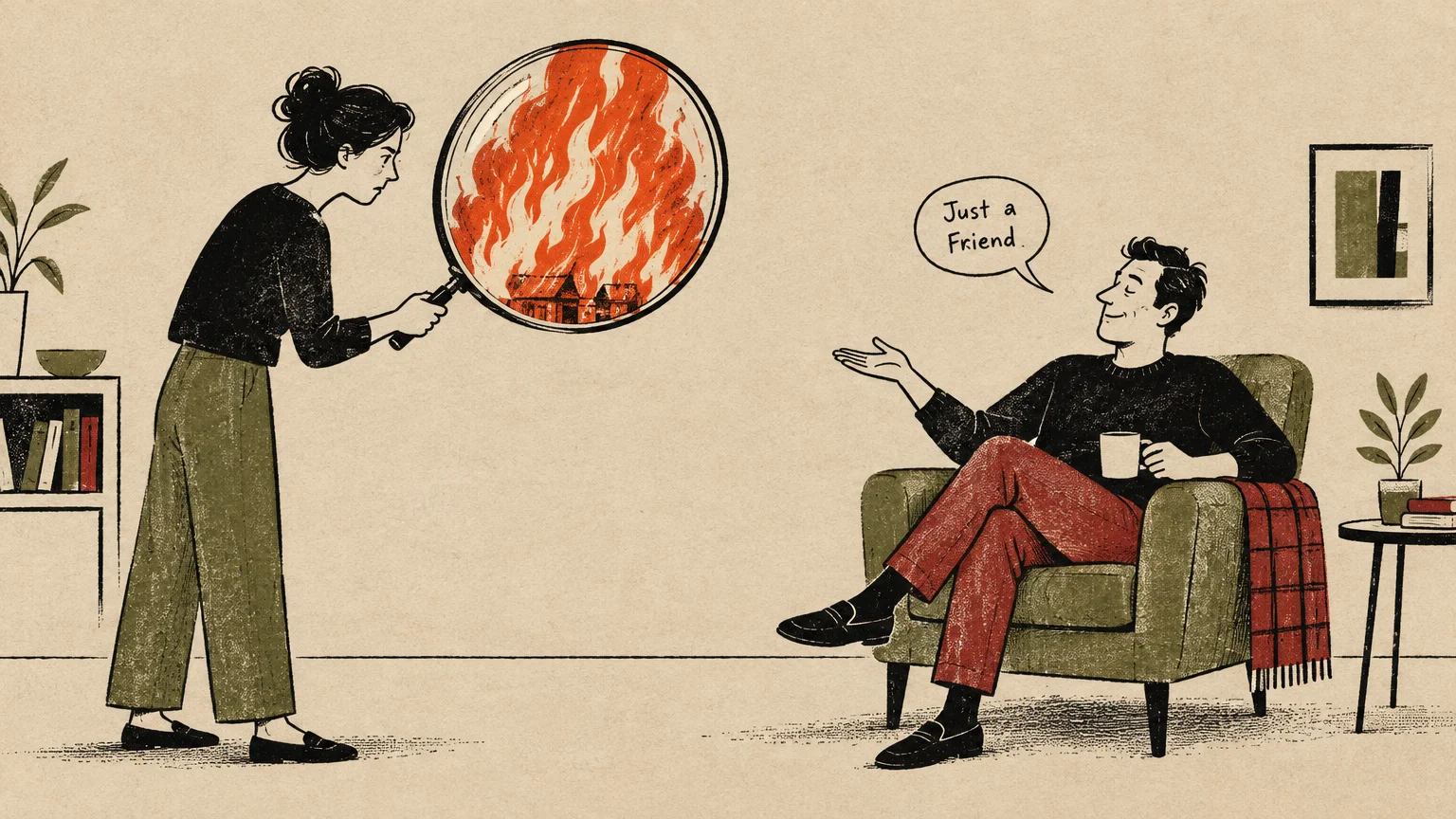
When you gently raise concerns about the dynamic, your partner may dismiss you as insecure or controlling. Common refrains like “We are just friends” invalidate your perceptive intuition.
Gaslighting occurs when they twist the narrative to make your intuition seem irrational. You end up apologizing for asking questions rather than receiving honest clarity.
Clinical insights on relationship gaslighting from Verywell Mind demonstrate that denying a partner’s reality accelerates emotional damage. Trust your intuition when behaviors fail to align with explanations.

Sign 7: Disproportionate Energy Spent on One Dynamic
Pay attention to where your partner directs their enthusiasm and effort. An emotional affair generates a sudden surge of excitement reminiscent of the early honeymoon phase.
They might dress more carefully for work, monitor their phone obsessively, or alter schedules to maximize shared time. Meanwhile, plans with you feel perfunctory or burdensome.
This lopsided energy distribution reveals where their priorities truly lie. When someone else receives their best energy, your partnership receives only the remnants.

Sign 8: Airing Marital Vulnerabilities Outside the Bond
Every relationship experiences friction, but sharing private grievances with an outside interest crosses an ethical threshold. Complaining about your marriage invites emotional bonding through sympathetic rescue.
Your partner may share intimate marital arguments or physical frustrations under the guise of seeking advice. This practice strips away your dignity and breaches mutual loyalty.
The outside confidant inevitably assumes the role of empathetic savior. Consequently, your relationship problems worsen because solutions are sought outside the marriage rather than within it.
Platonic Friendship vs. Emotional Affair: Key Differences
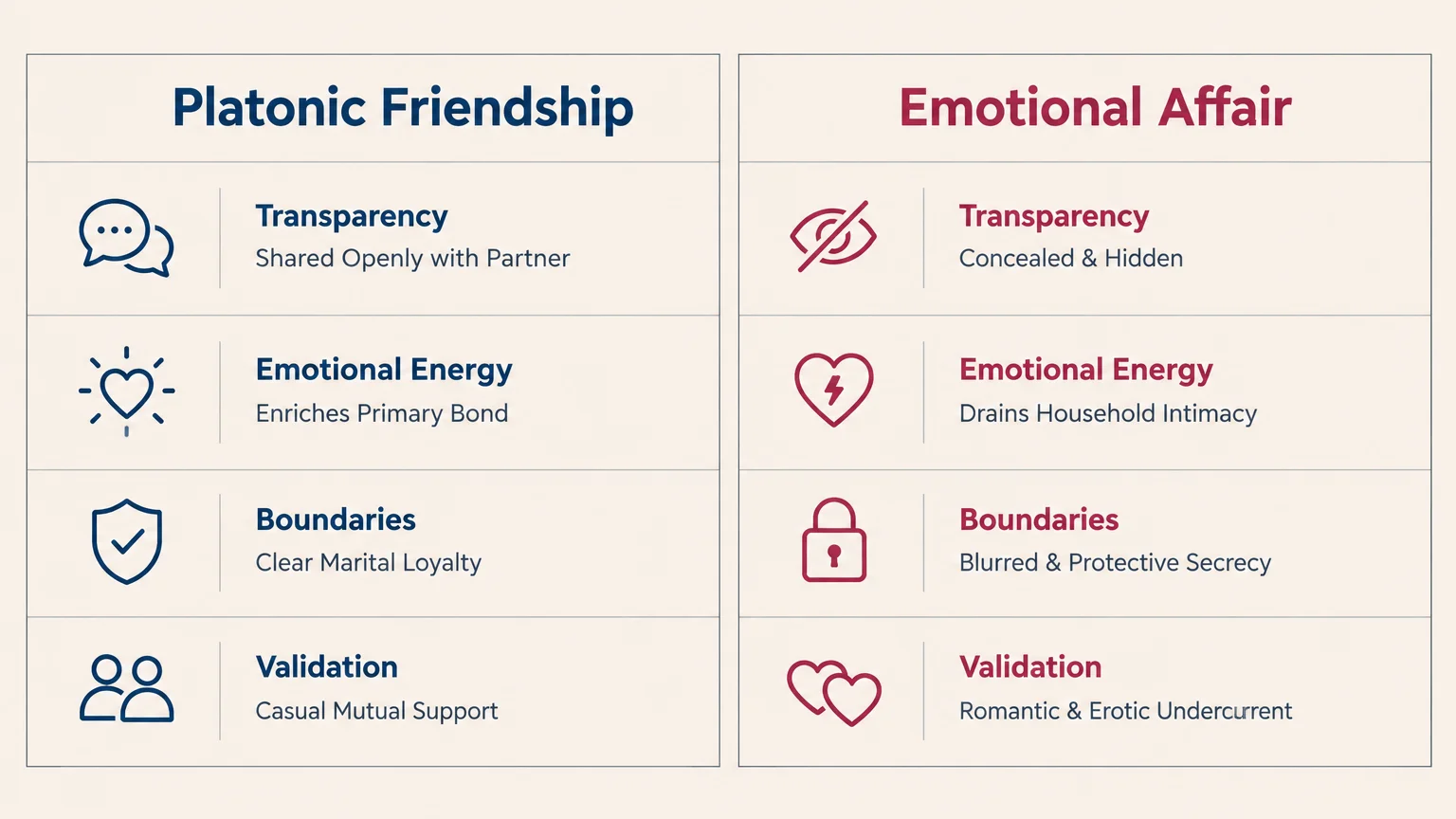
Telling the difference between a close friendship and emotional infidelity requires examining intent, honesty, and emotional investment. The following comparison clarifies these distinct relational dynamics.
| Relationship Dimension | Platonic Friendship | Emotional Affair |
|---|---|---|
| Transparency | Conversations and activities are open and shared openly with a partner. | Texts, calls, and meetings are hidden or routinely deleted. |
| Emotional Priority | The primary partner remains the main source of intimate vulnerability. | The outside person becomes the primary confidant for life updates. |
| Marital Boundaries | Relationship conflicts are resolved privately with the partner. | Marital flaws and sexual intimacy are vented to the outside person. |
| Inclusion | The partner is welcomed into gatherings and group conversations. | The partner is actively excluded through inside jokes and secrecy. |
| Energy Investment | Energy supports and enriches the primary relationship. | Energy drains away from the primary partnership into fantasy. |
As demonstrated above, authentic friendships never thrive on hiding interactions. The presence of deception almost always marks the transition into infidelity.

Common Misconceptions About Emotional Cheating
Misunderstandings surrounding non-physical betrayals often prevent couples from addressing problems promptly. Examining these persistent myths provides essential clarity.
- “Without physical contact, it does not count as cheating.” Many people believe that infidelity requires physical touch. In reality, emotional intimacy often causes deeper, longer-lasting psychological trauma than a one-night physical encounter.
- “Emotional affairs only happen in unhappy relationships.” Happy partnerships are also vulnerable when boundaries slacken during stressful life transitions. Infidelity frequently stems from personal identity exploration rather than marital dissatisfaction.
- “Jealousy is strictly an internal personal flaw.” Society often paints concern as irrational paranoia. While chronic suspicion can be unhealthy, sudden intuition usually responds to genuine shifts in relational transparency.
Recognizing these myths allows you to address the reality of emotional infidelity without shame. Clear boundaries protect relationships from drifting into unintended intimacy.
Navigating the Fallout: Practical Steps Forward
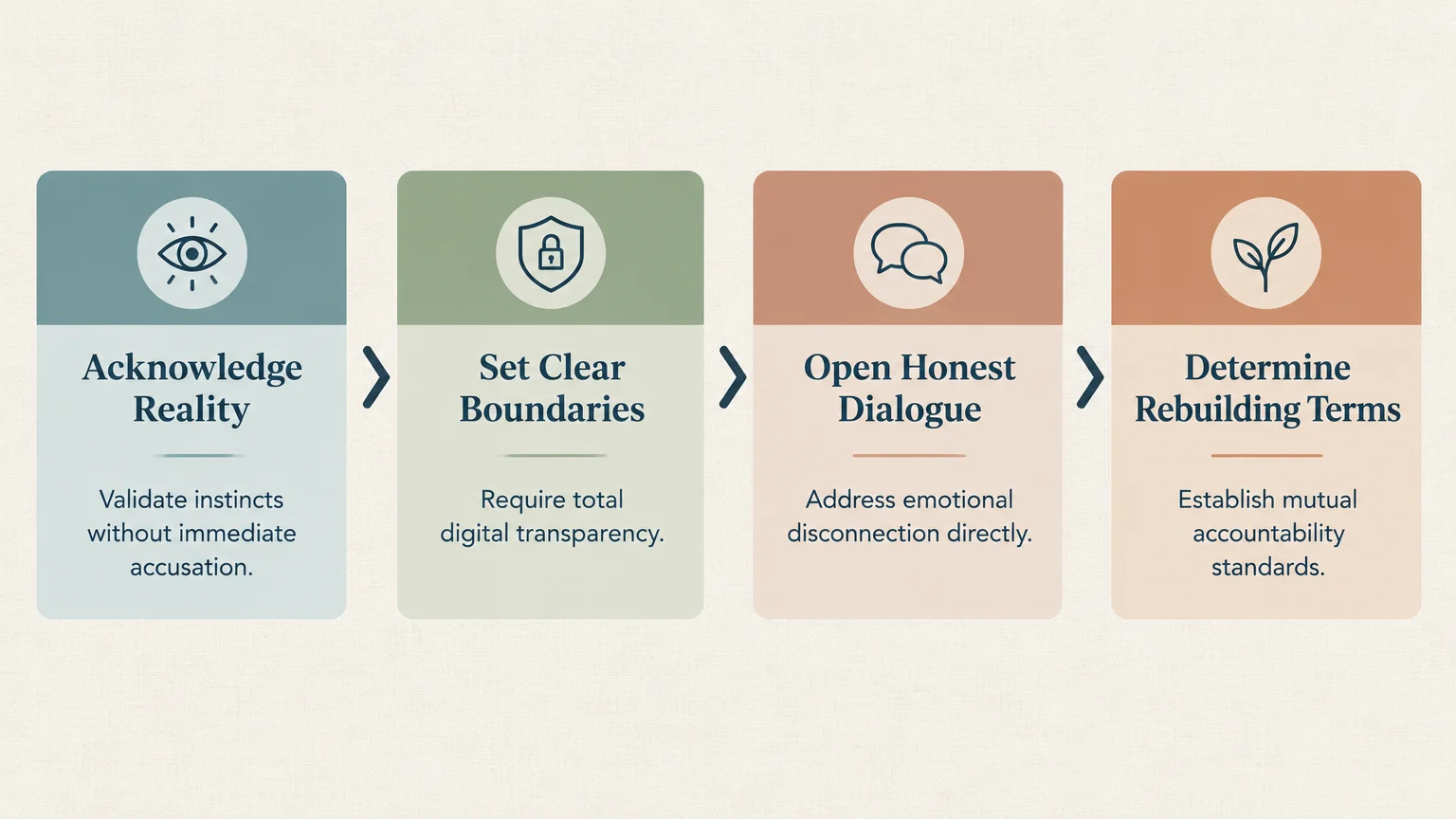
Discovering an emotional affair evokes grief, anger, and confusion. Taking grounded, strategic steps protects your mental well-being and guides your next decisions.
- Initiate a calm, structured dialogue. Choose a neutral moment without distractions to share your observations. Focus on specific behaviors and your emotional experience rather than issuing sweeping accusations.
- Establish uncompromising transparency. Rebuilding trust demands an immediate end to secret communication. Complete openness regarding messages, schedules, and friendships provides the safety needed for healing.
- Evaluate commitment to repair. Both individuals must acknowledge the breach and invest in relationship renewal. If your partner remains defensive or maintains contact, recovery cannot begin.
Healing requires patience and emotional discipline from both individuals. Deciding whether to repair or release the partnership depends heavily on mutual accountability.

Finding the Right Professional Help
Untangling emotional betrayal on your own can feel overwhelming. Clinical guidance provides a safe, structured framework to process trauma and rebuild communication.
Consider seeking professional support under the following specific circumstances:
- Persistent defensiveness and gaslighting: If conversations repeatedly dissolve into blame-shifting, an experienced clinician can help establish honest communication.
- Deep emotional trauma or shock: Discovering secret intimacy often causes hypervigilance, sleeplessness, and profound anxiety that benefits from individual therapeutic support.
- Repeated boundary violations: When a partner promises to end an external emotional dynamic but covertly continues, specialized infidelity counseling is essential.
- Ambivalence about the future: If either person feels uncertain about staying together, discernment counseling offers clarity without immediate pressure to reconcile.
Approaches such as the Gottman Method and Emotionally Focused Therapy (EFT) demonstrate high efficacy in repairing attachment injuries. You can explore evidence-based relationship resources through The Gottman Institute.
Frequently Asked Questions
Can an emotional affair turn into a physical affair?
Yes, emotional affairs frequently transition into physical infidelity over time. As emotional intimacy and secret sharing deepen, physical attraction and proximity often follow naturally.
How can I bring this up without sounding accusatory?
Use “I” statements that describe your observations and emotional experience rather than making direct accusations. Focus on how their emotional distance affects your connection and request transparent reassurance.
Can a relationship truly recover from emotional cheating?
Couples can recover and build a stronger partnership if both people commit to honest introspection. Recovery requires cutting ties with the third party and committing to absolute transparency.
What is the difference between emotional cheating and a work spouse?
A healthy work relationship involves professional collaboration without romantic secrecy or boundary violations. An emotional affair involves secretive venting, romantic chemistry, and emotional dependency that displaces your primary partner.
Moving Forward With Clarity
Navigating emotional cheating demands courage, whether you decide to rebuild your partnership or walk away. Honor your emotional truth and focus on establishing transparent, healthy boundaries in your relationships.
This article provides general educational information about psychology and relationships. It is not a substitute for professional therapy or medical advice. Everyone’s situation is unique—if you’re struggling, please reach out to a licensed mental health professional.
Last updated: February 2026. Psychology research evolves continuously—verify current findings with professional sources.








Leave a Reply