
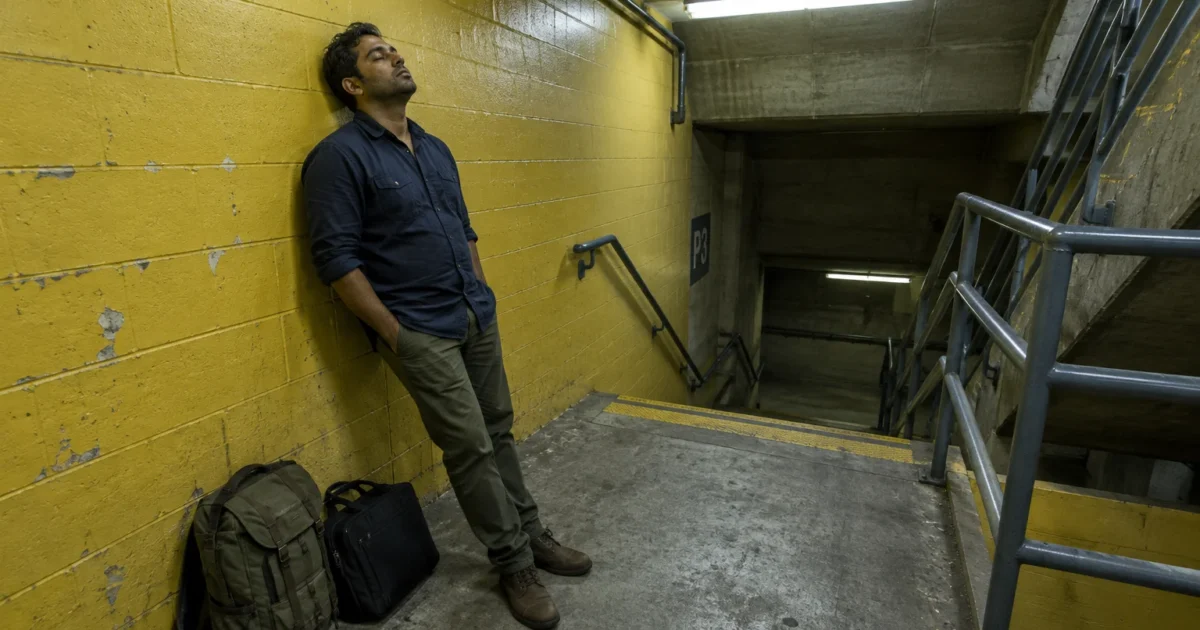
You can laugh with friends, hit demanding deadlines, and still carry an exhausting emotional ache inside. Masking sadness allows people to project complete composure while internal distress drains their vitality daily.
Clinicians often describe this dynamic as smiling depression or high-functioning depression. When emotional survival requires perfection, maintaining an upbeat exterior feels far safer than risking vulnerability or judgment.
Recognizing covert sorrow transforms how you support yourself and the people around you. Exploring these hidden patterns illuminates why quiet pain hurts just as deeply as visible grief.
The Psychology Behind Masked Sadness
Masked sadness occurs when you hide painful internal states behind socially celebrated behaviors. You might smile through exhaustion because revealing your true state feels unsafe or unacceptable.
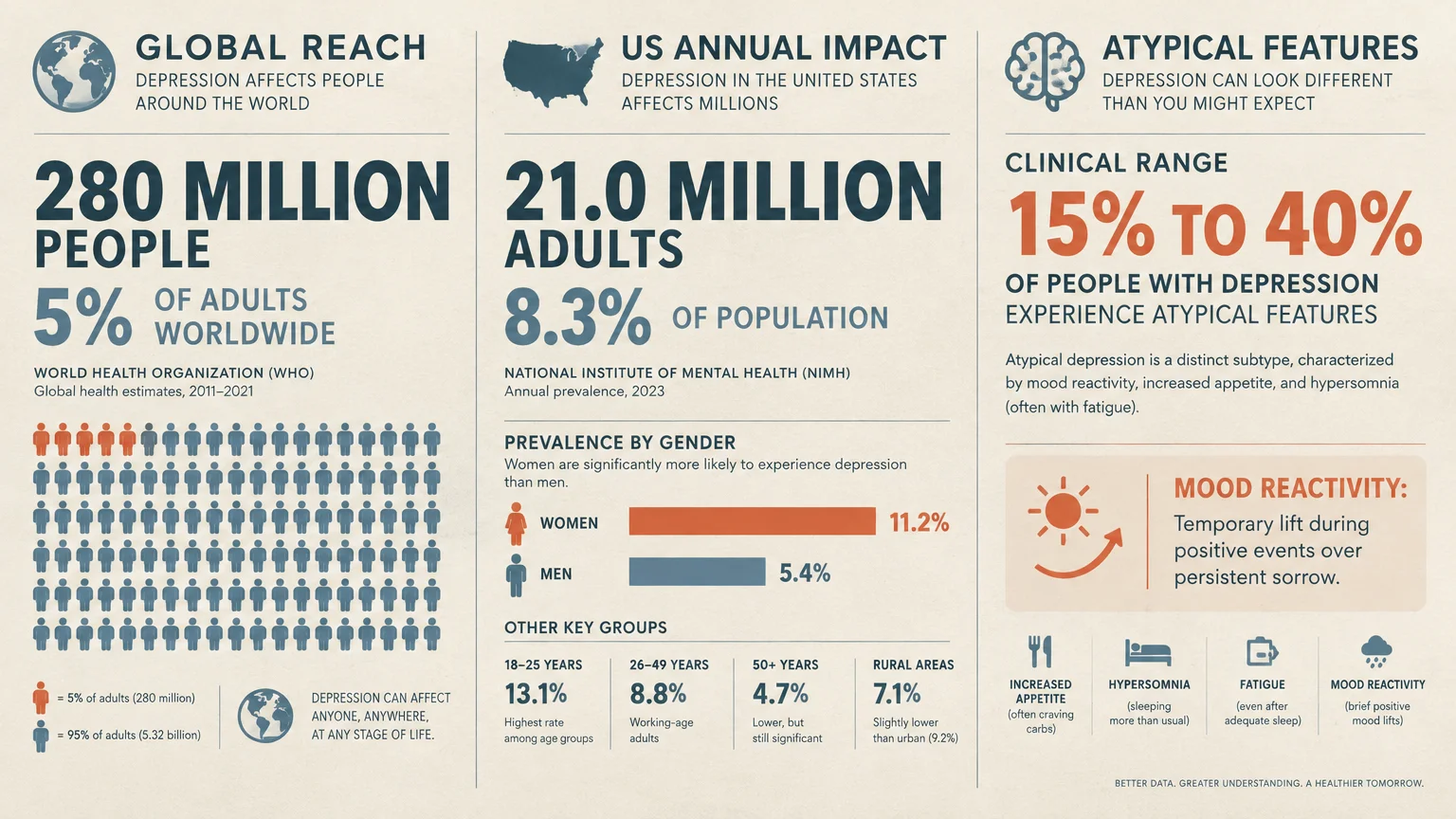
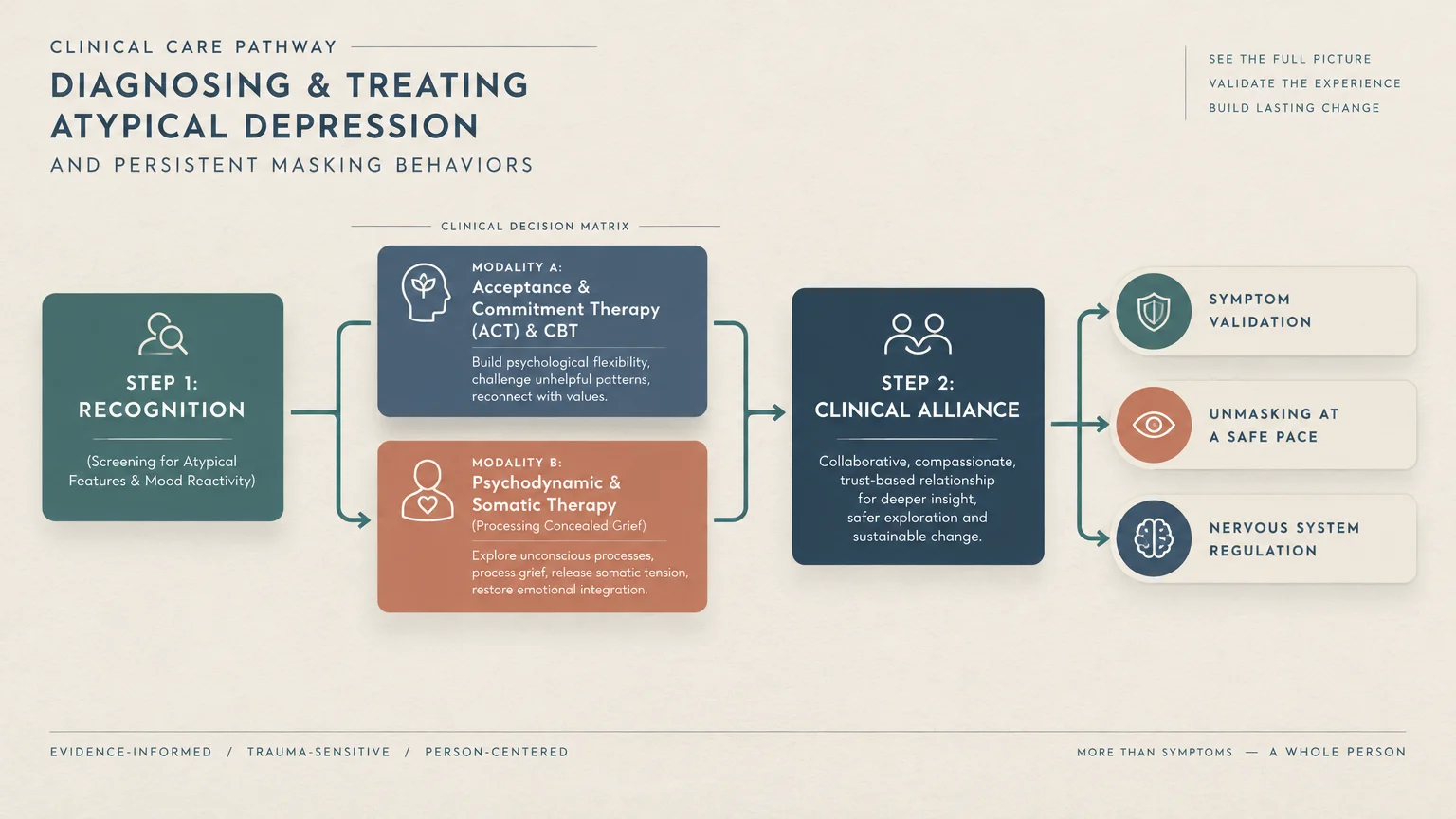
Neither smiling depression nor masked depression appears as an independent diagnosis in the DSM-5-TR. Mental health professionals typically classify these presentations under Major Depressive Disorder with atypical features or Persistent Depressive Disorder.
According to epidemiological research, between 15% and 40% of people with clinical depression exhibit atypical features. These individuals often experience mood reactivity, meaning positive events temporarily lift their spirits while deep sadness persists underneath.
Data from the World Health Organization indicates that approximately 5% of adults worldwide live with a depressive disorder. That represents over 280 million people navigating persistent sorrow across diverse cultures.
In the United States, data from the National Institute of Mental Health shows that roughly 21.0 million adults experience major depressive episodes annually. This represents 8.3% of the adult population, with rates higher among women than men.
Many of these millions continue working, raising families, and hosting social gatherings. They camouflage emotional suffering beneath a veneer of relentless competence.
“Vulnerability is not winning or losing; it’s having the courage to show up and be seen when we have no control over the outcome.” — Brené Brown, PhD, LMSW

11 Behaviors That Mask Deep Sadness
When you bury intense sorrow, it rarely disappears. Instead, your mind routes unresolved pain through everyday routines, interpersonal habits, and coping mechanisms.
1. Relentless Productivity and Compulsive Busyness
You might fill every waking hour with professional projects, home renovations, or community commitments. Leaving empty space on your calendar creates terrifying opportunities for suppressed thoughts to surface.
Society praises workaholism, which makes constant labor the perfect disguise for emotional distress. You use professional achievements to prove your stability to everyone around you.
Unfortunately, constant hustle eventually depletes your nervous system. When the workday concludes and silence arrives, the emotional vacuum feels twice as heavy.
2. Deflective Humor and Chronic Self-Deprecation
You make everyone in the room laugh, often at your own expense. Using comedy lets you control how other people perceive your vulnerabilities.
When someone asks about your well-being, you deflect with a witty quip. Transforming genuine agony into entertainment keeps uncomfortable conversations safely at arm’s length.
Humor serves as an emotional shield that blocks genuine connection. While people admire your wit, you remain profoundly alone with your underlying sadness.
3. Fierce Hyper-Independence
You pride yourself on never asking anyone for assistance, advice, or emotional backing. You handle logistical crises and heavy burdens entirely on your own terms.
Hyper-independence often stems from an unconscious fear of abandonment or past emotional betrayal. You believe that relying on others inevitably produces disappointment or painful rejection.
Refusing support creates an exhausting double standard. You readily show up for everyone else, yet you deny yourself the comfort of receiving care.
4. Compulsive Caretaking and People-Pleasing
You invest tremendous energy solving other people’s crises, soothing their anxieties, and arranging their schedules. Focusing outward distracts you from inspecting your own internal wreckage.
Caregiving also offers a safe proxy for love and self-worth. You feel valuable only when someone depends on your guidance, patience, and effort.
This dynamic leaves you emotionally bankrupt over time. You spend all your internal resources tending gardens that belong to other people.
5. Subtle Social Withdrawal and Disappearing Acts
You show up energized at social gatherings, but you disappear the moment the event concludes. You take days to return simple text messages or cancel plans unexpectedly.
Maintaining a cheerful facade consumes immense psychological bandwidth. Once your energy reserves run out, you must isolate yourself to recover from the performance.
Friends often miss the warning signs because your public interactions appear vibrant. Behind closed doors, you sit in absolute quiet trying to regain your baseline.
6. Irritability, Impatience, and Low Frustration Tolerance
Sadness does not always manifest as weeping or sluggishness. For many adults, chronic emotional despair leaks out through sharp tones, cynicism, and sudden irritation.
When your cognitive capacity focuses entirely on suppressing pain, you lose your patience reserve. Minor setbacks trigger disproportionate anger because your internal reservoir is already overflowing.
Society often misinterprets irritability as a personality flaw or poor attitude. In reality, persistent agitation frequently indicates an overloaded, hurting emotional system.
7. Over-Intellectualizing Emotions
You analyze your emotional patterns like an academic case study. You cite psychological theories, childhood attachment styles, and cognitive biases to explain your state.
Treating emotions like abstract logic puzzles keeps you from actually feeling them. Rationalizing sorrow allows you to remain detached from raw grief or helplessness.
Intellectual insight does not equal emotional resolution. You cannot think your way out of a feeling that demands somatic processing and genuine expression.
8. Somatic Complaints and Chronic Aches
Your body frequently registers emotional pain before your conscious mind acknowledges it. You might deal with persistent migraines, digestive upset, shoulder stiffness, or unexplained fatigue.
According to research from the American Psychological Association, chronic emotional stress activates the sympathetic nervous system continuously. This systemic activation promotes inflammation and elevates muscle tension throughout your tissues.
Medical evaluations may fail to identify distinct physical pathologies for these chronic complaints. Suppressed psychological distress routinely manifests through tangible somatic discomfort.
9. Cynicism and Forced Emotional Detachment
You adopt an indifferent worldview and insist that outcomes do not matter. Declaring that nothing matters protects you from the devastation of future disappointment.
Detachment operates as a defensive moat around a fragile, exhausted heart. By deciding to care about nothing, you protect yourself from deeper emotional injuries.
This protective shield ultimately robs life of color, warmth, and vitality. Indifference numbs your grief, but it simultaneously suffocates your capacity for joy.
10. Micro-Numbing Behaviors and Escapism
You avoid your internal world through continuous digital stimulation and low-stakes distractions. You scroll social media for hours, binge entire series, or engage in compulsive online shopping.
These activities do not produce genuine relaxation or physical rejuvenation. Instead, they provide convenient sensory bridges that carry you between demanding tasks without introspective gaps.
The habit keeps your mind occupied just enough to silence difficult thoughts. When the screen turns off, the baseline ache returns unchanged.
11. Rigid Perfectionism and Aesthetic Control
You keep your home spotless, maintain an immaculate appearance, and ensure your life appears flawless. You believe that an orderly exterior prevents internal chaos from breaking through.
Perfectionism convinces you that mistakes will expose your inner brokenness to the world. You hold yourself to impossible standards to shield your dignity.
Living under constant surveillance from your own inner critic creates tremendous pressure. The higher you build your standards, the harder you must fight to keep the facade standing.
Healthy Processing vs. Masked Sadness
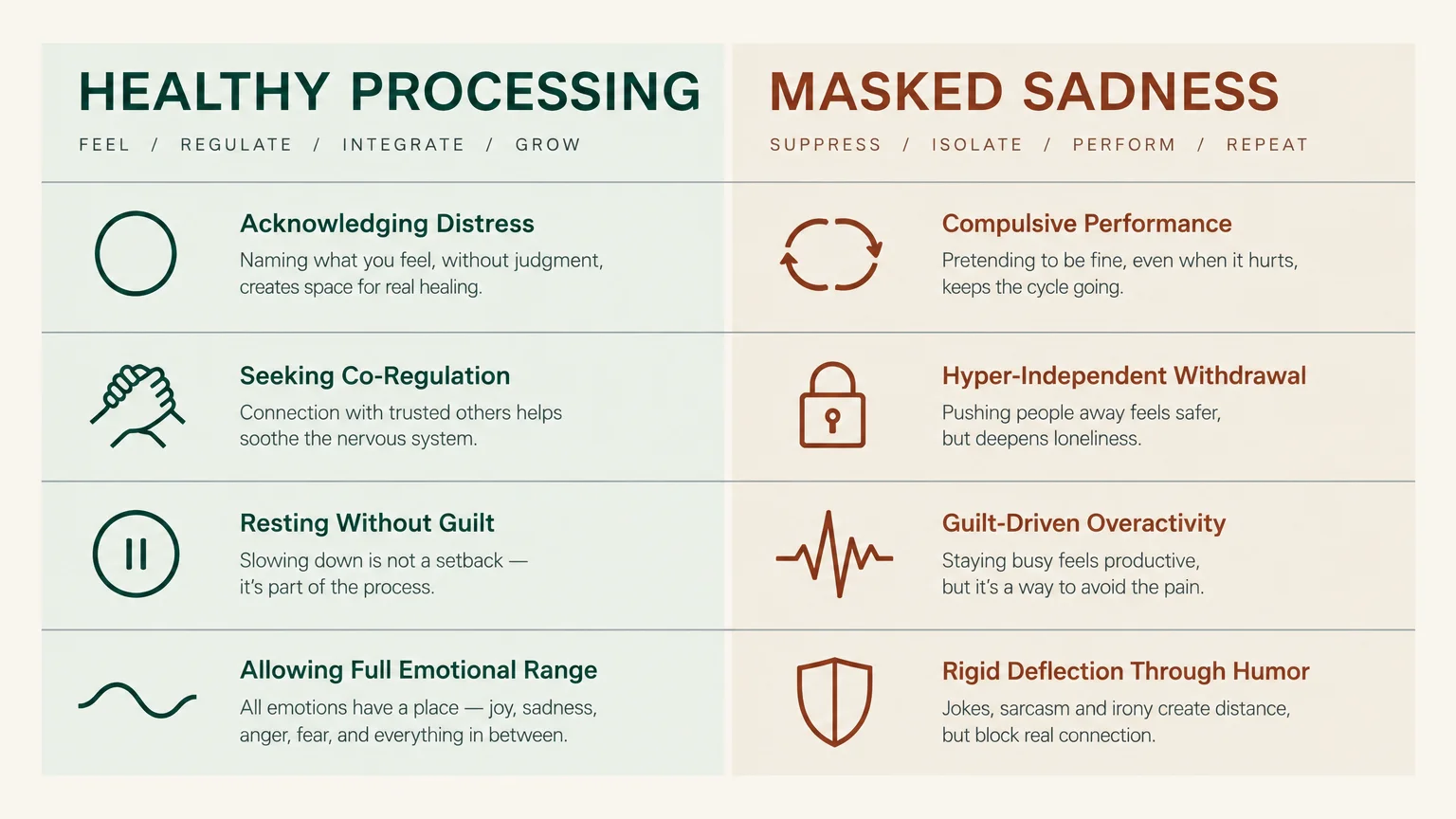
Distinguishing between resilient coping and emotional masking helps you make healthier lifestyle decisions. Examine how these two distinct approaches handle real-world challenges:
| Dimension | Healthy Emotional Processing | Masked Sadness (Concealment) |
|---|---|---|
| Self-Awareness | Acknowledges sadness without judgment or shame. | Denies or minimizes pain to maintain composure. |
| Social Expression | Shares struggles with trusted, supportive peers. | Performs relentless cheerfulness and hides distress. |
| Physical State | Experiences rested recovery after downtime. | Carries chronic tension, fatigue, and headaches. |
| Response to Help | Welcomes assistance and shares personal burdens. | Refuses help through fierce hyper-independence. |
| View of Vulnerability | Views vulnerability as a path to connection. | Views vulnerability as weakness or failure. |

Common Misconceptions
Widespread myths about mental health often prevent people from recognizing their own concealed pain. Dismantling these misunderstandings clears the way for genuine healing.
Misconception 1: High-achieving, functional people cannot suffer from severe depression. Productivity does not equal emotional health. Many people channel their depressive anxiety directly into their careers, maintaining external competence while decaying inside.
Misconception 2: Hiding negative emotions represents strength and emotional maturity. Suppressing feelings increases cardiovascular stress and worsens depressive symptoms over time. True emotional resilience involves feeling difficult emotions honestly and processing them with care.
Misconception 3: Asking someone directly about hidden sadness will offend them or make things worse. Research consistently shows that compassionate, non-judgmental inquiries reduce emotional isolation. Acknowledging someone’s unspoken exhaustion frequently offers profound relief rather than discomfort.
The Heavy Biological Cost of Concealment
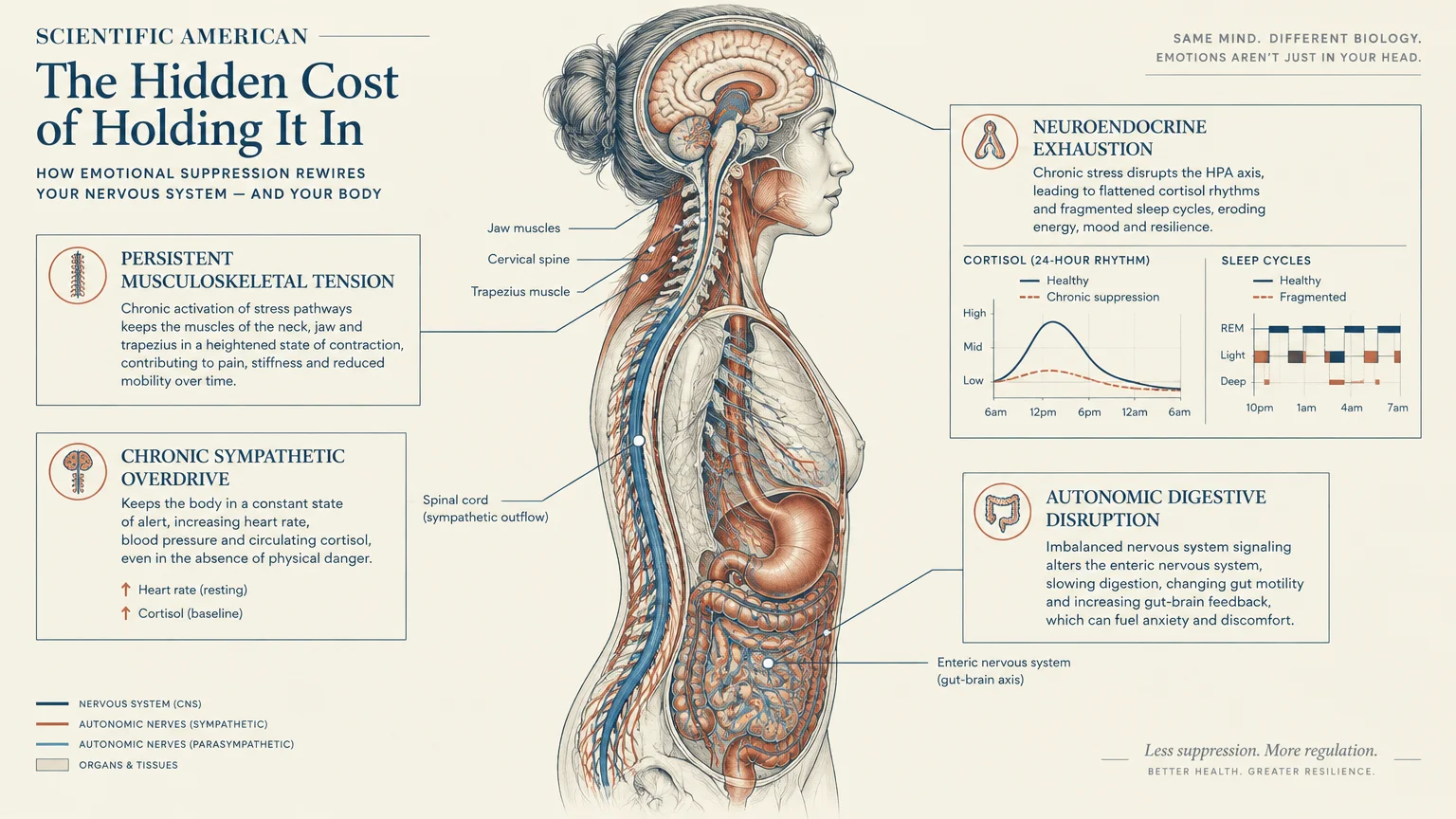
Hiding deep sadness requires constant cognitive and physiological exertion. Your brain must actively suppress emotional expression while manufacturing socially acceptable behavior.
Psychological research reveals that habitual expressive suppression keeps the autonomic nervous system on high alert. Cortisol and adrenaline remain elevated, disrupting healthy sleep architecture and impairing immune function.
Over time, this neurobiological strain produces profound burnout. Masking sadness deprives you of social support, compounding your isolation and accelerating physical exhaustion.
“The curious paradox is that when I accept myself just as I am, then I can change.” — Carl Rogers, PhD

Actionable Ways to Gently Drop the Mask
Unlearning a lifetime of emotional masking takes patience, safety, and conscious effort. You do not have to shed your protective armor overnight.
- Conduct a daily somatic inventory: Pause for two minutes each morning. Notice where your shoulders, jaw, and stomach carry unspoken tension.
- Practice micro-vulnerabilities: When a trusted friend asks how you are doing, skip the automatic “I’m great” response. Try saying, “I’m feeling a bit overwhelmed lately.”
- Schedule quiet processing blocks: Set aside fifteen minutes without screens, music, or tasks. Allow whatever emotions arise to exist without trying to fix them.
- Identify your emotional deflections: Notice when you use humor or intellectual analysis to avoid feeling sadness. Name the defense mechanism gently when it appears.
- Build a low-demand support network: Connect with people who do not demand an entertaining performance from you. Spend time with companions who welcome quiet truth.

How to Support Someone Who Is Hiding Their Pain
If you suspect someone you love is camouflaging deep distress, avoid confronting them aggressively. Forcing someone to drop their defense mechanisms before they feel safe often triggers deeper withdrawal.
Instead, offer specific, low-pressure observations. You might say, “I notice you take care of everyone around you, but you carry a lot alone. I am here if you ever want to rest.”
Avoid responding with toxic positivity or dismissive encouragement like “look on the bright side.” Validate their hidden fatigue and remind them that their worth exists independent of their productivity.
Finding the Right Professional Help
Masked depression frequently delays essential therapeutic intervention. Data from SAMHSA shows that between 39% and 49% of U.S. adults with major depressive episodes do not receive treatment.
You deserve specialized guidance to unpack your sadness safely. Consider reaching out to a licensed professional if you recognize any of the following patterns in your life:
- Your routine masking requires so much energy that you feel physically depleted every single evening.
- You rely on alcohol, compulsive spending, or numbing habits to tolerate baseline sadness.
- You feel emotionally detached from your loved ones and unable to access genuine joy or sorrow.
- You experience recurrent passive thoughts of wishing you could disappear or not wake up.
Evidence-based therapies offer effective pathways for working through concealed distress. Cognitive Behavioral Therapy (CBT) helps you challenge rigid beliefs regarding perfectionism and worth.
Acceptance and Commitment Therapy (ACT) teaches you to sit with difficult emotions without fleeing into compulsive labor. Emotion-Focused Therapy provides a compassionate environment to process long-buried grief safely.
If you or someone you know is in immediate emotional distress, contact the 988 Suicide & Crisis Lifeline by calling or texting 988. This confidential, free service operates 24/7 across the United States and Canada.
Frequently Asked Questions
Can you have depression and genuinely not realize it?
Yes, many people live with high-functioning or masked depression for years without recognizing the condition. They assume that because they work and laugh, their persistent exhaustion is simply normal stress.
Why does deep sadness make some people irritable instead of tearful?
Irritability serves as an externalizing defense against vulnerable internal emotions. When sadness feels intolerable, your nervous system converts that hurt into agitation to regain a sense of control.
How do I open up to a therapist if I automatically smile when talking about pain?
You can name the smiling behavior directly to your therapist during your initial session. Inform them that you smile reflexively when uncomfortable, which gives them permission to look past your pleasant exterior.
Is smiling depression dangerous?
Smiling depression carries significant risk because it hides internal distress from friends, family, and healthcare providers. Because these individuals maintain their daily energy and executive function, they may carry out self-harm plans without displaying obvious warning signs.
Unmasking your sadness requires courage, patience, and gentle self-compassion. Stepping out from behind your protective performance opens the door to authentic connection and deep emotional healing.
This is educational content based on psychological research and general principles. Individual experiences vary significantly. For personalized guidance, consult a licensed therapist, psychologist, or counselor.
Last updated: February 2026. Psychology research evolves continuously—verify current findings with professional sources.








Leave a Reply