

You often sense a subtle emotional shift across the dinner table long before anyone speaks. Everyday conversations turn strictly transactional, shared laughter fades, and familiar warmth quietly evaporates.
Learning to recognize the critical signs your partner is losing interest helps you confront relationship burnout signs before emotional distance permanently damages your bond.
When you constantly wonder if your partner is pulling away, evaluating observable behavioral patterns provides necessary clarity. Recognizing these twelve psychological indicators empowers you to address underlying issues with confidence.
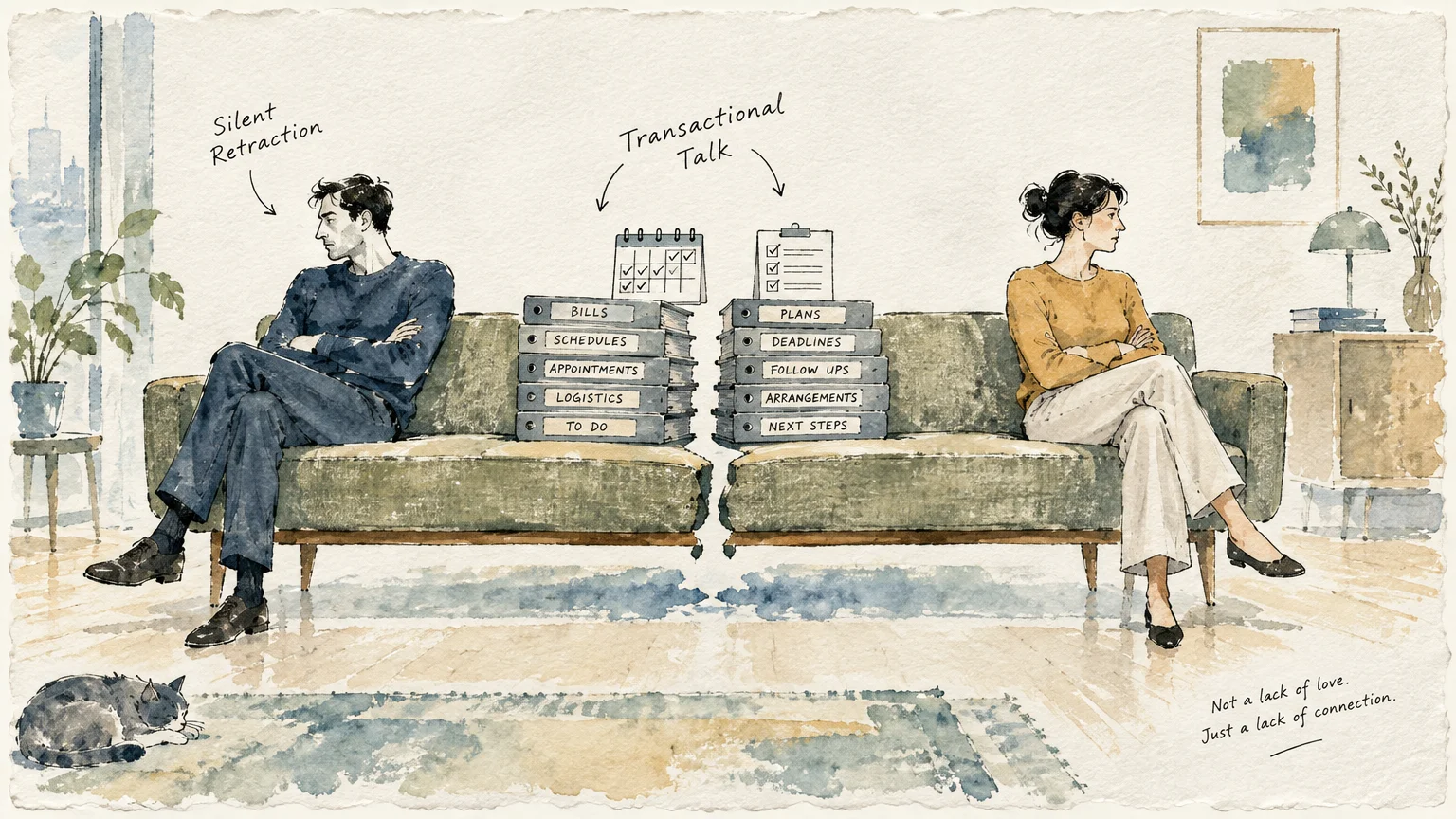
12 Signs Your Partner Is Emotionally Burned Out
1. Superficial and Purely Transactional Conversations
Your partner stops sharing spontaneous thoughts, emotional reflections, or personal vulnerabilities. Everyday communication narrows strictly to logistical coordination, chore delegation, and scheduling updates.
When emotional fatigue takes root, partners consciously or unconsciously conserve mental energy by reducing conversational depth. This emotional withholding serves as a self-protective barrier against vulnerability.
Notice whether open-ended prompts receive flat, monosyllabic dismissals. If discussions about inner feelings feel forced or unwelcome, emotional withdrawal is actively occurring.
2. Disproportionate Irritation Over Trivial Habits
Quirks that your partner once viewed with affection suddenly trigger visible annoyance or biting sarcasm. A misplaced set of keys or a minor chewing sound sparks sharp, hostile commentary.
According to relationship research from The Gottman Institute, habitual irritability often reflects accumulated negative sentiment override. In this state, a partner interprets neutral or harmless behaviors through a critical, resentful lens.
When genuine goodwill erodes, your partner loses the cognitive buffer that normally cushions daily relational frustrations.
3. A Sharp Drop in Non-Sexual Affection
Physical touch reveals emotional connection long before words do. Casual hugs in the hallway, resting hands on shoulders, or holding hands during evening walks quietly vanish from your daily routine.
Non-sexual physical touch requires spontaneous emotional warmth and psychological safety. Its absence ranks among the clearest signs of emotional distance in a relationship.
While sexual desire naturally ebbs and flows over time, the total disappearance of gentle physical contact indicates emotional disconnection.
4. Frequent Stonewalling and Conflict Evasion
Rather than engaging in constructive disagreement, your partner retreats behind a wall of deliberate silence. They fold their arms, turn their eyes downward, or leave the room without offering any resolution.
Stonewalling occurs when internal physiological arousal overwhelms a person’s coping capacity. When experienced chronically, however, it serves as an evasion strategy designed to shut down relational repair.
If your attempts to discuss challenges encounter icy silence, your partner may feel too exhausted by the dynamic to invest in solutions.
5. Micro-Exclusions from Everyday Decisions
You suddenly discover that your partner agreed to weekend commitments, made financial purchases, or reshuffled schedules without consulting you. These moments represent micro-exclusions from your shared reality.
A thriving partnership operates from a cohesive “we” orientation. When fatigue sets in, individuals mentally revert to a solitary “me” mindset, making autonomous choices without considering their significant other.
Hearing about critical lifestyle updates through mutual acquaintances or social media posts confirms that psychological decoupling has begun.
6. Vanishing Curiosity About Your Inner Life
Healthy partners express authentic interest in your thoughts, daily hurdles, and long-term aspirations. They ask follow-up questions because your emotional world matters to them.
When partner burnout deepens, intellectual and emotional curiosity dies out completely. Your partner stops inquiring about your workday, your friendships, or your creative interests.
Living alongside an uncurious partner generates profound loneliness, making you feel more like a roommate than an intimate companion.
“In a relationship, when you turn away from a bid, you don’t realize that you are doing subtle damage to the connection.” — Dr. John Gottman, Relationship Researcher and Co-Founder of The Gottman Institute
7. Reluctance to Commit to Future Plans
Planning vacations, reserving concert tickets months ahead, or discussing long-term living arrangements suddenly prompts deflection. Your partner responds with vague phrases like “let’s see when it gets closer” or outright resistance.
Partners who feel trapped or exhausted avoid locking themselves into future obligations. They subconsciously resist promises that require prolonged presence in a dynamic that currently drains them.
Pay close attention if planning even a minor trip a few weeks away provokes unusual hesitation or defensive reactions.
8. Chronic Screen Escapism and “Phubbing”
Your partner keeps their eyes glued to a smartphone, laptop screen, or television whenever you share the same space. Clinicians label this habit of snubbing an intimate partner for a mobile screen as “phubbing.”
Research shared by the American Psychological Association indicates that habitual digital distraction often functions as an emotional avoidant mechanism. Screens provide effortless dopamine while preventing meaningful face-to-face interaction.
When digital devices replace spontaneous eye contact and shared conversation, your partner is using technology as an emotional shield.
9. Abandoning Relational Maintenance and Emotional Labor
Every relationship requires active emotional labor to maintain closeness and momentum. This includes organizing dates, marking special anniversaries, and creating calm moments to reconnect.
When a partner becomes profoundly fatigued by the relationship, they completely abandon these maintenance behaviors. They allow anniversaries to slip by and let social coordination collapse entirely.
If you stop driving the relationship forward and discover that all mutual momentum stops, the responsibility has become completely one-sided.
10. Defensive Body Language and Physical Distance
Human bodies naturally orient toward sources of warmth and turn away from discomfort. Observe how your partner positions themselves when you sit down on the couch together.
Angling shoulders away, crossing legs toward the exit, or placing physical objects like throw pillows between you reveals subconscious discomfort. These nonverbal boundaries signify an unexpressed desire for self-containment.
Nonverbal physical withdrawal frequently manifests weeks or months before your partner openly articulates their emotional exhaustion.
11. Ceasing to Argue or Advocate for Needs
Many people mistake total quiet for marital tranquility, yet complete silence often proves far more dangerous than vocal conflict. Heated arguments demonstrate that both parties still care enough to seek change.
When your partner ceases to voice dissatisfaction or demand better treatment, they have likely entered resigned detachment. They believe that speaking up produces zero constructive change.
Apathy represents the death of connection; when someone stops fighting for the relationship, they have mentally checked out.
12. Treating Shared Moments Like Tedious Obligations
Couples need shared leisure to replenish affection and emotional intimacy. When burnout takes hold, your partner treats dates or casual evenings at home like exhausting professional duties.
They check the clock repeatedly, exhibit restless energy, or find transparent excuses to leave early. Their presence feels mechanical rather than engaged.
If your companionship feels like an item on a chore list that your partner must endure, the relationship has entered severe emotional exhaustion.
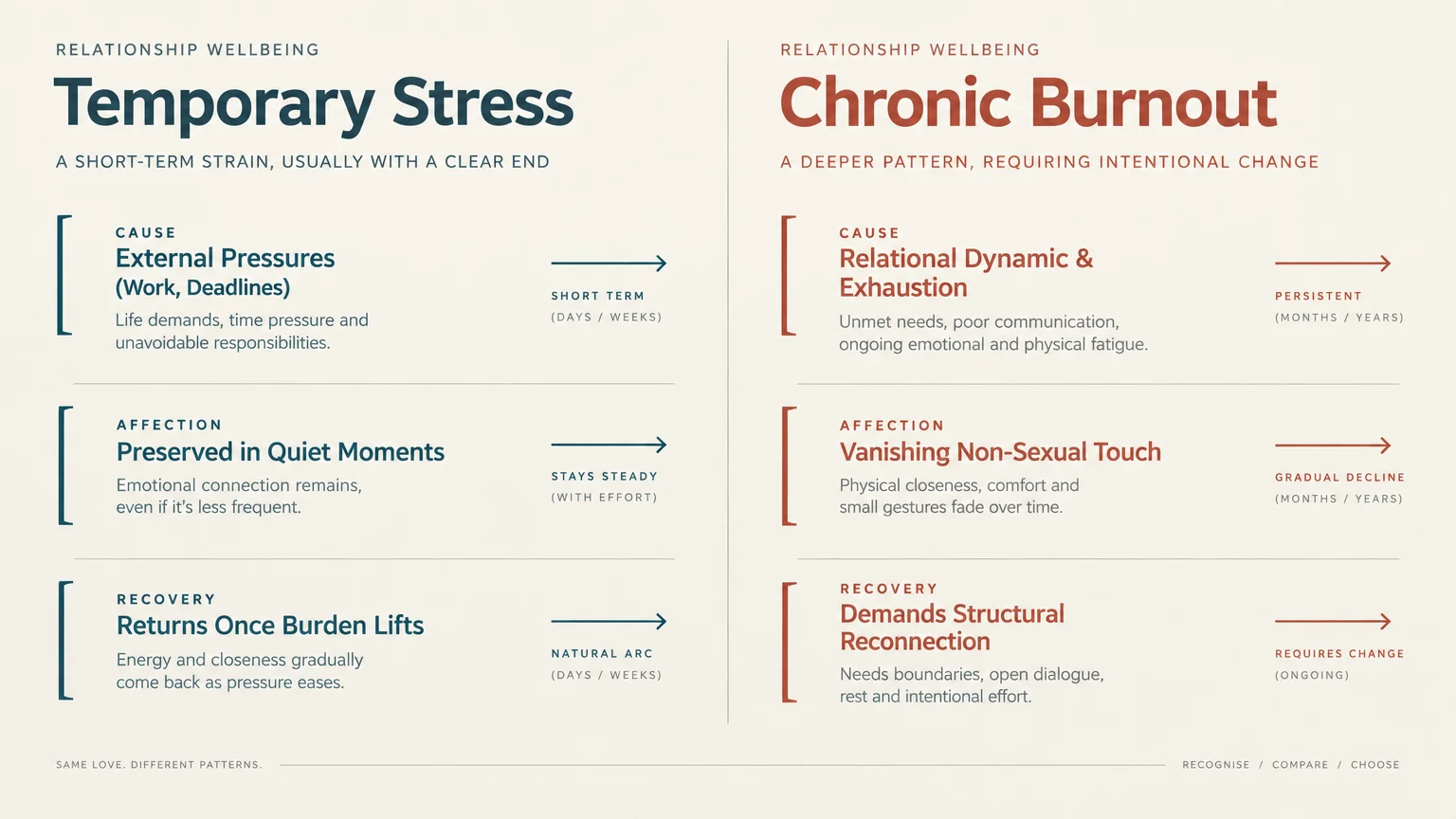
Temporary Stress vs. Chronic Relationship Burnout
Distinguishing between external pressures and genuine relational detachment prevents misinterpreting temporary exhaustion as a permanent crisis. Use the comparison table below to evaluate whether external stressors or chronic relationship burnout drives your partner’s behavior.
| Behavioral Dimension | Acute External Stress (Job, Health, Family) | Chronic Relationship Burnout |
|---|---|---|
| Primary Target of Frustration | External demands, demanding employers, or circumstantial constraints. | Your personality traits, everyday habits, and physical presence. |
| Affection & Physical Connection | Reduced due to energy depletion, but welcomed when initiated gently. | Actively rejected, dodged, or tolerated with visible physical tension. |
| Communication Quality | Distracted or brief, but paired with apologies and mutual reassurance. | Dismissive, flat, and devoid of emotional repair attempts. |
| Future Orientation | Temporary pause on major plans until the immediate crisis passes. | Persistent hesitation or outright refusal to imagine a shared future. |
| Relational Effort | Revives rapidly during weekends, vacations, or low-stress periods. | Remains flat, joyless, and emotionally distant regardless of circumstances. |
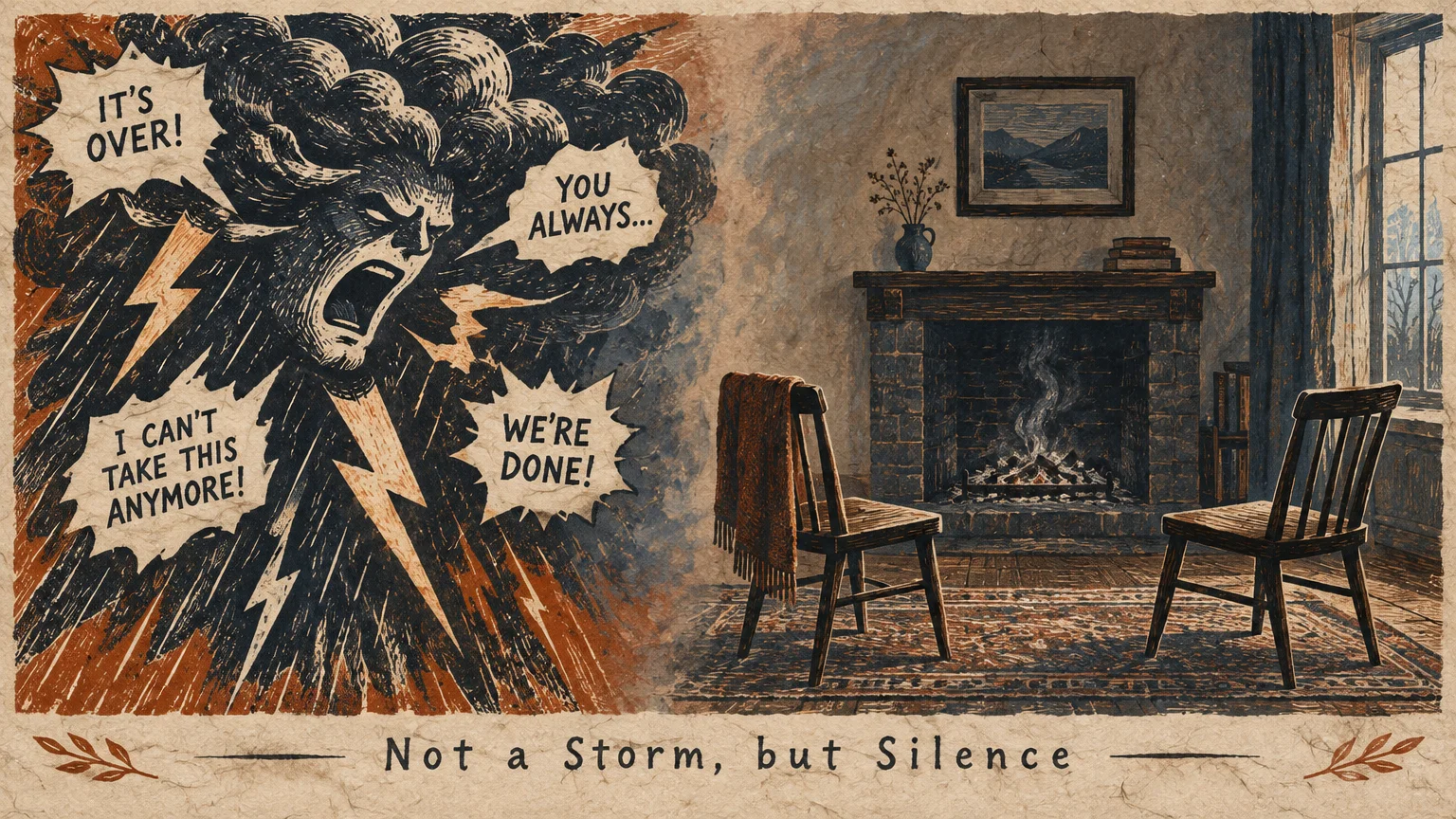
Common Misconceptions About Relationship Fatigue
Navigating emotional distance requires untangling reality from harmful relationship myths. Believing inaccurate assumptions often worsens anxiety and prompts unhelpful reactions.
Misconception: Emotional withdrawal always points to an affair. While infidelity certainly causes sudden secrecy, emotional withdrawal more commonly stems from chronic stress, undiagnosed depression, or unaddressed domestic resentment.
Jumping immediately to accusations of unfaithfulness alienates a partner who is simply overwhelmed by life demands or relational friction.
Misconception: Frequent fighting proves a relationship is doomed, while silence indicates peace. Volatile conflict is challenging, but constructive friction shows partners are still invested in being understood. Total silence, by contrast, often reflects dangerous emotional apathy.
Misconception: Pursuing harder will pull a distant partner back. When you sense emotional withdrawal, your natural instinct may be to cling tighter, demand explanations, or force immediate intimacy.
According to family systems concepts discussed on Psychology Today, high-pressure pursuit reliably drives an avoidant partner further into isolation. Stepping back into your own self-regulation creates the psychological space required for genuine reconnection.

Constructive Steps When Your Partner Is Pulling Away
You cannot control your partner’s internal emotions, but you possess absolute agency over your own responses. Taking deliberate, grounded actions helps clarify the future of your bond without sacrificing your self-respect.
- Initiate a low-pressure conversation using a soft startup: Frame observations around your personal experience rather than making accusatory declarations. Say, “I notice we have felt disconnected lately, and I want to understand where your head is at,” instead of “You never pay attention to me.”
- Discontinue emotional overfunctioning: If you carry all the logistical, social, and emotional weight, pause your efforts intentionally. Allow natural space so your partner has room to step forward voluntarily.
- Reinvest in personal autonomy and supportive friendships: Centering your entire existence on an emotionally distant partner magnifies pain. Cultivate your independent hobbies, physical health, and external social network.
- Establish unambiguous boundaries for mutual respect: Emotional fatigue never excuses emotional cruelty, contempt, or deceit. Define what behaviors you will accept and clarify the lines you will not tolerate.

Finding the Right Professional Help
Self-directed relationship adjustments reach natural limits when deep-seated patterns entrench themselves. Knowing when to engage an objective, licensed clinician protects both individuals from protracted emotional distress.
You should consider professional couples counseling or individual therapy in several distinct scenarios:
- Chronic stonewalling blocks daily communication: When simple discussions trigger multi-day silences or profound emotional shutdowns, a trained therapist can de-escalate physiological distress.
- Contempt or hostile mockery enters the dynamic: Contempt ranks as the single greatest predictor of relationship dissolution. Professional intervention is mandatory to dismantle destructive sarcasm and restore basic dignity.
- Suspected clinical depression or mental health challenges: As detailed by Verywell Mind, clinical depression frequently mimics emotional coldness and detachment. Individual evaluation clarifies whether the issue is relational burnout or an underlying depressive episode.
- Pervasive ambivalence about remaining together: When one or both partners question whether they want to stay in the relationship, discernment counseling provides structured clarity without forcing reconciliation.
Frequently Asked Questions
How can I tell if my partner is tired of me or just overwhelmed by stress?
Evaluate their response to low-pressure affection. Stressed partners welcome gentle comfort, whereas burned-out partners actively stiffen or recoil when you initiate contact.
Can a relationship recover once a partner has emotionally detached?
Yes, relationships can recover if both partners acknowledge the disconnect and commit to dismantling underlying resentments through honest communication and skilled therapy.
Should I give my partner complete space when they pull away?
Offer calm, structured space without disappearing entirely. Pair your emotional step-back with explicit communication: “I sense you need breathing room, so I am going to step back; let’s check in on Friday.”
How long should I wait for an emotionally distant partner to turn around?
Establish a private internal timeline based on your mental health needs. Waiting indefinitely without measurable behavioral changes or mutual willingness to seek help damages your emotional well-being.
Facing the reality that your partner may feel exhausted by the relationship is profoundly disorienting. However, clarity always serves you better than anxious uncertainty.
Whether this challenging chapter marks a catalyst for mutual recommitment or the gentle close of a shared journey, prioritizing your self-respect and emotional clarity ensures you move forward on solid ground.
The information in this article is meant for educational purposes and general guidance. It does not replace individual therapy, counseling, or medical treatment. If you or someone you know is in crisis, contact the 988 Suicide & Crisis Lifeline by calling or texting 988.
Last updated: February 2026. Psychology research evolves continuously—verify current findings with professional sources.









Leave a Reply