

You might expect self-doubt to look like obvious timidity or visible insecurity. In reality, quiet habits often mask a silent struggle with personal value.
Hidden signs of low self-esteem frequently hide behind traits society praises, such as chronic agreeableness and relentless perfectionism. You may wear these behaviors as armor without realizing the toll they take.
Recognizing self-esteem problems beneath these masks allows you to reclaim your emotional energy and establish authentic confidence. Spotting these covert tendencies is the first step toward lasting healing.
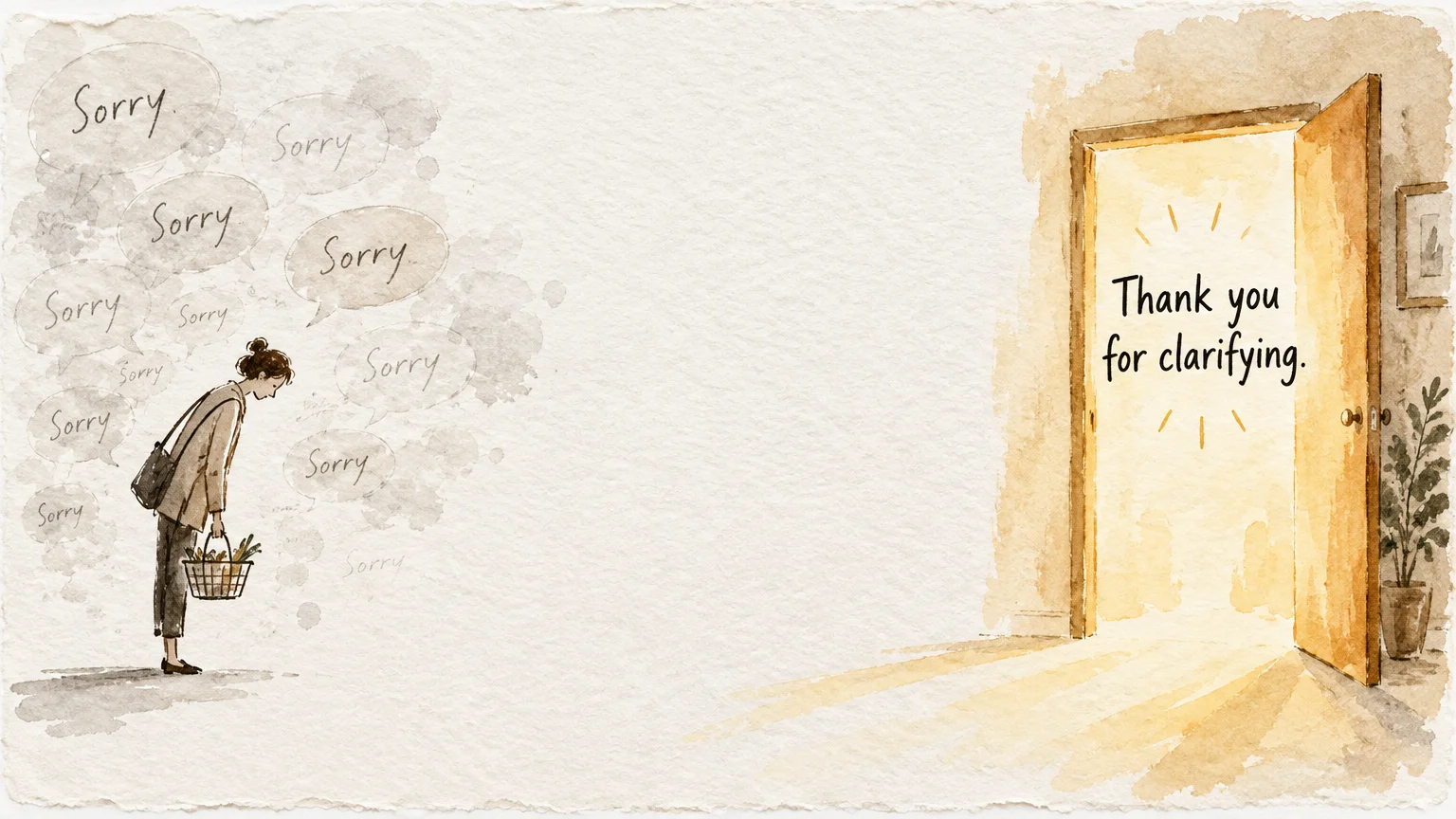
1. Chronic Over-Apologizing
Do you say “sorry” when someone bumps into you at the grocery store? This automatic reflex often signals an unconscious belief that your mere physical presence inconveniences others.
When you apologize for taking up space, you treat your basic existence as an imposition. Over time, this verbal habit conditions your brain to feel fundamentally guilty.
According to the American Psychological Association, habitual self-blame reinforces negative self-schemas. You teach people around you that you assume responsibility for every minor friction.
Instead of apologizing for asking a clarifying question, try saying, “Thank you for clarifying.” Shifting from reflexive guilt to gratitude preserves your dignity and rebalances the social interaction.

2. Compulsive Over-Explaining
When you decline an invitation, do you construct an elaborate narrative to justify your absence? Compulsive over-explaining reveals a deep fear that your boundaries lack legitimacy on their own.
You might believe that saying a simple “no” appears rude or uncaring. Consequently, you offer evidence and backstories to persuade the other person that you deserve rest.
This pattern is one of the classic behaviors linked to self-esteem issues. You subconsciously assume your personal preferences hold no intrinsic weight unless verified by an external crisis.
Healthy boundaries require no defensive brief. Practice stating your availability plainly: “I cannot make it tonight, but thank you for thinking of me.”

3. Deflecting Compliments and Minimizing Wins
When a coworker praises your presentation, do you immediately credit luck or mention your flaws? Deflecting genuine praise suggests your self-image cannot comfortably integrate positive external feedback.
Psychologists call this cognitive dissonance. When someone offers a compliment that contradicts your negative internal narrative, your brain rejects the praise to preserve internal consistency.
Research summarized by Verywell Mind indicates that dismissing positive feedback systematically sustains low self-worth symptoms over time. You filter out validation while absorbing criticism like a sponge.
Next time someone compliments you, pause before dismissing the remark. A simple, grounded “Thank you, I worked hard on this” allows you to receive appreciation gracefully.

4. Fierce Hyper-Independence
You might view your complete self-reliance as an unshakeable badge of honor. However, an inability to ask for help often masks a profound fear of rejection or feeling like a burden.
When you believe your worth depends on never being an inconvenience, you isolate yourself emotionally. You shoulder crushing workloads alone because vulnerability feels too dangerous.
This defense mechanism often stems from childhood environments where caregivers met your needs inconsistently. You learned early that relying on others led to disappointment or abandonment.
True interdependence does not diminish your competence. Allowing trusted friends or colleagues to support you creates genuine connection and relieves emotional exhaustion.

5. Chameleon Behavior and Social Camouflaging
Have you ever noticed your opinions, laughter, or interests shifting to match whoever stands in front of you? Social camouflaging involves erasing your authentic preferences to ensure total social safety.
When you battle low self-worth, sharing an unpopular opinion feels like risking total ostracism. You mirror the group’s taste in music, food, and politics to stay invisible and secure.
Unfortunately, chronic camouflaging comes at a devastating cost to your identity. When you abandon your authentic perspective, you confirm the painful belief that your true self is unlovable.
Notice the wisdom of humanistic psychology in addressing this disconnect:
“The curious paradox is that when I accept myself just as I am, then I can change.” — Carl Rogers, Ph.D.
Self-worth flourishes when you express minor preferences without apology. Start small by voicing an honest restaurant preference or expressing a differing opinion on a film.

6. Relentless Perfectionism and Over-Functioning
High achievement frequently masquerades as healthy self-esteem, but perfectionism often roots itself in self-preservation. You may feel that exceptional performance is the only shield protecting you from judgment.
When you tie your fundamental value to flawless output, any minor mistake feels like an existential catastrophe. You work late, manage everyone else’s crises, and constantly monitor for flaws.
Clinical research published through Psychology Today highlights that perfectionism functions as a defense against deep-seated shame. It is not about self-improvement; it is about dodging criticism.
As researcher Brené Brown famously noted:
“Understanding the difference between healthy striving and perfectionism is critical to laying down the shield and picking up your life.” — Brené Brown, Ph.D., LMSW
Replace perfectionism with self-compassion by setting realistic boundaries on your effort. Strive for excellence when it aligns with your values, but separate your human worth from task completion.

7. Chronic Indecisiveness in Casual Choices
Do you repeatedly say “I don’t care, whatever you want” when picking dinner or choosing a movie? While you might view this as polite adaptability, it often signals an internalized self-erasure.
Chronic indecisiveness reveals a persistent fear that expressing a preference will cause conflict or disappoint someone else. You treat your desires as trivial and unworthy of space.
Over time, continuously suppressing small decisions weakens your ability to identify what you actually want. Your decision-making muscle atrophies through lack of use.
Reclaim your agency by practicing decisive choices in low-risk settings. Pick the restaurant, select the table, or choose the meeting time without second-guessing your right to choose.

8. Tolerating Poor Treatment and Boundary Violations
Staying in one-sided friendships or accepting disrespectful behavior often traces back to an internal narrative of unworthiness. You accept the treatment you unconsciously believe you deserve.
When someone ignores your calls, belittles your ideas, or takes advantage of your generosity, you may make excuses for them. You prioritize preserving their comfort over protecting your emotional well-being.
These reactions represent prominent signs of low self-worth in interpersonal relationships. You fear that setting a firm limit will provoke abandonment, so you tolerate mistreatment instead.
You can consult clinical insights from Harvard Health regarding how chronic relational stress harms physical health. Establishing boundaries is an act of self-preservation, not selfishness.
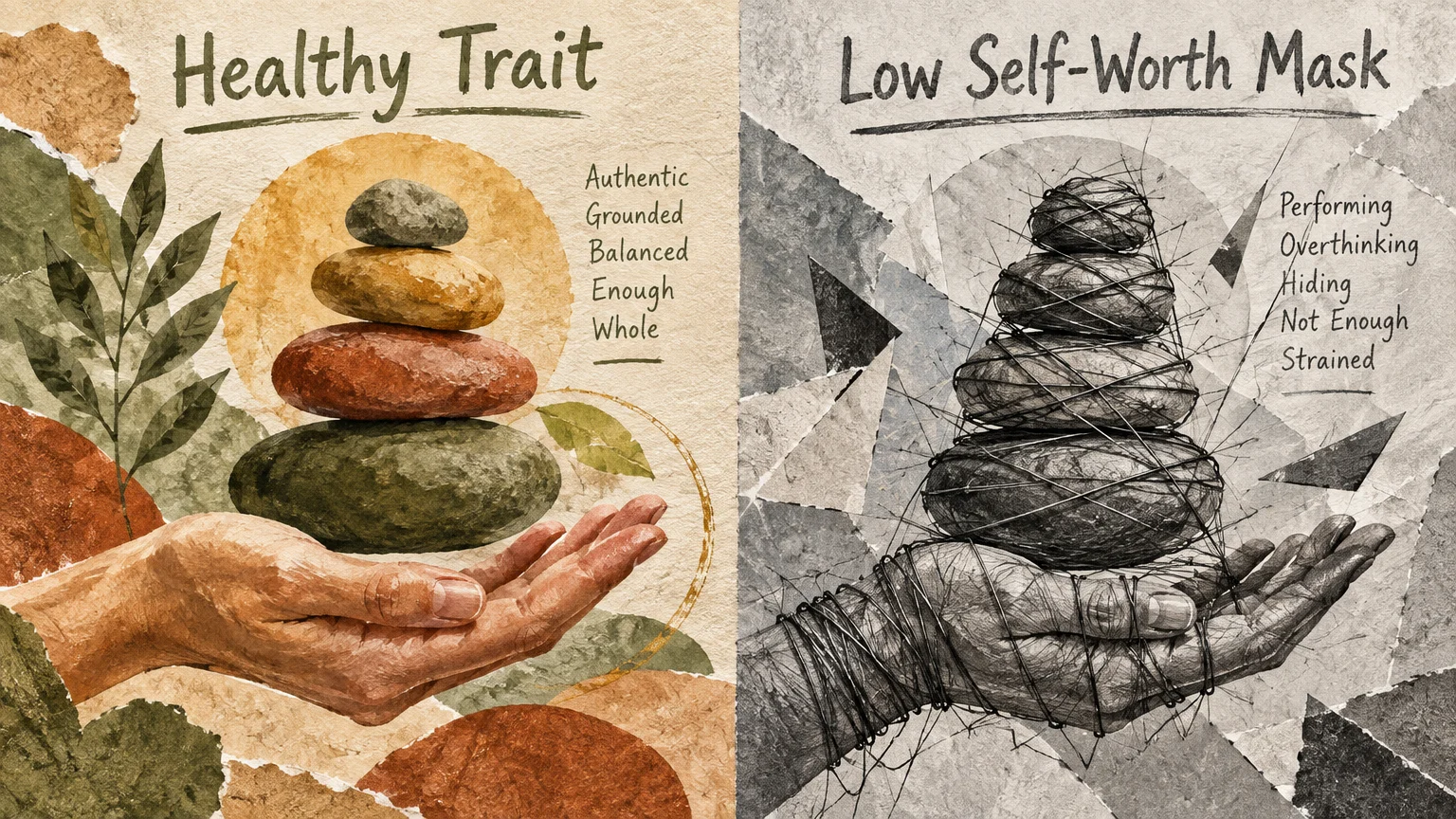
Patterns to Watch For: Healthy Traits vs. Low Self-Worth Masks
Covert self-esteem issues often mimic positive character traits, confusing both you and the people around you. Distinguishing between healthy behaviors and protective masks brings essential clarity to your growth.
| Character Trait | Healthy Expression | Low Self-Worth Mask |
|---|---|---|
| Politeness | Treats others with mutual respect and basic consideration. | Apologizes reflexively and acts as if existing inconveniences people. |
| Reliability | Shows up consistently while honoring personal boundaries. | Over-functions compulsively out of fear that saying no causes rejection. |
| Adaptability | Compromises flexibly while maintaining distinct personal preferences. | Engages in social camouflaging and suppresses authentic desires. |
| Independence | Demonstrates competence while comfortably requesting and accepting help. | Refuses all assistance to avoid feeling burdensome or vulnerable. |
| Diligence | Pursues meaningful goals for internal satisfaction and joy. | Chases perfectionism frantically to protect against criticism and shame. |
Recognizing self-esteem problems requires examining the motivation behind your actions. Are your habits fueled by self-respect, or are they defensive strategies to prevent rejection?

Practical Steps to Reclaim Your Self-Worth
Transforming these unconscious habits takes deliberate, compassionate practice. You do not have to overhaul your entire personality overnight; gradual behavioral changes rewire your internal self-talk.
- Implement the five-second pause: Before instinctively saying “sorry” or agreeing to a burdensome task, pause for five seconds to check your true feelings.
- Eliminate justification scripts: Practice declining requests with concise, kind statements rather than offering detailed alibis.
- Accept compliments with grace: Receive positive remarks with a grounded “thank you” without offering a counter-critique.
- Assert low-stakes preferences: Make quick, definitive choices regarding small everyday decisions like meals or walking routes.
- Cultivate self-compassionate dialogue: Speak to yourself with the same warmth and understanding you would offer a cherished friend.
When you shift these micro-behaviors, you signal to your subconscious that your comfort, time, and identity possess genuine merit. Small consistent actions yield profound shifts in emotional resilience.

When Self-Help Isn’t Enough
While self-directed strategies offer tremendous value, entrenched feelings of inadequacy often stem from developmental trauma or persistent depression. In certain situations, working with a licensed mental health professional is essential.
Consider seeking therapy if you notice any of the following patterns persisting for several months:
- Pervasive chronic shame: You feel fundamentally flawed, unlovable, or broken regardless of positive life circumstances.
- Trauma-driven relationship patterns: You repeatedly enter emotionally abusive or exploitative relationships because you struggle to assert basic boundaries.
- Paralyzing depressive symptoms: Low self-worth triggers chronic hopelessness, loss of interest in life, or deep emotional numbness.
- Severe avoidance and isolation: Fear of judgment prevents you from pursuing career opportunities, dating, or maintaining friendships.
Evidence-based modalities such as Cognitive Behavioral Therapy (CBT) and Acceptance and Commitment Therapy (ACT) help dismantle entrenched self-defeating core beliefs. A skilled clinician provides a supportive environment to explore these root causes safely.
Frequently Asked Questions
Here are answers to common questions about recognizing and addressing covert self-worth issues.
What is the difference between self-esteem and self-worth?
Self-esteem often fluctuates based on external achievements, social approval, and current performance. Self-worth, by contrast, is the deep, steady conviction that your life has intrinsic, unearned value.
Can someone seem outwardly confident while struggling with low self-worth?
Yes, many individuals exhibit charismatic, successful outward personas while secretly battling intense self-doubt. High performance and social charm frequently serve as defensive shields against vulnerability and shame.
How long does it take to rebuild damaged self-worth?
Rebuilding core self-worth is a gradual, non-linear process that typically unfolds over months of intentional effort. Consistent boundary setting and self-compassion yield noticeable emotional relief within several weeks.
What causes covert low self-esteem in adulthood?
Covert low self-esteem often develops from early emotional neglect, hypercritical parenting, childhood bullying, or conditional affection. Adults learn to over-function and people-please to secure attachment and avoid criticism.
Moving Forward with Self-Compassion
Unlearning lifelong survival behaviors takes courage, patience, and persistent kindness toward yourself. Notice your patterns without judgment, celebrating every small moment where you honor your authentic needs.
The information in this article is meant for educational purposes and general guidance; it does not replace individual therapy, counseling, or medical treatment. If you or someone you know is in crisis, contact the 988 Suicide & Crisis Lifeline by calling or texting 988.
Last updated: February 2026. Psychology research evolves continuously—verify current findings with professional sources.







Leave a Reply