
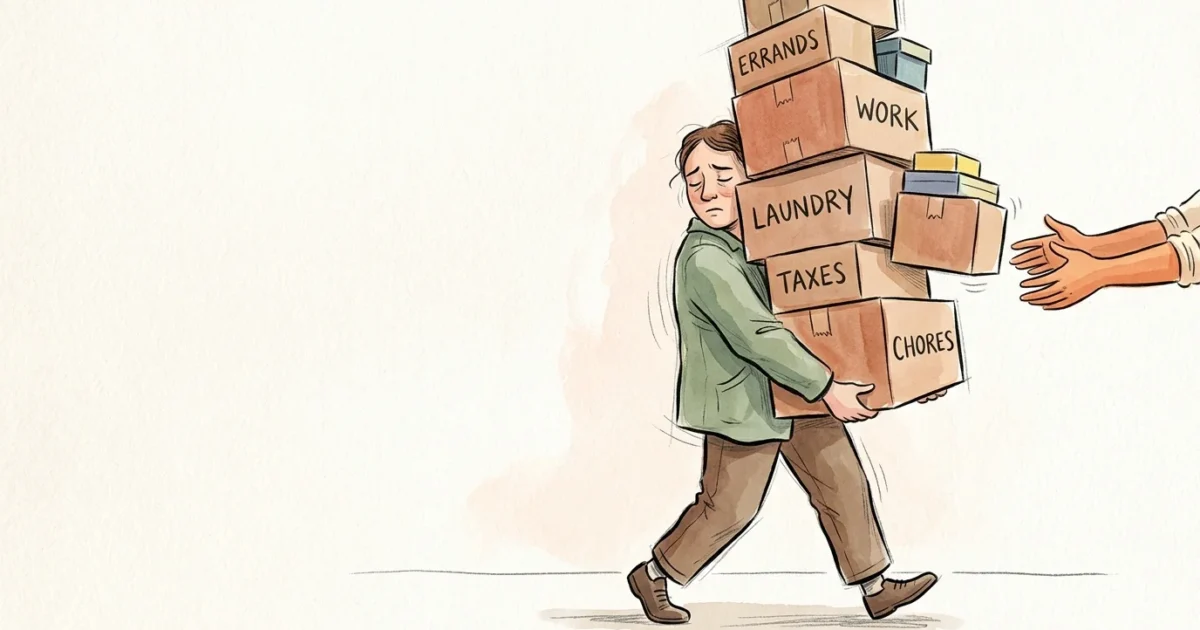
Refusing assistance when you are drowning does not prove your strength; it often signals an emotional defense mechanism disguised as competence. When you constantly decline offers of support, you risk chronic burnout, emotional isolation, and strained relationships. Many capable individuals operate under the unconscious belief that relying on others invites vulnerability, debt, or eventual disappointment. Recognizing the subtle behaviors that push people away allows you to break this exhausting cycle. By identifying why you resist outside help, you can shift from defensive hyper-independence toward genuine emotional resilience, learning to accept support without feeling compromised, weak, or indebted to those who care about you.
Understanding Hyper-Independence: Why Some People Can’t Accept Help
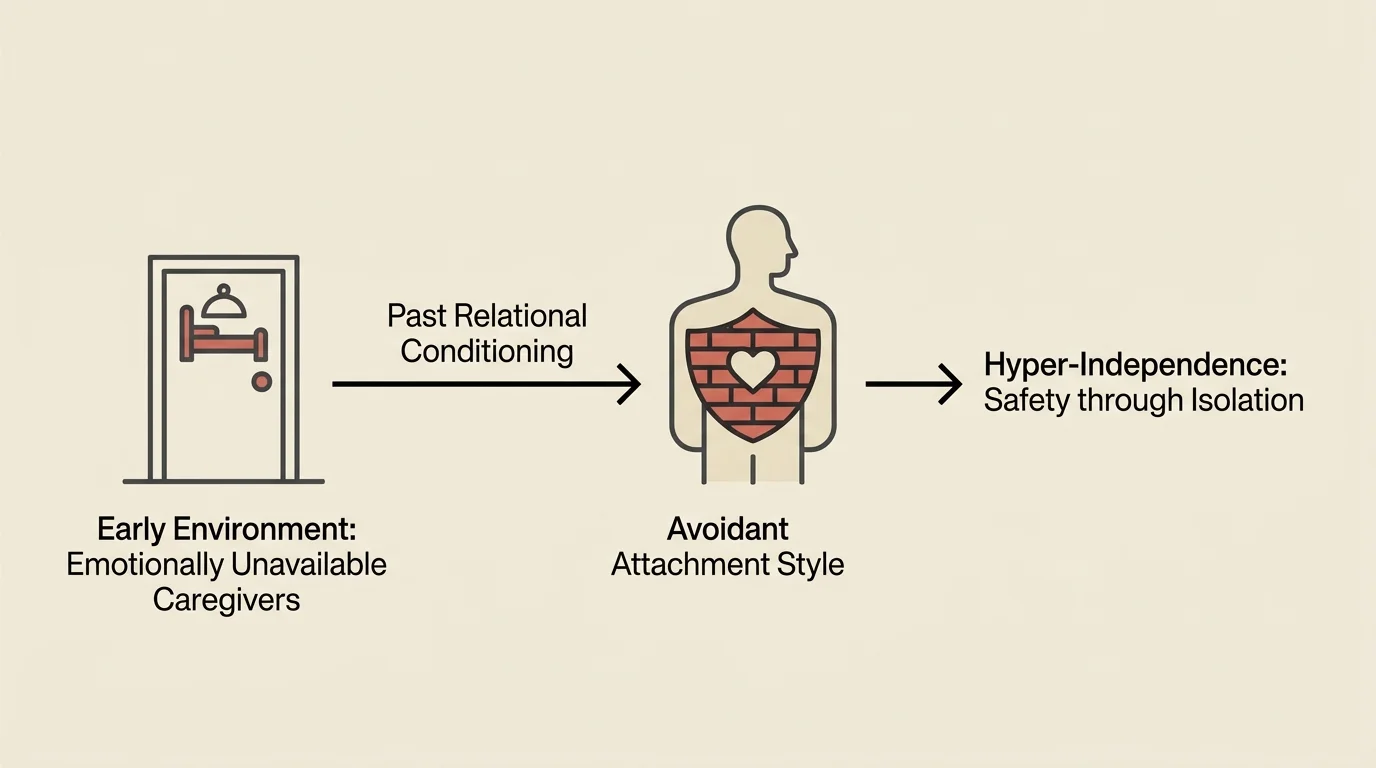
Societies often celebrate the myth of the rugged individual who conquers adversity entirely alone. However, developmental psychologists view extreme self-reliance not as an achievement, but as an adaptive coping strategy. When you examine why some people can’t accept help, the root cause rarely traces back to genuine capability; it stems from past relational conditioning. If you grew up in an environment where caregivers were emotionally unpredictable, unavailable, or critical, you quickly learned that depending on others produced distress rather than comfort.
In clinical psychology, this behavioral pattern aligns closely with an avoidant attachment style. According to research published by the American Psychological Association (APA), individuals with avoidant attachment tendencies frequently suppress their attachment needs to protect themselves from anticipated rejection or neglect. When you believe that external support is unreliable or dangerous, handling every challenge yourself feels like the only safe option. You build an emotional fortress where competence replaces intimacy, insulating you from the possibility of being let down.
Furthermore, early parentification—where a child assumes adult emotional or logistical responsibilities—cements the conviction that you must be the caregiver, never the care recipient. As an adult, you might find immense pride in being the person everyone leans on. Yet, this dynamic creates an uneven foundation in your relationships; giving gives you control, whereas receiving forces you to surrender it.
“When we attach judgment to receiving help, we knowingly or unknowingly attach judgment to giving help.” — Brené Brown, Ph.D., LMSW

8 Clear Signs You Struggle Accepting Help
Recognizing the difficulty receiving support signs in your daily life requires honest self-reflection. These patterns often masquerade as efficiency, high achievement, or consideration for others. Here are eight unmistakable indicators that your self-reliance has crossed into self-protection.
1. The Automatic “I’m Fine” Reflex
Someone notices your heavy workload or emotional strain and asks if they can assist. Before your brain can even evaluate your capacity, your mouth offers an immediate, knee-jerk dismissal: “No thanks, I’ve got it!” You treat offers of help like an intrusion rather than an olive branch. This reflex prevents you from checking in with your actual physical and psychological state, shutting down external aid before you even acknowledge that you are overwhelmed.
2. Overwhelming Guilt and the Phantom Debt Ledger
When circumstances force you to accept assistance, you do not feel relief; you feel anxiety. You view support through a transactional lens, immediately calculating an imaginary emotional debt that you must repay instantly. If a colleague covers a shift or a friend brings you dinner while you are sick, you obsess over how and when to balance the ledger. This guilt stems from a core belief that kindness is never unconditional and that accepting favor gives others leverage over your autonomy.
3. Excessive Apologizing and Over-Explaining
If you must ask for or receive assistance, you accompany the interaction with a barrage of apologies and defensive explanations. You find yourself saying, “I’m so sorry to bother you,” or offering extensive justifications for why you could not solve the problem on your own. You fear that needing assistance reflects poorly on your intelligence or work ethic, so you preemptively apologize to soften what you perceive as an imposition.
4. Equating Support with Personal Failure
You hold yourself to a double standard that you would never apply to others. When a friend seeks guidance, you view them as wise and proactive; when you require guidance, you view yourself as defective or incapable. You interpret the need for external resources as proof that your systems broke down. This cognitive distortion is one of the classic signs you struggle accepting help, linking the universal human need for collaboration with personal inadequacy.
5. Compulsive Caretaking as an Avoidance Strategy
You consistently rush to rescue, organize, and support everyone around you while aggressively guarding your own life from outside involvement. By playing the perpetual helper, you keep the conversational spotlight off your own vulnerabilities. Caretaking allows you to stay connected to people while maintaining emotional distance; you control the flow of intimacy without having to expose your tender spots.
6. Inability to Delegate Driven by Perfectionism
In workplace and domestic settings, you hoard tasks because you believe no one else can execute them to your exacting standards. Your internal narrative tells you, “It is faster and easier if I just do it myself.” While this feels like pragmatic time management, it is actually a manifestation of control anxiety. Letting someone else take the wheel requires tolerating their methods and potential mistakes, which feels intolerable when your sense of safety depends on complete control.
7. Silent Resentment and Emotional Isolation
You secretly feel unappreciated, exhausted, and isolated because no one seems to step up for you, yet you actively reject or fail to solicit support. According to insights from Psychology Today, chronic self-reliance frequently breeds deep relational resentment. You expect people to magically anticipate your needs without being asked, yet when they offer tangible help, you push them away. This paradox leaves you feeling uniquely burdened and fundamentally alone.
8. Minimizing Crises to Maintain an Unshakeable Facade
Even in the midst of genuine crises—such as severe illness, bereavement, or career collapse—you minimize your distress to outside observers. You make self-deprecating jokes about your burnout or insist that “other people have it much worse.” By downplaying your genuine suffering, you prevent others from seeing your vulnerability, effectively barring them from stepping in to hold space for you.

Healthy Interdependence vs. Self-Reliance to a Fault
Understanding the difference between healthy self-sufficiency and hyper-independence clarifies why extreme self-reliance harms your well-being. Human beings evolved as social creatures; our nervous systems co-regulate through meaningful connection, a concept extensively documented by Harvard Health research on relational wellness. Reviewing the comparison below helps you determine where your behaviors fall on the spectrum.
| Behavioral Dimension | Self-Reliance to a Fault (Hyper-Independence) | Healthy Interdependence |
|---|---|---|
| View of Assistance | Perceived as a sign of weakness, liability, or lost autonomy. | Recognized as a natural, reciprocal part of human community. |
| Internal Response to Help | Triggers anxiety, hypervigilance, and an urge to repay immediately. | Fosters gratitude, relief, and deeper relational closeness. |
| Delegation Style | Hoards tasks; micromanages or avoids delegation completely. | Shares responsibilities willingly and trusts others’ capabilities. |
| Vulnerability & Communication | Masks struggles behind an “I’m fine” persona; hides distress. | Communicates limitations clearly and asks for specific support. |
| Relational Balance | One-sided dynamic where you give constantly but never receive. | Balanced exchange where both giving and receiving flow naturally. |
What Can Go Wrong: The Hidden Toll of Extreme Self-Reliance
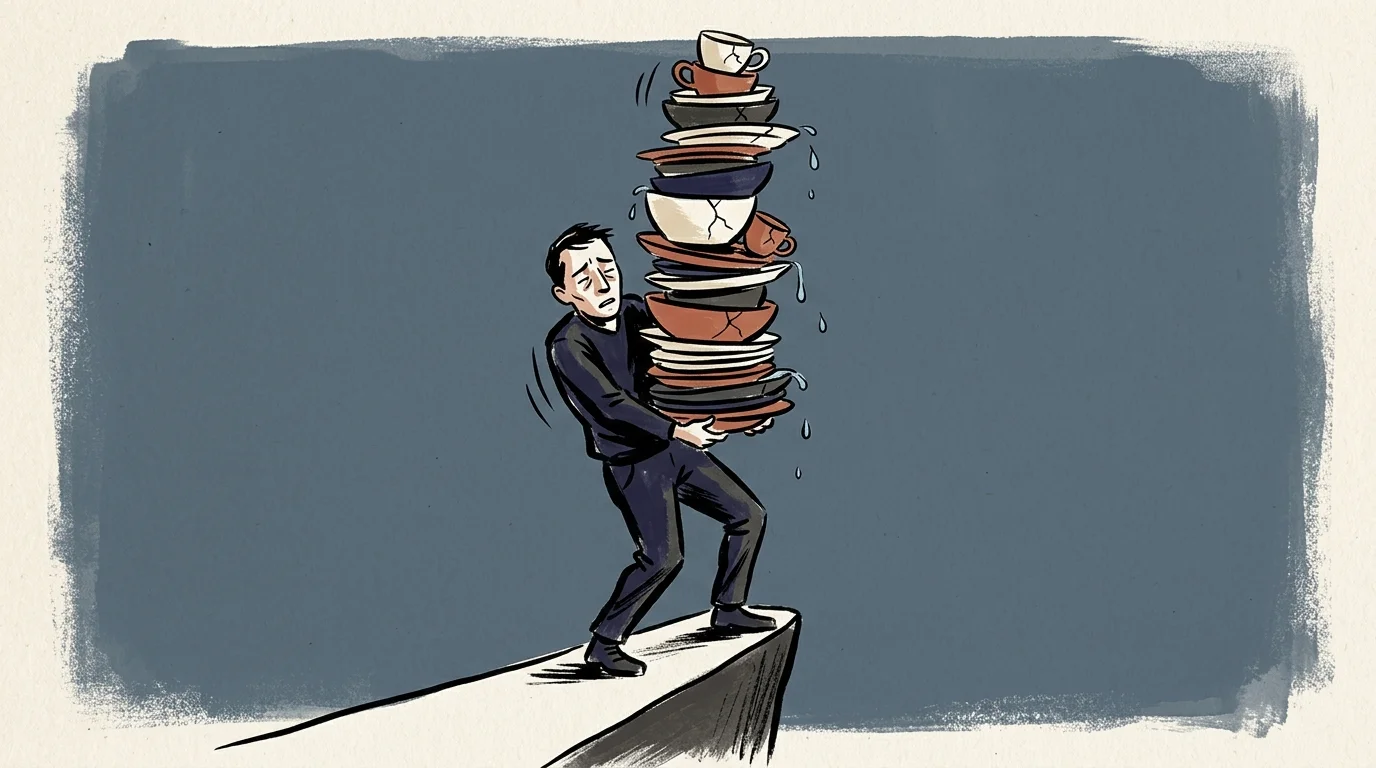
Refusing support rarely looks dangerous on the surface because modern culture routinely applauds self-sufficiency. However, signs of self reliance to a fault carry serious psychological, physical, and relational costs over time. Misunderstanding your hyper-independence as a virtuous personality trait blinds you to the damage it creates.
- Chronic Nervous System Dysregulation and Burnout: When your brain operates under the assumption that you have no safety net, your sympathetic nervous system stays in a state of low-grade, perpetual activation. Without shared loads, the cumulative physical and cognitive burden inevitably leads to clinical exhaustion, insomnia, and burnout.
- Erosion of Meaningful Intimacy: Relationships require reciprocal vulnerability. According to clinical frameworks from The Gottman Institute, allowing your partner or friends to support you builds trust and emotional safety. When you refuse to let others help you, you inadvertently deny them the opportunity to feel valued and trusted, creating emotional distance and accidental superficiality.
- Impaired Problem Solving: Tunnel vision is an inevitable consequence of prolonged stress. When you decline outside perspectives, feedback, or practical aid, you limit your options to your own bandwidth, often choosing inefficient or exhausting paths to solve complex problems.
- Deprivation of Community Joy: Generosity is a two-way street. When someone offers you a gift, a meal, or practical assistance, they experience the documented psychological benefit of prosocial behavior. Rejecting their generosity robs them of that connection and turns relationships into rigid, cautious transactions.

Practical Steps for Learning to Accept Help from Others
Unlearning defensive self-reliance does not happen overnight. Your nervous system must slowly learn that vulnerability does not equal catastrophe. Use these evidence-based strategies to build your capacity for healthy receiving.
- Practice the 5-Second Pause: When someone asks, “Can I help you with that?” interrupt your automated “No, I’m fine” reflex. Count to five internally. Check your energy levels, assess the workload, and ask yourself: Would accepting this make my life easier right now?
- Start with Micro-Acceptances: Do not begin by asking for monumental emotional support if that feels terrifying. Start small. Let someone hold an elevator door, allow a coworker to grab you a coffee, or let a friend carry one grocery bag. Notice that the world does not end and no debt is held over your head.
- Reframe Receiving as an Act of Generosity: Remind yourself how good it feels when you support someone you care about. When you accept help, you are granting the other person that exact same gift of connection and purpose. Give others the opportunity to show up for you.
- Dismantle the Imaginary Debt Ledger: When feelings of guilt surface after someone assists you, consciously name the emotion. Say to yourself: “This person helped me because they care, not to gain leverage. A simple ‘Thank you’ is complete payment.” Resist the urge to immediately perform an equal counter-favor.
- Use Structured, Low-Stakes Requests: If asking for help feels overwhelming, practice using clear, bounded scripts. Say, “I’m juggling several deadlines today; could you proofread this two-page document by 3 PM?” Specific requests reduce ambiguity and ease your fear of being a vague burden.

When to Seek Professional Support
While self-guided tools help you adjust daily habits, deep-seated resistance to support often points to unresolved emotional patterns that benefit from specialized care. Consider reaching out to a licensed mental health professional if you experience any of the following scenarios:
- Your inability to accept assistance is accompanied by severe anxiety, panic, or pervasive feelings of worthlessness whenever you feel vulnerable.
- A history of childhood emotional neglect, trauma, or parentification makes it impossible for you to trust anyone in your personal or professional life.
- You are experiencing severe physical or mental health burnout, yet your defense mechanisms prevent you from delegating tasks or seeking medical guidance.
- Your chronic hyper-independence is causing persistent conflict, emotional disconnection, or breakups in your romantic partnerships and close friendships.
Evidence-based modalities such as Cognitive Behavioral Therapy (CBT), Emotion-Focused Therapy (EFT), and attachment-informed therapy can help you rewire threat responses around vulnerability and develop secure, fulfilling relational patterns.
Frequently Asked Questions
Why does accepting help make me feel so uncomfortable?
Discomfort when accepting help usually indicates that your nervous system perceives receiving as a vulnerability or a threat to your autonomy. If you learned early in life that relying on others led to disappointment, criticism, or strings attached, accepting support activates an unconscious protective defense.
Is hyper-independence considered a trauma response?
Yes, psychologists frequently identify hyper-independence as a trauma response, particularly tied to relational trauma or emotional neglect. When caregivers or key figures fail to provide consistent safety, a person often adopts extreme self-sufficiency as a survival strategy to prevent future harm.
How do I tell my loved ones that I am working on accepting help?
Communicate transparently by saying something like: “I have realized that I have a habit of turning down support even when I need it. I’m actively working on changing that. If you see me struggling, feel free to offer a hand, and I will do my best to accept it without pushing you away.”
What is the difference between healthy self-reliance and hyper-independence?
Healthy self-reliance means you have confidence in your skills and can solve problems independently when needed, while remaining open to collaboration and support. Hyper-independence is rigid and fear-driven; it compels you to reject support even when doing so leads to exhaustion, isolation, and burnout.
Moving Toward Connected Living
Learning to accept help from others does not diminish your strength, capability, or independence. True resilience does not mean bearing every burden in solitary silence; it means knowing your limits, honoring your human needs, and allowing a trusted community to stand beside you. By identifying your defensive reflexes and practicing small moments of openness, you replace the exhausting armor of hyper-independence with the enduring safety of authentic connection.
This is educational content based on psychological research and general principles. Individual experiences vary significantly. For personalized guidance, consult a licensed therapist, psychologist, or counselor.
Last updated: February 2026. Psychology research evolves continuously—verify current findings with professional sources.









Leave a Reply