

You decline a ride in the pouring rain because you convince yourself walking three miles is easier than inconveniencing a friend. You hide your hardest struggles behind a reflexive smile, terrified that taking up space will push people away.
A persistent fear of being a burden distorts how you relate to others, transforming normal human interdependence into an unbearable emotional debt. Recognizing this hidden anxiety allows you to rebuild authentic, reciprocal connections.
When you identify the quiet habits that protect you from feeling burdensome, you can finally reclaim your right to belong. Here are the psychological indicators that explain why you keep holding yourself back.

The Psychology Behind Burden Anxiety
Psychologists define perceived burdensomeness as a cognitive distortion where an individual views their existence as an unwanted liability to others.
When you struggle with burden anxiety psychology, your nervous system interprets asking for help as a threat to your social safety.
This dynamic frequently stems from childhood experiences where emotional expression met parental withdrawal, criticism, or overwhelming stress.
Research published through the American Psychological Association demonstrates that insecure attachment patterns often reinforce fears that personal needs push others away.
Children raised in unpredictable environments frequently adopt parentified roles; they learn to suppress their feelings to preserve family harmony.
Over time, this survival tactic hardens into an unconscious adult belief: you are only worthy of love if you require nothing in return.
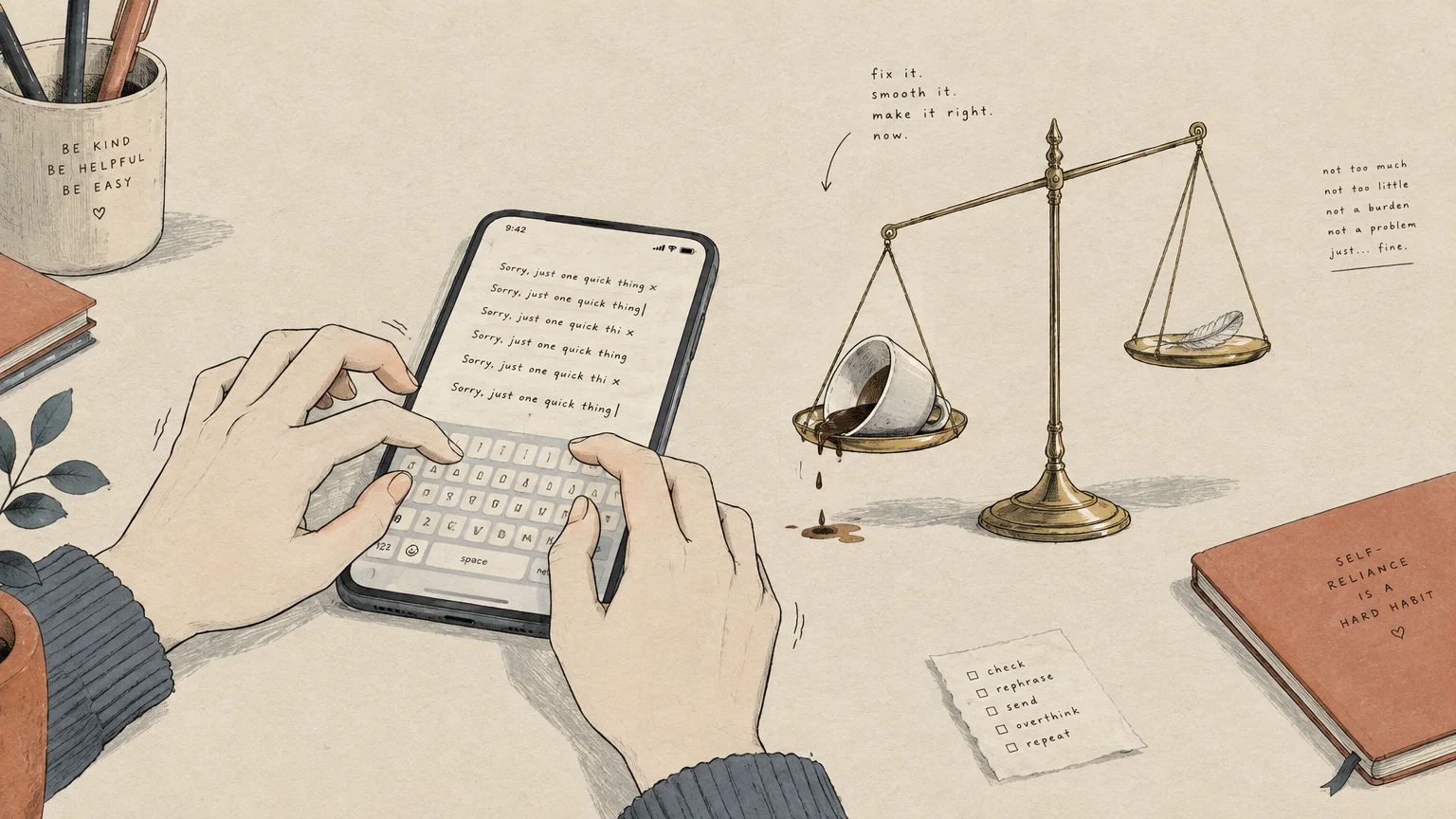
12 Signs Someone Has a Deep Fear of Being a Burden
Burden anxiety rarely announces itself with loud declarations. Instead, it surfaces through subtle behavioral adjustments and defensive relational habits.
1. Chronic and Reflexive Over-Apologizing
You apologize for taking up physical space, asking simple clarification questions, or existing in a shared room.
Phrases like “I am so sorry to bother you” or “Sorry, just one quick thing” become verbal armor designed to disarm potential frustration.
This constant apologizing does not reflect genuine wrongdoing; rather, it reflects a continuous internal plea for permission to exist.
2. Fierce, Compulsive Self-Reliance
People who hate asking for help often view self-sufficiency as a moral imperative rather than a practical skill.
You will carry heavy furniture alone, struggle through intense work deadlines without support, or research technical problems for hours before consulting anyone.
Relying on another person feels dangerous because you believe needing support imposes an unfair toll on their goodwill.
3. Minimizing Physical Illness and Emotional Pain
When you fall ill or suffer an injury, you downplay your symptoms to avoid causing alarm or inconvenience.
You might tell friends that a severe migraine is “just a mild headache” or attend social gatherings while visibly exhausted.
This behavior represents an attempt to keep your bodily and emotional vulnerability hidden from view.
4. Hypervigilance to Subtle Shifts in Mood
You instantly detect micro-expressions, shifts in vocal tone, or delayed text replies from friends and partners.
When someone sighs or looks weary, your mind automatically assumes responsibility for their discomfort.
According to clinicians writing for Psychology Today, emotional hypervigilance functions as an exhausting attempt to prevent interpersonal abandonment before it happens.
5. An Urgent Need to “Pay Back” Every Favor
Receiving support triggers an uncomfortable internal ledger that demands immediate balance.
If a colleague buys you coffee, you feel an urgent impulse to buy their lunch the following day.
You struggle to accept kindness as a gift; instead, you treat every generous act as a high-interest emotional loan.
6. Masking Vulnerability with Humor or Positivity
When serious emotional topics arise, you deflect discomfort with self-deprecating jokes or forced cheerfulness.
You package your pain into entertaining anecdotes so friends can laugh rather than worry about your well-being.
This strategy allows you to share personal events without making anyone feel obligated to carry your emotional weight.
7. Complete Indecision Over Simple Preferences
When a group asks where you want to eat, you default to “I don’t care, whatever everyone else wants.”
You fear that expressing a distinct preference might inconvenience someone or ruin their experience.
By erasing your desires, you hope to remain the easiest, lowest-maintenance person in the room.
8. Isolating During Times of Crisis
When life overwhelms you, your primary instinct is to withdraw completely rather than reach out to your support network.
You disappear for days or weeks, waiting until you resolve the crisis privately before reappearing with a polished smile.
You tell yourself that sharing your grief will bring people down, so you suffer in absolute solitude.
9. Deep Discomfort with Receiving Gifts or Compliments
Praise and unexpected presents make you squirm because you feel fundamentally undeserving of positive attention.
When someone highlights your achievements, you immediately credit luck, timing, or other contributors.
These reactions are classic emotional signs of low self-worth, where your mind rejects genuine appreciation to maintain an unburdened status.
10. Over-Functioning to Justify Your Presence
You arrive at dinner parties early to help cook and stay late to wash dishes, rarely sitting down to enjoy the company.
In relationships, you become the perpetual planner, emotional caretaker, and crisis manager.
You unconsciously believe your presence is only acceptable if you provide a clear, practical service that offsets your existence.
11. Reluctance to Initiate Contact
You rarely send the first text or schedule casual outings, even with your closest friends.
Your hesitation stems from a fear that your message will interrupt a busy workday or intrude on their personal time.
Tragically, this protective habit can cause friends to believe you are distant or uninterested in the relationship.
12. Assuming Neutral Behavior Equals Annoyance
A short reply or a neutral expression sends you into an anxious spiral of self-doubt.
You quickly conclude: “They are tired of me,” or “I finally pushed them too far.”
Your mind filters neutral social feedback through the painful assumption that everyone eventually tires of your presence.
“Until we can receive with an open heart, we’re never really giving with an open heart. When we attach judgment to receiving help, we knowingly or unknowingly attach judgment to giving help.” — Brené Brown, Ph.D., LMSW
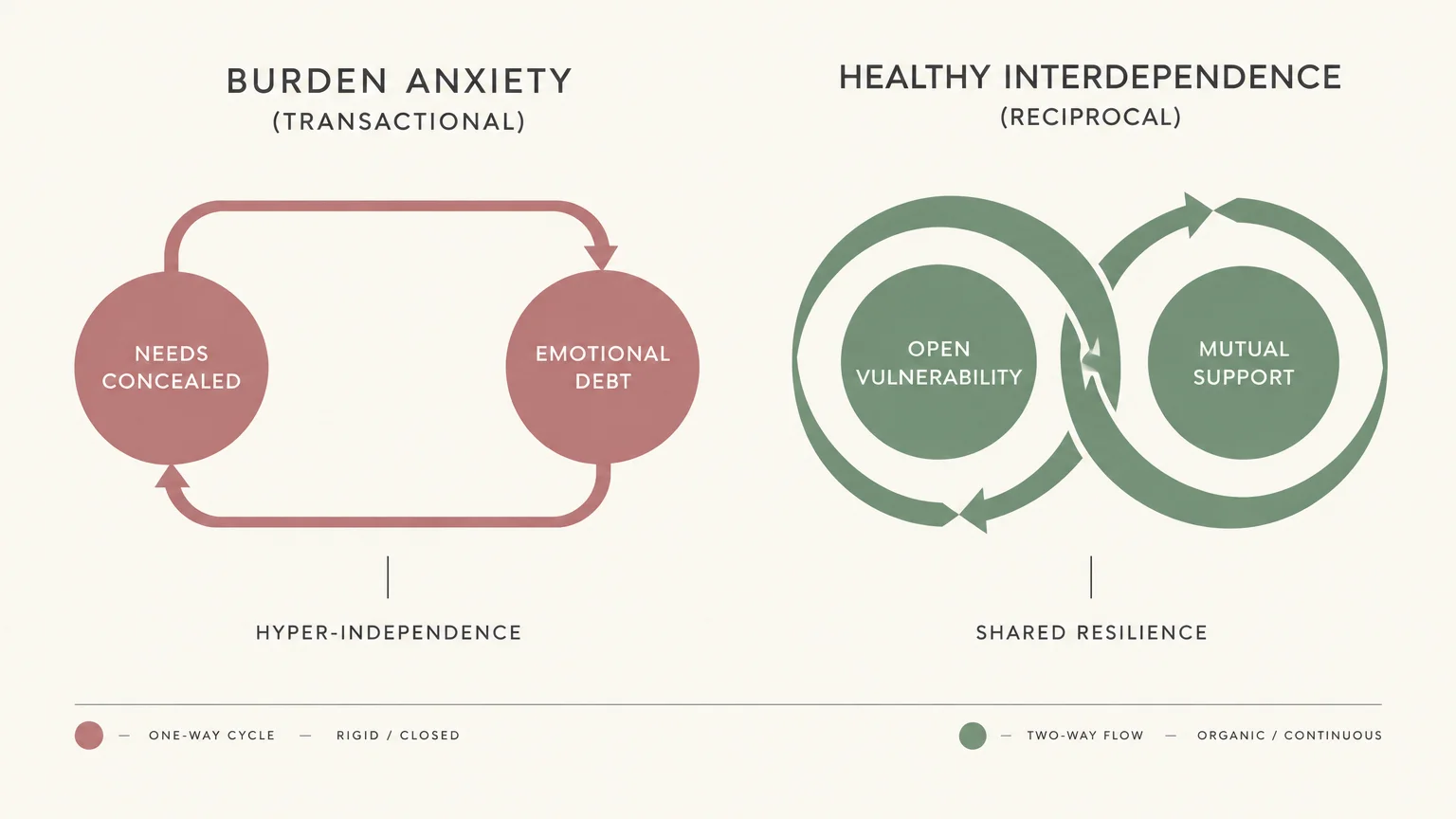
Healthy Interdependence vs. Burden Anxiety
Human beings thrive on social reciprocity. True connection requires giving and receiving support in equal measure.
The table below highlights how burden anxiety distorts relational dynamics compared to healthy interdependence.
| Relational Dynamic | Healthy Interdependence | Burden Anxiety Coping |
|---|---|---|
| Asking for Help | Views requests as normal opportunities for collaboration and connection. | Views requests as dangerous impositions that exhaust other people. |
| Receiving Care | Accepts kindness with gratitude and comfort. | Experiences acute guilt and an urgent need to repay the debt immediately. |
| Managing Conflict | Voices disagreements openly to foster mutual understanding. | Suppresses dissent to prevent discomfort or annoyance in others. |
| Handling Crisis | Reaches out to trusted loved ones for emotional anchoring. | Retreats into complete isolation until the crisis resolves privately. |
| Expressing Needs | States preferences clearly and negotiates boundaries comfortably. | Erases preferences to avoid becoming an inconvenience. |
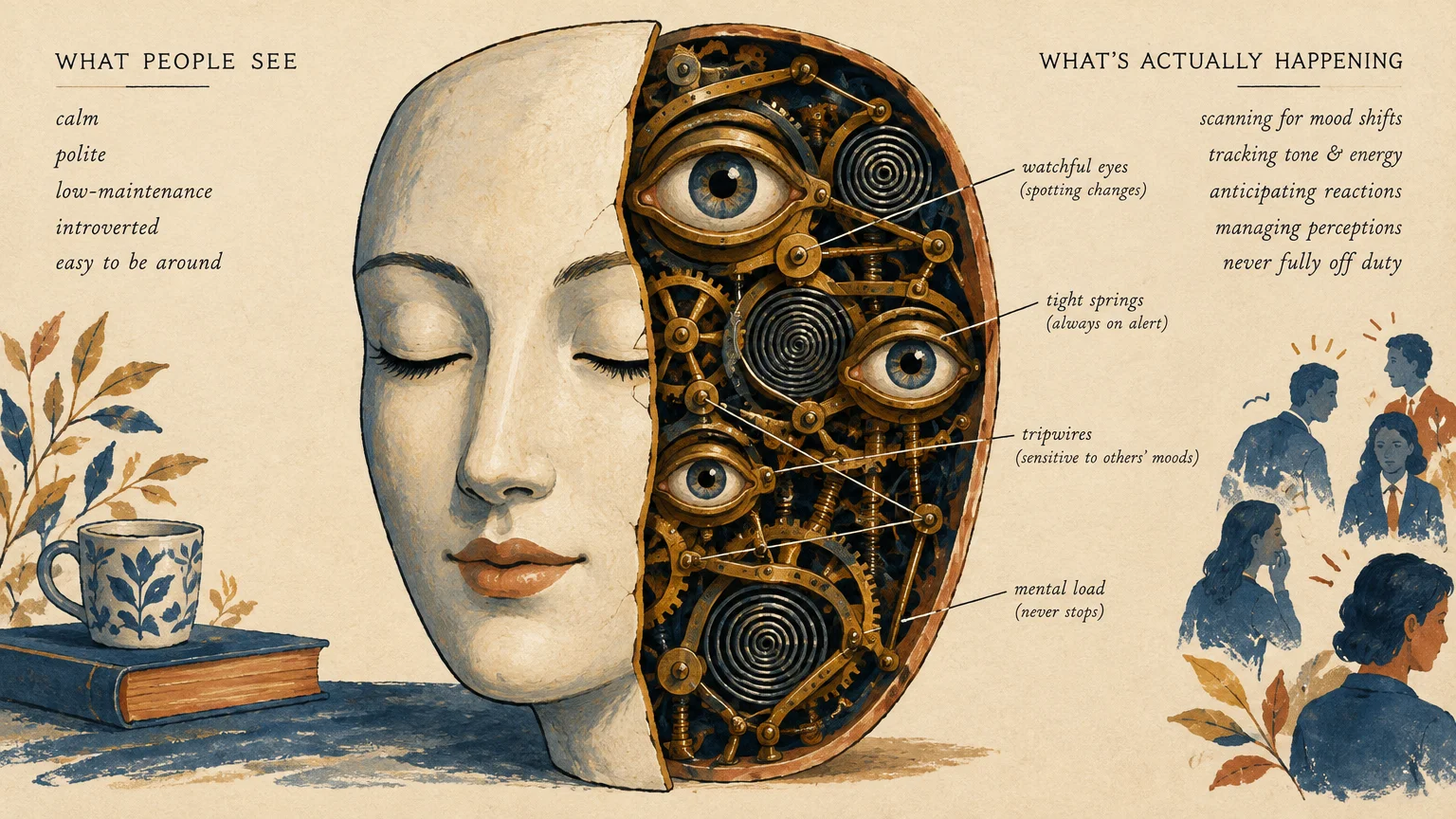
Common Misconceptions About Burden Anxiety
Because burden anxiety operates through quiet withdrawal and self-containment, observers frequently misunderstand the underlying motivation.
Clarifying these common misconceptions helps dismantle the stigma surrounding emotional avoidance.
- Misconception: They prefer being alone. Many people who withdraw crave deep connection; their isolation is a protective defense, not a social preference.
- Misconception: They are naturally low-maintenance. Extreme accommodation is often a learned survival response rather than an innate personality trait.
- Misconception: Reassuring them once solves the issue. Deeply ingrained fears of abandonment require consistent safety over time, not a single casual reassurance.
- Misconception: They do not trust their friends. Their hesitation usually reflects internal feelings of inadequacy rather than a lack of faith in loved ones.

Practical Steps to Unlearn the Fear of Taking Up Space
Rewiring this protective reflex takes deliberate practice and emotional patience. You cannot think your way out of a somatic fear; you must take new actions to experience safety.
Start small by practicing low-stakes vulnerability in supportive environments.
Ask a friend for a minor recommendation, or let a coworker hold the door without rushing to apologize.
Notice the physical sensations that arise when someone assists you. Allow yourself to feel the discomfort without rushing to fix it.
Next, replace reflexive apologies with genuine expressions of gratitude.
Instead of saying “Sorry for venting,” try saying “Thank you for listening to me today.”
This subtle shift reframes your conversation from an imposition into a moment of mutual trust.
Finally, practice vocalizing simple daily preferences.
When asked where to eat, pick a restaurant you enjoy. Giving your friends clear direction relieves them of decision-making fatigue.

Finding the Right Professional Help
While self-reflection helps identify signs of feeling like a burden, professional therapy often accelerates lasting recovery.
Consider seeking guidance from a licensed therapist if you experience any of the following patterns:
- Persistent Depressive Symptoms: Believing your loved ones would live happier lives without you requires immediate therapeutic care.
- Severe Burnout from Over-Functioning: Exhausting yourself by managing everyone else’s needs while ignoring your physical health.
- Inability to Maintain Intimacy: Constantly sabotaging close relationships whenever a partner attempts to support you emotionally.
- Deep-Seated Childhood Trauma: Unresolved emotional neglect that continues to dictate your adult self-worth.
Evidence-based modalities like Cognitive Behavioral Therapy (CBT) help challenge distorted thoughts regarding your social worth.
Similarly, Emotion-Focused Therapy (EFT) and attachment-informed counseling help you build safety around emotional vulnerability.
Organizations like the National Alliance on Mental Illness (NAMI) provide free resources and support groups to help navigate your healing journey.
Frequently Asked Questions
Why do I constantly feel like a burden to everyone?
This feeling usually originates from early relational experiences where your emotional needs were dismissed, criticized, or treated as exhausting chores.
How does fear of being a burden damage relationships?
Refusing to share your needs prevents genuine emotional intimacy and creates one-sided dynamics that leave partners feeling shut out.
Can childhood emotional neglect cause burden anxiety?
Yes. When caregivers ignore a child’s feelings, the child learns that expressing vulnerability threatens the relationship, fostering adult hyper-independence.
How do I respond when someone says they feel like a burden?
Validate their feelings without dismissing them. Say: “I love supporting you, and your presence in my life is never an inconvenience.”
Embracing Your Right to Belong
You do not need to earn your place on this planet through perpetual labor, silence, or self-erasure.
True friendship and enduring love require mutual vulnerability; allowing others to care for you is a gift that strengthens your bonds.
Start small, breathe through the initial discomfort, and remind yourself that your needs matter just as much as anyone else’s.
The information in this article is meant for educational purposes and general guidance. It does not replace individual therapy, counseling, or medical treatment. If you or someone you know is in crisis, contact the 988 Suicide & Crisis Lifeline by calling or texting 988.
Last updated: February 2026. Psychology research evolves continuously—verify current findings with professional sources.









Leave a Reply