

If everyday environments like crowded offices, harsh fluorescent lighting, or sudden emotional shifts in a room leave you drained, your nervous system may process the world through a heightened biological lens. Recognizing the core signs you’re a highly sensitive person allows you to transform what feels like chronic overwhelm into your greatest psychological strength. Coined in scientific literature as Sensory Processing Sensitivity (SPS), this trait shapes roughly 30 percent of the population across cognitive, physiological, and emotional dimensions. Rather than viewing your depth of feeling as a vulnerability, understanding your distinct HSP characteristics equips you to establish restorative boundaries, prevent sensory overload, and thrive in an overstimulating modern world.
Understanding Sensory Processing Sensitivity: The Science Behind the Trait
Sensory Processing Sensitivity (SPS) is not a psychological disorder, a character flaw, or an emotional weakness. First identified in the 1990s by clinical psychologists Dr. Elaine Aron and Dr. Arthur Aron, SPS represents an innate, genetically influenced temperament trait. Research published in the Journal of Personality and Social Psychology demonstrated that individuals with high sensitivity possess a central nervous system that perceives, filters, and processes environmental stimuli far more deeply than the average person.
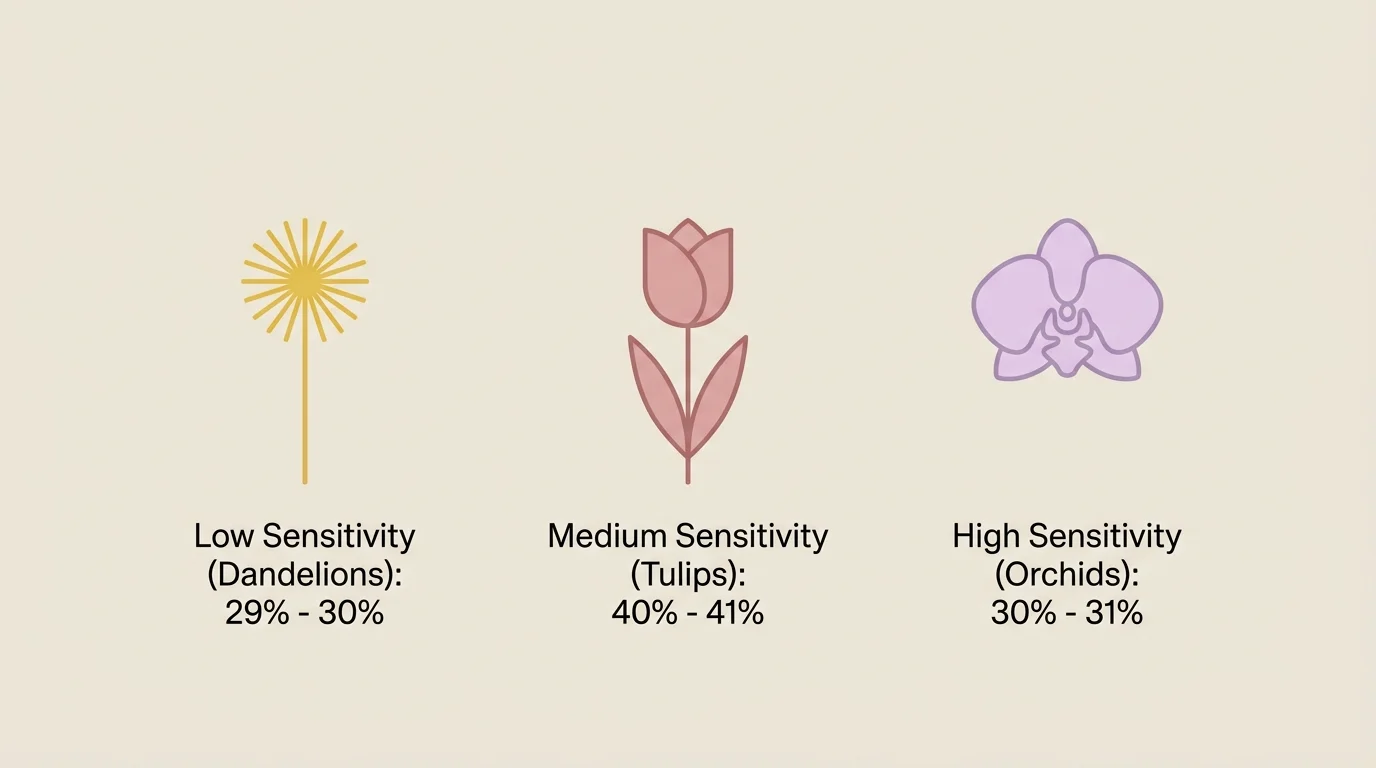
Subsequent genetic and neuroimaging studies have validated these findings. A landmark twin study published in Molecular Psychiatry (Assary et al., 2020) revealed that approximately 47% of the variance in environmental sensitivity is heritable, with the remaining 53% shaped by environmental factors. Furthermore, research led by Francesca Lionetti (2018) classified the population into three distinct sensitivity groups rather than a simple binary:
- Low Sensitivity (“Dandelions”): Roughly 29% to 30% of the population, who remain resilient and relatively unaffected by fluctuations in their physical or emotional environment.
- Medium Sensitivity (“Tulips”): Approximately 40% to 41% of people, who exhibit a moderate degree of sensitivity to environmental stressors and social conditions.
- High Sensitivity (“Orchids”): The top 30% to 31% of the population, who flourish exceptionally in supportive, low-stress environments but struggle significantly in chaotic or toxic surroundings.
Evolutionary biologists have documented sensory processing sensitivity in more than 100 non-human species, ranging from primates and canines to birds and fish. This cross-species persistence indicates that high sensitivity serves a vital evolutionary purpose: observing subtle environmental shifts, detecting unseen threats early, and making careful, reflective decisions that protect the collective group.
“When someone really hears you without passing judgment on you, without trying to take responsibility for you, without trying to mold you, it feels damn good.” — Carl Rogers, Ph.D.
To differentiate SPS from other personality markers, Dr. Aron developed the D.O.E.S. framework, which outlines the four fundamental pillars of the trait:
- D — Depth of Processing: You automatically analyze information on a profound level, drawing connections, reflecting on past experiences, and considering long-term consequences before acting.
- O — Overstimulation: Because your nervous system takes in every sight, sound, smell, and emotional nuance, you reach sensory and cognitive saturation faster than others.
- E — Emotional Reactivity and High Empathy: Functional MRI studies show that highly sensitive people exhibit elevated activation in mirror neuron networks and the insula when viewing emotional expressions, resulting in profound empathetic resonance.
- S — Sensitivity to Subtle Stimuli: You readily perceive minor environmental changes that others overlook, such as faint background humming, subtle tonal shifts in someone’s voice, or minor changes in room lighting.
The 8 Core Signs You Are a Highly Sensitive Person
While every individual expresses their temperament uniquely, specific patterns distinguish sensory processing sensitivity. Here are the eight primary emotional sensitivity signs and highly sensitive person traits supported by clinical research.
1. You Process Everyday Information on an Exceptionally Deep Level
You rarely take events, conversations, or decisions at face value. Instead, your mind operates like a high-powered search engine, cross-referencing new data with previous memories, ethical frameworks, and potential future scenarios. Before making a significant decision—such as accepting a job offer, relocating, or committing to a relationship—you weigh every variable thoroughly.
While this deep cognitive processing fosters exceptional problem-solving abilities and thoroughness, it can also manifest as analysis paralysis. When faced with too many choices or high-stakes outcomes, your thorough evaluation can stall action, causing mental fatigue long before you make a definitive move.
2. You Experience Rapid Sensory Overload in Chaotic Environments
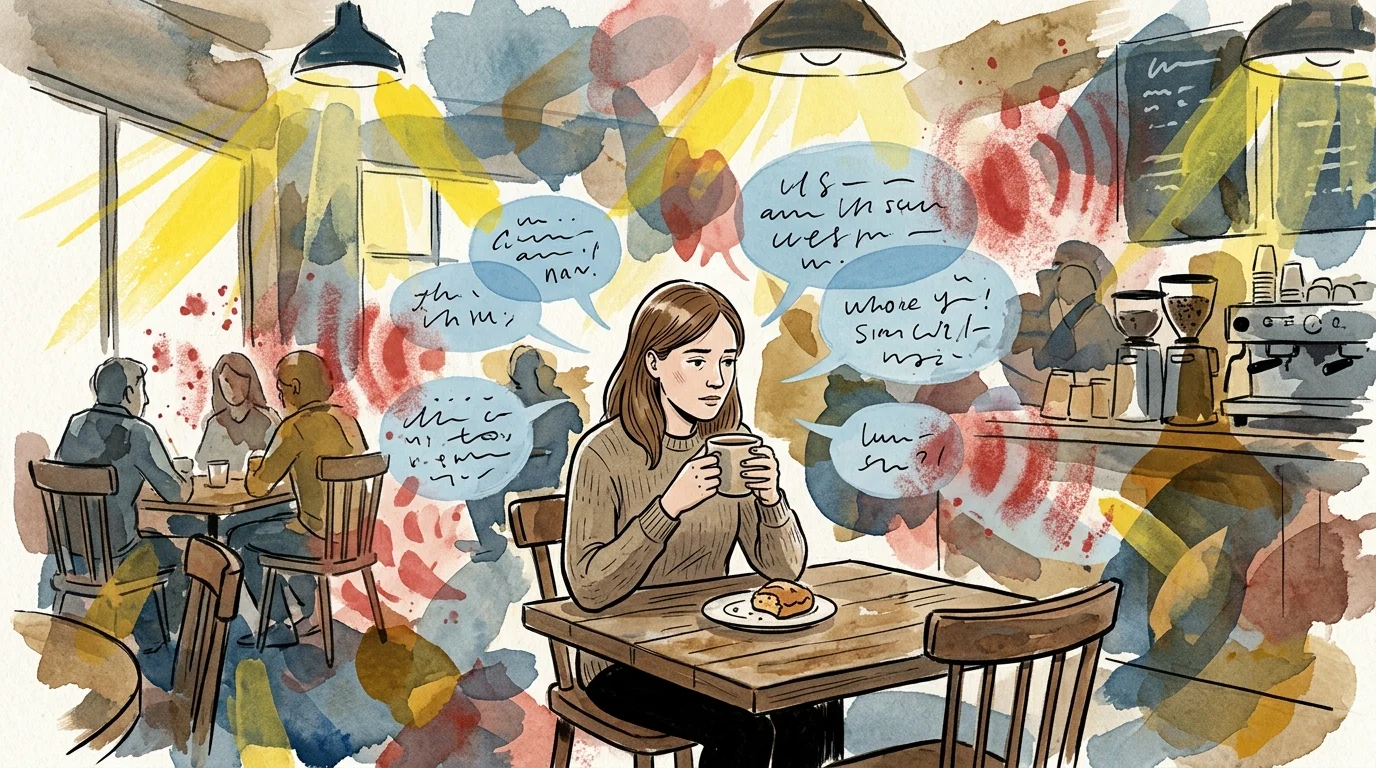
Open-plan offices, crowded shopping malls, blaring music, and flickering fluorescent lights do not merely irritate you; they exhaust your neurological resources. Because your brain does not filter out ambient noise as aggressively as a non-HSP brain, you absorb the full volume of sensory input simultaneously.
When exposed to sustained chaos without a break, you may experience classic signs of sensory overload: physical tension, irritability, brain fog, sudden headaches, or an urgent desire to flee to a dark, quiet room. According to clinical guidance from the American Psychological Association, managing environmental stressors directly mitigates chronic nervous system dysregulation.
3. You Possess Elevated Empathy and Absorb Others’ Emotions
If someone enters the room feeling anxious, angry, or heartbroken, you sense it immediately—often before they say a word. Your mirror neuron system fires with high intensity, causing you to not only recognize what another person is experiencing but actually feel those emotional states within your own body.
This deep emotional resonance makes you a compassionate friend, skilled mediator, and perceptive partner. However, without clear energetic boundaries, you risk emotional contagion: absorbing other people’s stress, sadness, and resentment until you can no longer distinguish your authentic feelings from the emotions of those around you.
4. You Notice Subtle Environmental and Social Cues That Others Miss
Your perception acts like a high-definition camera lens. You pick up on microscopic changes in a colleague’s body language, slight hesitations in conversation, a faint burning odor in the kitchen, or a subtle change in room temperature that no one else detects.
In professional settings, this perceptual acuity enables you to catch critical errors, anticipate client needs, and resolve team tensions before they escalate. Socially, it allows you to connect deeply with others because you notice the unspoken needs hidden behind polite conversation.
5. You Require Dedicated Decompression Time After Social Demands
Even when you enjoy social gatherings, parties, or collaborative work sessions, sustained interaction depletes your battery. You need intentional, uninterrupted solitude in a low-stimulation space to bring your nervous system back to baseline equilibrium.
Contrary to popular belief, high sensitivity is not identical to introversion. Research from Dr. Elaine Aron shows that roughly 70% of HSPs are introverts, while approximately 30% are extroverts. Extroverted HSPs (often referred to as High Sensation Seeking HSPs) seek novel experiences, community, and social connection, yet their nervous systems still require quiet downtime to recover from the sensory input of those activities.
6. You Have a Rich, Complex Inner Life and Deep Aesthetic Appreciation
Music, visual art, profound literature, and natural landscapes evoke intense, physical reactions in you. A moving musical harmony might give you chills, while a sunset or thought-provoking film can leave you deeply contemplative for days.
From an early age, you likely spent significant time daydreaming, writing, creating, or pondering existential questions. This rich internal landscape provides a profound source of joy, meaning, and resilience, giving you a creative edge in artistic, analytical, and human-centered professions.
7. You Experience Intense Discomfort with Time Pressure and Multi-Tasking
When you have a massive to-do list combined with tight, urgent deadlines, your nervous system goes into overdrive. Juggling multiple competing priorities simultaneously fractures your focus and spikes your cortisol levels.
Furthermore, if someone watches you perform a task—such as typing an email, taking a driving test, or giving a presentation—your performance may drop significantly despite your high competence. This performance anxiety stems directly from the overwhelming cognitive load of managing the task alongside the heightened awareness of being observed.
8. You Exhibit Heightened Physical and Physiological Sensitivity
Your sensitivity extends directly into your physiological and metabolic systems. Highly sensitive people frequently report:
- Strong physical reactions to stimulants like caffeine or medications, often requiring lower dosages than standard recommendations.
- Severe mood swings or cognitive crashes when hungry (intense “hanger”) due to acute blood sugar sensitivity.
- Physical irritation from scratchy clothing fabrics, tight waistbands, or shirt tags.
- A lower pain threshold and heightened sensitivity to changes in weather, air quality, or room humidity.
These physiological responses confirm that SPS is a biological trait wired into your somatic framework, as documented across biological databases via the National Institutes of Health.
HSP vs. Introversion vs. Sensory Processing Disorder vs. Anxiety
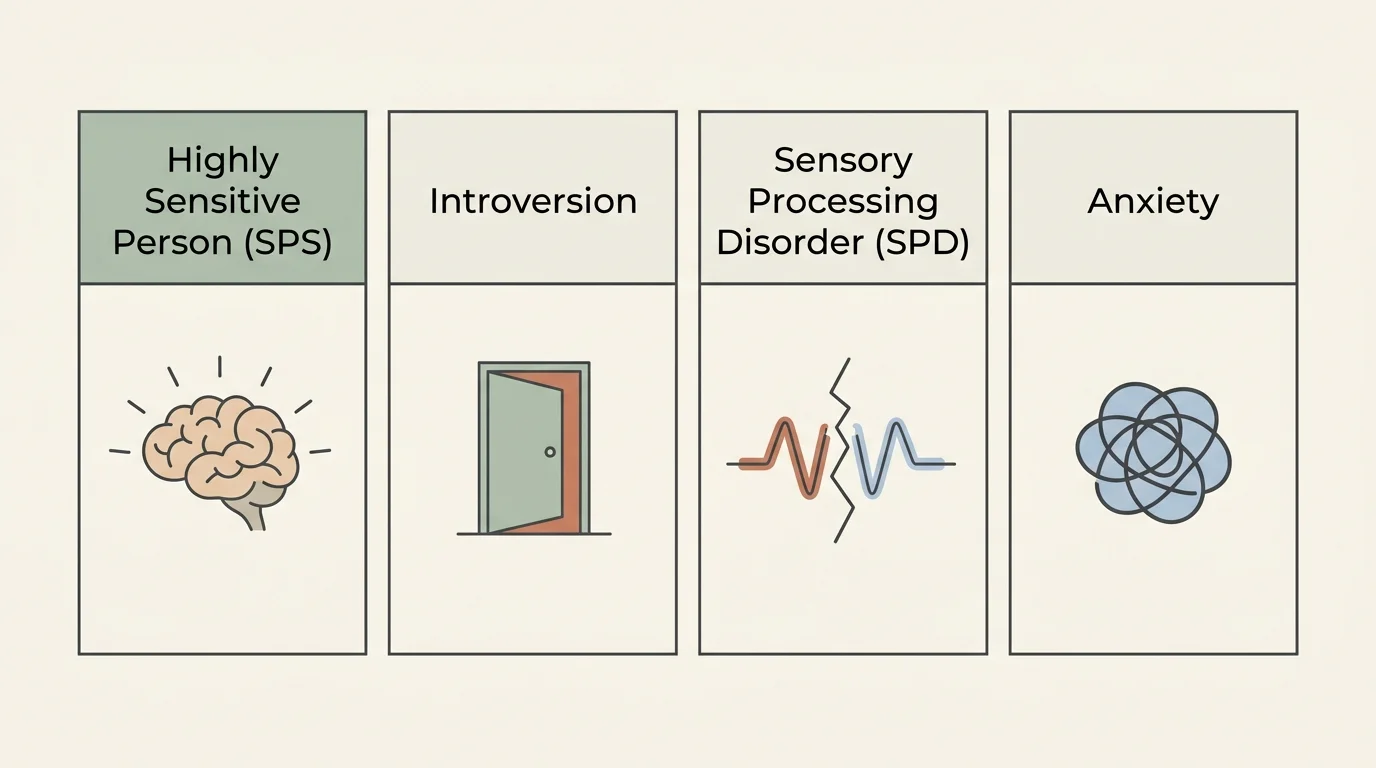
Because the signs of high sensitivity overlap with several psychological and neurological profiles, individuals frequently confuse Sensory Processing Sensitivity with introversion, neurodivergence, or clinical anxiety. The table below clarifies the primary distinctions across these categories.
| Dimension | Sensory Processing Sensitivity (HSP) | Introversion | Sensory Processing Disorder (SPD) | Generalized Anxiety Disorder (GAD) |
|---|---|---|---|---|
| Core Mechanism | Deep cognitive and emotional processing of environmental stimuli. | Preference for low-stimulation social environments to restore energy. | Neurological difficulty organizing and responding to sensory information. | Persistent, excessive worry and apprehension about various life events. |
| Clinical Status | Innate personality trait (not in DSM-5-TR or ICD-11). | Normal personality dimension (Jungian / Big Five). | Neurological condition (often managed via Occupational Therapy). | Classified mental health disorder requiring clinical intervention. |
| Origin | Genetic (47% heritable) and evolutionary trait. | Temperament orientation (dopamine sensitivity pathways). | Neurological atypicality in sensory signal integration. | Combination of genetics, neurochemistry, trauma, and chronic stress. |
| Response to Low-Stimulus Rest | Rapidly restores calm, clarity, and emotional equilibrium. | Recharges social battery and mental focus. | May reduce immediate distress but does not alter sensory integration deficits. | May not relieve internal, intrusive worry loops without cognitive tools. |

Actionable Daily Strategies to Protect and Harness Your Sensitivity
Navigating modern society with an orchid-type nervous system requires proactive management rather than passive endurance. Implement these evidence-based strategies to optimize your daily well-being.
1. Conduct a Sensory Environment Audit
Identify and minimize unnecessary sensory inputs in your home and workspace. Replace harsh overhead fluorescent bulbs with warm, diffused lamps. Invest in high-quality noise-canceling headphones to filter out background hums during deep work. Opt for soft, natural fabrics in your wardrobe, and clear visual clutter from your immediate workspace to decrease unconscious cognitive processing.
2. Build Restorative “Sensory Buffers” into Your Schedule
Avoid scheduling back-to-back social events, intense meetings, or errands without interstitial breaks. Establish a non-negotiable 15-to-30-minute transition period between demanding activities. Use this time to sit in silence, practice diaphragmatic breathing, or take a quiet walk outside without listening to podcasts or looking at your phone.
3. Establish Clear Emotional Boundaries
Because you naturally absorb external feelings, you must deliberately distinguish your emotions from those around you. When you feel a sudden surge of tension, anger, or sadness during a social interaction, pause and ask yourself: “Is this emotion mine, or am I carrying it for someone else?”
“Vulnerability is not winning or losing; it’s having the courage to show up and be seen when we have no control over the outcome.” — Brené Brown, Ph.D., MSW
Practice saying clear, compassionate nos without over-explaining your reasons. You do not need to justify your need for quiet, rest, or space to anyone.
4. Reframe Sensitivity as a Strategic Asset
Shift your internal narrative from viewing sensitivity as a burden to recognizing it as an advanced processing capacity. Your heightened empathy makes you an exceptional communicator; your depth of processing fuels rigorous creative and intellectual output; your perception of subtleties prevents critical operational mistakes. When you protect your nervous system from chronic depletion, your sensitivity becomes your competitive advantage.
What Can Go Wrong: Navigating Common Misconceptions and Vulnerabilities
Understanding highly sensitive personality traits requires recognizing the common pitfalls and psychological traps that can develop if the trait remains unmanaged.
- The “Fragility Trap”: Some individuals use the HSP label as a justification for complete avoidance of life’s challenges, retreating from discomfort and expecting the world to accommodate their every preference. High sensitivity indicates a responsive nervous system—it does not signify helplessness. Resilience is built through managed exposure and intentional recovery.
- Confusing Trauma Hypervigilance with Innate Sensitivity: Unresolved developmental trauma or chronic stress can cause hypervigilance—a state of constant threat scanning that mimics the subtle perceptual acuity of an HSP. While an HSP naturally notices beauty and nuanced social dynamics with equal depth, hypervigilance focuses almost exclusively on perceived danger, rejection, and threat.
- Chronic Empathy Burnout: Highly sensitive individuals often fall into people-pleasing patterns and codependency because they feel other people’s discomfort acutely. Trying to manage or fix everyone else’s emotional state to maintain peace will inevitably lead to exhaustion and chronic resentment. Explore resources on Psychology Today to learn effective interpersonal boundary techniques.

When to Seek Professional Support
While high sensitivity is an innate trait rather than a mental illness, living in an overstimulating world can place significant stress on an unsupported nervous system. Consider seeking guidance from a licensed therapist or mental health professional in the following situations:
- Sensory Overwhelm Transitions into Chronic Panic or Agoraphobia: If sensory saturation causes regular panic attacks, severe health anxiety, or complete avoidance of public spaces, evidence-based therapies like Cognitive Behavioral Therapy (CBT) or Acceptance and Commitment Therapy (ACT) can help you rebuild distress tolerance.
- Difficulty Differentiating Sensitivity from Trauma Responses: If your heightened sensitivity is accompanied by intrusive memories, hyper-reactivity to benign stimuli, or persistent feelings of detachment, a trauma-informed clinician can assess for Post-Traumatic Stress Disorder (PTSD) or complex trauma.
- Deep Empathy Leads to Clinical Depression or Burnout: When emotional absorption results in chronic despair, feelings of worthlessness, or an inability to function at work or in relationships, professional mental health care provides targeted stabilization. For deeper insights on managing mood challenges, consult educational materials from Verywell Mind.
- Severe Relationship Distress Caused by Emotional Flooding: If you or your partner experience frequent emotional shutdowns, explosive conflict, or complete withdrawal during difficult conversations, couples counseling can establish safe communication protocols.
Frequently Asked Questions
Is being a Highly Sensitive Person a formal medical or mental health diagnosis?
No. Sensory Processing Sensitivity (SPS) is an innate, biologically based personality trait, not a mental disorder. It is not listed in the Diagnostic and Statistical Manual of Mental Disorders (DSM-5-TR) or the International Classification of Diseases (ICD-11). It reflects normal human variation in neurological processing.
Can someone be both an extrovert and a Highly Sensitive Person?
Yes. Approximately 30% of highly sensitive people are extroverts. Extroverted HSPs thrive on social connection, novelty, and stimulating projects, but they still possess a sensitive nervous system that requires deliberate quiet time to process experiences and prevent sensory exhaustion.
Is high sensitivity the same thing as autism or ADHD?
No, though they share overlapping characteristics such as sensory sensitivity and intense focus. While autism and ADHD are neurodevelopmental conditions involving specific differences in communication, executive functioning, and developmental trajectories, SPS is a temperament trait defined primarily by deep cognitive processing and heightened empathy without the diagnostic criteria of autism or ADHD.
Can you change or “cure” high sensitivity?
Because Sensory Processing Sensitivity is an innate, genetically influenced trait (roughly 47% heritable), you cannot eliminate or “cure” it. However, you can dramatically change how you manage your environment, regulate your nervous system, and set boundaries, transforming the trait from a source of daily stress into a powerful personal asset.
Moving Forward with Compassion and Strength
Living as a highly sensitive person in a world built for speed, volume, and relentless productivity presents genuine challenges. Yet, your capacity for deep reflection, profound empathy, and acute perceptual awareness represents an invaluable human strength. By honoring your nervous system’s need for quiet recovery, designing environments that nourish rather than drain you, and holding firm boundaries, you can cultivate a resilient, meaningful life.
This article provides general educational information about psychology and relationships. It is not a substitute for professional therapy or medical advice. Everyone’s situation is unique—if you’re struggling, please reach out to a licensed mental health professional.
Last updated: February 2026. Psychology research evolves continuously—verify current findings with professional sources.





Leave a Reply