

You feel a sudden chill when conversations turn intimate, leaving you wondering why your partner abruptly retreats behind emotional walls. Recognizing these subtle defense mechanisms helps you address relationship intimacy issues early.
Emotional avoidance rarely stems from malice; it usually acts as an unconscious protective armor against perceived vulnerability. When someone fears closeness, they develop behaviors that deliberately keep their loved ones at arm’s length.
Identifying these patterns enables both partners to navigate emotional unavailability with clarity and empathy. Here are twelve grounded, observable signs of emotional avoidance in relationships and practical tools to rebuild genuine connection.
Understanding Emotional Avoidance and Avoidant Attachment
Emotional avoidance is an automatic coping strategy designed to minimize psychological distress. People adopt this pattern when vulnerability feels threatening or unsafe.
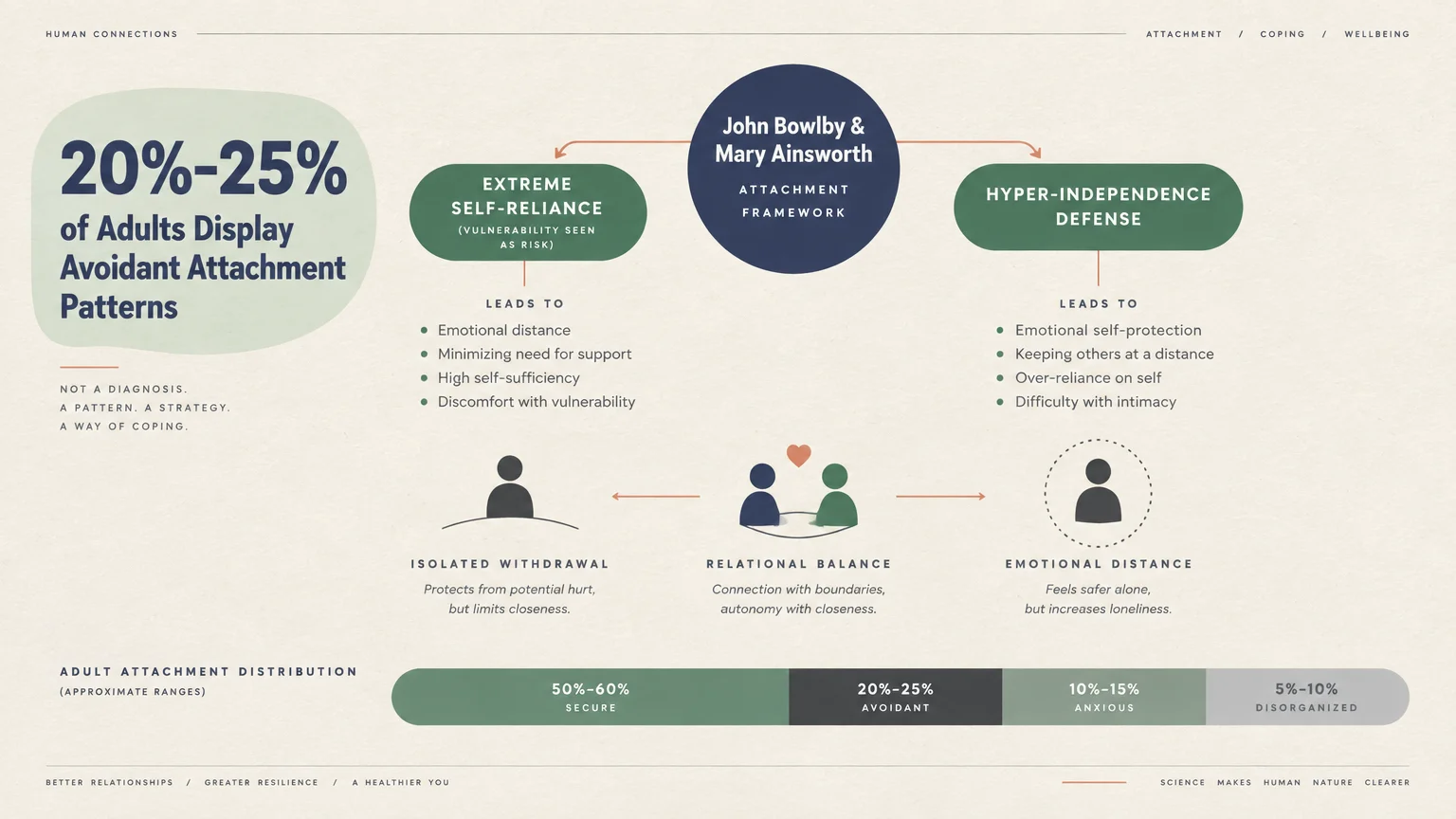
Attachment researchers classify this tendency under avoidant attachment, a framework established by John Bowlby and Mary Ainsworth. According to the American Psychological Association, adult attachment styles heavily shape how individuals manage intimacy and conflict.
Studies estimate that roughly 20 to 25 percent of adults display avoidant attachment patterns. These individuals often value self-reliance to an extreme degree, viewing emotional reliance on others as a dangerous weakness.
Recognizing these avoidant partner signs gives you the insight needed to respond constructively rather than reactively. When you understand the root cause of the distance, you can interact with compassion while holding healthy boundaries.

12 Distinct Behaviors That Signal Emotional Avoidance
1. Stonewalling and Sudden Withdrawal During Conflict
When disagreements arise, an avoidant partner may freeze, walk out of the room, or stare silently. They treat your attempts to communicate like an overwhelming attack rather than a conversation.
Research from The Gottman Institute identifies stonewalling as a primary predictor of relationship instability. During these moments, the avoidant individual experiences physiological flooding, causing their nervous system to shut down entirely.
2. Deflecting Serious Moments with Sarcasm and Humor
Whenever you try to discuss deep feelings, an avoidant partner might crack a joke or make light of the situation. They use humor as an emotional shield to break genuine tension.
While levity has its place, chronic deflection prevents authentic bonding. It invalidates your emotional reality and keeps conversations strictly superficial.
3. Rigid Hyper-Independence
Avoidant individuals take excessive pride in never asking for assistance. They insist on managing every crisis, errand, and burden entirely on their own.
This hyper-independence creates an invisible barrier in romantic partnerships. By refusing to need you, they ensure they never have to depend on you for comfort or safety.
4. Over-Intellectualizing Emotions
Instead of feeling an emotion, an avoidant person will analyze it like a math equation. They debate the cold logic of an argument while completely ignoring the underlying hurt.
Psychologists refer to this behavior as intellectualization, a psychological defense mechanism where abstract thinking replaces uncomfortable emotional experiences. You end up having a clinical debate instead of an empathetic exchange.
5. Longing for a “Phantom Ex” or Unattainable Ideal
An avoidant partner may fixate on a past relationship, believing that previous partner was their one true soulmate. Alternatively, they invent an unrealistic checklist that no living human could ever satisfy.
This phantom ideal serves a convenient psychological purpose. By yearning for someone unattainable, they protect themselves from risking vulnerability with the person standing right in front of them.
6. Using Chronic Busyness as a Shield
Work commitments, packed gym schedules, and endless hobbies can function as socially sanctioned escape routes. An avoidant partner stays constantly occupied so quiet moments of connection rarely happen.
When your partner’s calendar always takes precedence over emotional presence, intimacy quickly deteriorates. Busyness provides a continuous excuse to postpone difficult, honest dialogues.
7. Invalidation of Vulnerability in Others
Avoidant partners often react to tears or distress with visible irritation, coldness, or judgment. They might label your natural emotional reactions as dramatic or needy.
Because they aggressively suppress their own internal pain, witnessing your emotional expression triggers deep discomfort. Their dismissal protects them from confronting the feelings they work tirelessly to hide.
8. Compartmentalizing Physical and Emotional Intimacy
Some avoidant individuals enjoy vibrant physical connections but emotionally disconnect the second physical intimacy concludes. They may roll over, check their smartphone, or immediately leave the room.
According to clinical resources from the Cleveland Clinic, this compartmentalization separates sex from genuine emotional attachment. It allows the partner to satisfy physical needs without facing emotional exposure.
9. The Vulnerability Hangover Retreat
Have you ever shared a magically close weekend, only for your partner to vanish emotionally on Monday? This sudden withdrawal is often called a vulnerability hangover.
Experiencing profound closeness terrifies an avoidant nervous system. To restore their internal equilibrium, they instinctively pull away to re-establish emotional control.
10. Hyper-Fixating on Minor Flaws
Avoidant partners frequently magnify tiny imperfections in their partners, such as how you chew, dress, or organize your car. Attachment theorists classify these behaviors as deactivating strategies.
By focusing on these inconsequential flaws, they convince themselves that the relationship cannot possibly work. This irrational critique creates a psychological pretext to maintain emotional distance.
11. Reluctance to Define or Plan the Future
Conversations about moving in together, marriage, or next summer’s vacation often trigger evasion or non-committal murmurs. Long-term commitments feel like suffocating traps to an avoidant mind.
This resistance leaves you feeling unsettled and insecure about your standing in their life. The avoidant partner views open-ended flexibility as their only guarantee of personal survival.
12. Passive-Aggressive Outbursts Instead of Direct Requests
Because avoidant individuals fear direct confrontation, they rarely state their grievances openly. Instead, their unexpressed frustrations leak out through silent treatments, subtle eye rolls, or barbed remarks.
This indirect communication creates persistent confusion and resentment in the relationship. Over time, both partners find themselves walking on eggshells to prevent covert hostility.

Patterns to Watch For: Avoidance vs. Healthy Boundaries
People frequently mistake emotional avoidance for healthy independence or firm personal boundaries. However, these two dynamics stem from completely opposite psychological intentions.
Healthy boundaries clarify personal limits while keeping the door open for shared intimacy. Emotional avoidance, by contrast, builds a fortress that shuts connection out entirely.
Reviewing the fundamental distinctions below can help you determine whether your partner’s responses reflect healthy autonomy or defensive avoidance.
| Relational Dynamic | Healthy Boundary | Emotional Avoidance |
|---|---|---|
| Communication Style | Directly explains the need for space and schedules a time to reconnect. | Abruptly withdraws without explanation or shuts down dialogue. |
| Approach to Vulnerability | Acknowledges personal feelings and validates the partner’s emotions. | Dismisses emotional expressions as irrational, weak, or overly needy. |
| Conflict Management | Seeks mutual resolution while taking ownership of personal mistakes. | Deflects blame, utilizes sarcasm, or relies on silent treatments. |
| Core Relationship Goal | Protects individual well-being while fostering reciprocal closeness. | Guards self-reliance at the expense of mutual emotional connection. |
Understanding this contrast prevents you from accepting neglect as merely a quirky personality trait. Clear boundaries invite collaboration, whereas avoidance demands distance at all costs.

How to Respond When Your Partner Shuts Down
Navigating a relationship with an avoidant partner requires patience, firm communication, and clear limits. Changing an avoidant dynamic requires shifting the relational dance between both partners.
Articles on emotional health from Verywell Mind emphasize that chasing an avoidant person only accelerates their retreat. Here are effective strategies to foster security without compromising your own needs:
- Regulate your own nervous system: Avoid chasing, pleading, or escalating when your partner withdraws; self-soothing keeps the conversation grounded.
- Offer low-pressure connection points: Engage in parallel activities, such as taking walks or cooking side-by-side, which reduce intense eye contact.
- Communicate with brevity and clarity: State your feelings and needs directly without presenting an exhaustive catalog of past grievances.
- Affirm their autonomy: Respect their need for solitary time while establishing agreed-upon check-in times to maintain safety.
- Reinforce positive vulnerability: Acknowledge and appreciate when your partner takes even small risks to express real feelings.
Consistent emotional safety allows avoidant individuals to lower their defenses gradually. When vulnerability is met with acceptance rather than criticism, trust begins to take root.
“In a relationship, when one partner becomes flooded, they emotionally check out to protect themselves.” — Dr. John Gottman, Relationship Researcher and Founder of The Gottman Institute
“Vulnerability is not winning or losing; it’s having the courage to show up and be seen when we have no control over the outcome.” — Dr. Brené Brown, Research Professor and Author

When Self-Help Isn’t Enough
While understanding attachment styles is empowering, self-help books and honest conversations cannot fix every relationship impasse. Deeply ingrained avoidant adaptations often require clinical intervention to unravel safely.
Consider seeking professional support from a licensed marriage and family therapist if you encounter the following scenarios:
- The pursuer-distancer cycle becomes toxic: One partner relentlessly demands intimacy while the other responds with hostile, weeks-long silent treatments.
- Emotional neglect triggers depressive symptoms: You experience persistent loneliness, chronic anxiety, or diminished self-esteem due to continuous rejection.
- Past trauma prevents basic trust: Childhood neglect or abuse leaves either partner unable to tolerate any form of interpersonal closeness.
- Repeated promises to open up yield zero change: Your partner intellectually acknowledges the distance but refuses to practice emotional engagement over extended periods.
Evidence-based therapies, including Emotionally Focused Therapy (EFT), demonstrate high efficacy in repairing attachment injuries. A skilled therapist provides a structured container where both partners can express core fears without triggering defensive retreats.
Frequently Asked Questions
Can an emotionally avoidant person truly fall in love?
Yes, avoidant individuals experience romantic love and desire connection just like anyone else. However, their nervous systems associate intense love with vulnerability and loss of control, causing them to panic when intimacy peaks.
What causes someone to develop emotional avoidance?
Emotional avoidance typically stems from early childhood experiences where caregivers were emotionally unavailable, intrusive, or overly critical. Children learn to suppress their attachment needs to protect themselves from continuous disappointment or shame.
How can I tell if my partner is avoidant or simply not interested?
An uninterested person pulls away across all domains, showing little curiosity about your life or care for your company. An avoidant partner often exhibits hot-and-cold cycles, drawing close before pulling away when emotions intensify.
Can someone transition from avoidant attachment to secure attachment?
Yes, individuals can cultivate earned security through dedicated self-reflection, consistent therapy, and emotionally safe relationships. This shift requires actively learning to identify feelings and tolerating the discomfort of vulnerability.
Moving Forward with Compassion and Clarity
Recognizing emotional avoidance in relationships allows you to stop taking your partner’s emotional retreats personally. Their emotional walls reflect their internal fears rather than your worthiness of love.
Focus on nurturing your emotional health while inviting your partner into genuine connection. True intimacy requires mutual courage, and you deserve a partnership where vulnerability is met with warmth.
This article provides general educational information about psychology and relationships. It is not a substitute for professional therapy or medical advice.
Everyone’s situation is unique—if you’re struggling, please reach out to a licensed mental health professional.
Last updated: February 2026. Psychology research evolves continuously—verify current findings with professional sources.






Leave a Reply