

When life feels unpredictable, micromanaging your schedule, environment, or relationships can feel like your only defense. Recognizing these patterns helps you distinguish between healthy self-protection and exhausting hypervigilance.
Behind almost every controlling reaction lies an unspoken fear of vulnerability or sudden disaster. You can learn to release rigid habits without sacrificing your safety or peace of mind.
Understanding the psychology of control allows you to break cycles of friction with loved ones and reclaim your energy. Here are ten telling behaviors to watch for.
The Hidden Driver: Anxiety and the Need for Control
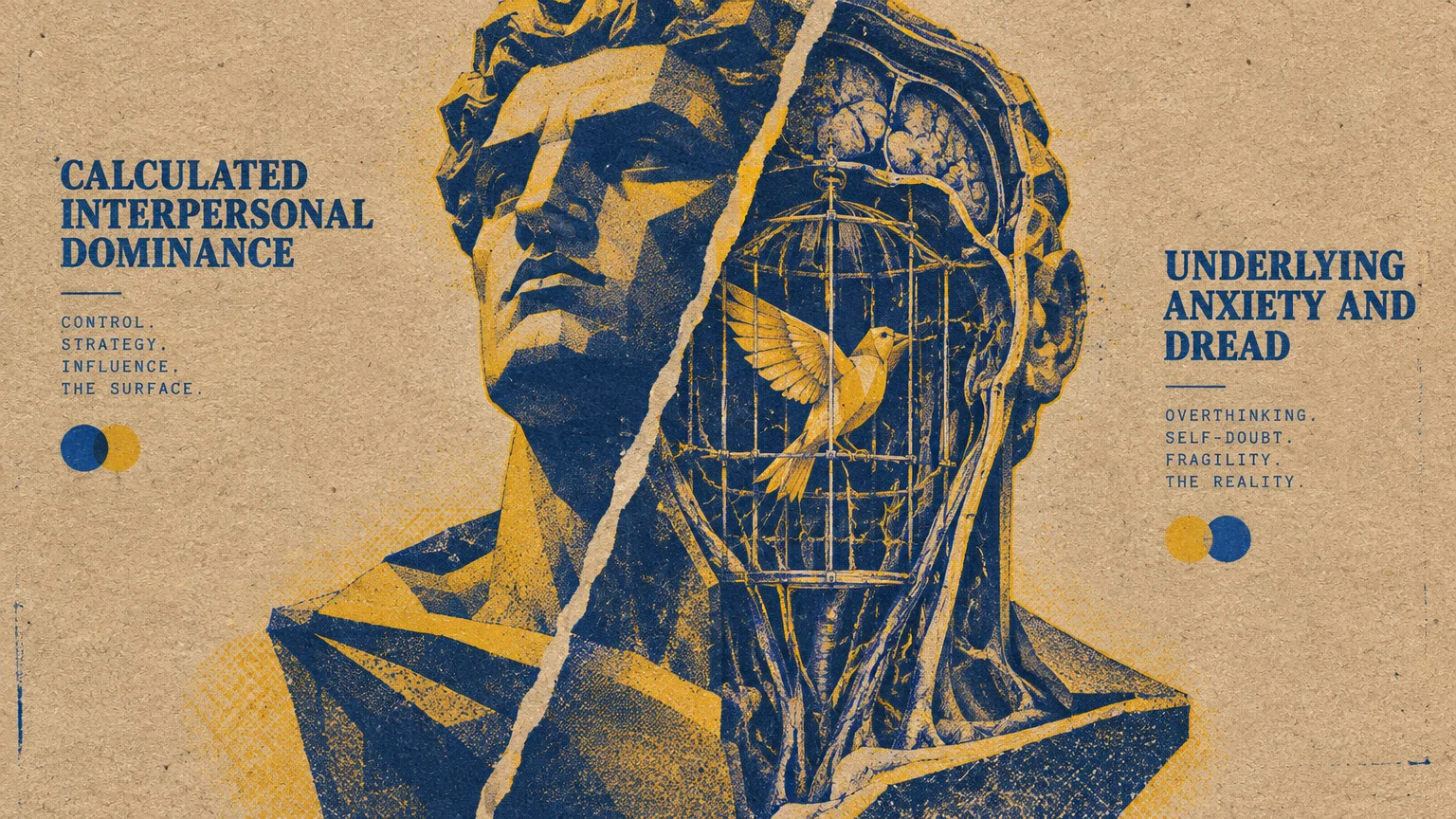
Most people associate controlling personality traits with arrogance or a desire for interpersonal dominance. Modern clinical insights demonstrate that an intense urge to control usually originates from unmanaged emotional distress.
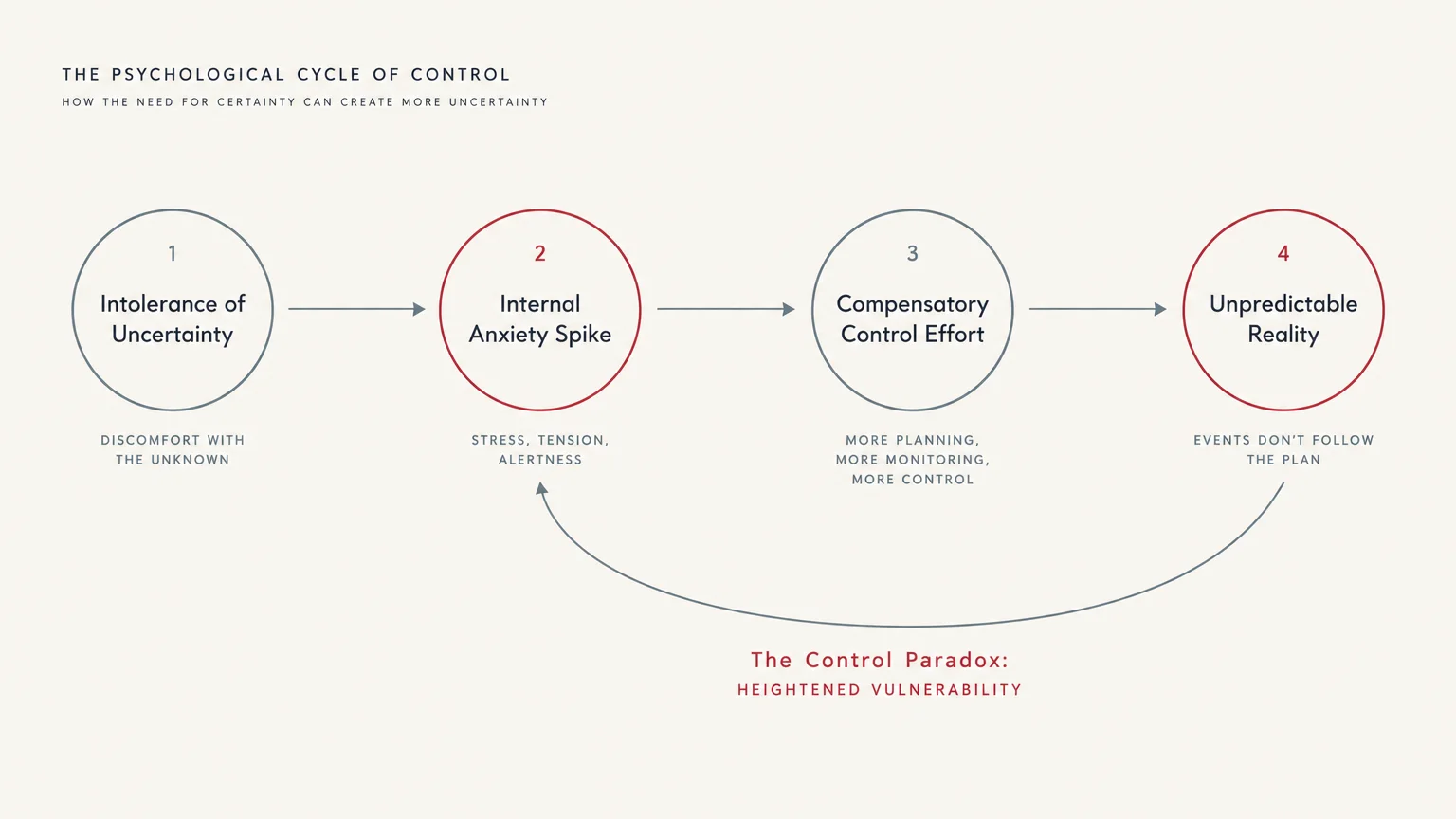
When internal tension climbs, your nervous system scans for external targets to organize. The American Psychological Association highlights how perceived control serves as a primary cognitive buffer against overwhelming stress.
If you experience an intolerance of uncertainty, unexpected shifts register as threats rather than mere inconveniences. Controlling behavior signs emerge as compensatory defenses against that intolerable vulnerability.
This dynamic creates a frustrating paradox. The tighter you grasp every circumstance, the more anxious you feel when reality refuses to cooperate.

10 Behaviors Linked to a Deep Need for Control
The compulsion to govern your environment rarely presents as overt tyranny. Instead, it frequently hides behind helpfulness, efficiency, and perfectionist standards.
1. Chronic Micromanagement and Inability to Delegate
You find it agonizing to hand off projects at work or divide chores at home. Even when someone offers competent help, you hover over them or redo their completed effort.
This habit stems from equating different methodologies with catastrophic failure. You sacrifice your personal time and health simply to guarantee that execution matches your exact mental blueprint.
2. Unsolicited Advice and Compulsive “Fixing”
When friends voice frustrations, you immediately pitch multi-step action plans instead of listening. Silence and passive empathy feel uncomfortable because unresolved distress triggers your own anxiety.
Offering uninvited solutions allows you to manage another person’s emotional state to stabilize your own. It transforms their private struggle into a project under your jurisdiction.
3. Acute Distress Over Minor Plan Deviations
A sudden restaurant closure, bad traffic, or an unexpected guest can instantly ruin your mood. You interpret ordinary disruptions not as minor hiccups, but as personal crises.
Rigid scheduling provides a fragile sense of safety. When schedules break, the underlying dread you kept at bay rushes back to the surface.
4. Conversational Dominance and Demanding the Last Word
During disagreements, you struggle to pause the discussion until the other party fully concedes to your perspective. Walking away with differences unresolved feels intolerable.
Research from The Gottman Institute emphasizes that defensiveness and conversational stonewalling often mask profound fears of emotional exposure. Forcing agreement serves as a tool to neutralize that relational risk.
5. Catastrophizing and Obsessive Contingency Planning
You construct extensive mental safety nets for obscure, worst-case scenarios. While healthy foresight prepares you for realistic roadblocks, chronic catastrophizing exhausts your mental reserves.
Clinical literature on anxiety and need for control explains that people treat worry as a superstition. You unconsciously believe that imagining every disaster prevents life from blindsiding you.
6. Hypercritical Standards for Self and Others
You judge performance through an unforgiving binary lens: things are either flawless or unacceptable. When colleagues or partners commit ordinary blunders, your frustration flares quickly.
Perfectionism acts as psychological armor. You hold everyone to impossible benchmarks because you believe flawless performance protects against rejection, blame, and shame.
7. Emotional Stonewalling and Avoiding Vulnerability
You carefully conceal personal doubts, tears, or moments of weakness. Admitting that you feel lost seems unacceptable because dependence requires trusting factors you cannot dictate.
Maintaining an impenetrable exterior keeps you firmly in the driver’s seat. Unfortunately, blocking emotional exposure also prevents you from forming genuine, restorative intimacy.
8. Gatekeeping Information and Everyday Tasks
You default to mantras like “It is faster if I handle it myself.” Over time, you centralize financial details, social calendars, and domestic logistics until you become the sole operator.
People often view these routines as signs of a control freak. In truth, gatekeeping represents an avoidant coping mechanism driven by a profound distrust of outside support.
9. Monitoring and Interrogating Loved Ones
You regularly review read receipts, question minor schedule gaps, or police how your partner loads the dishwasher. You justify this scrutiny as simple thoroughness or loving concern.
In practice, persistent surveillance erodes intimacy and insults your partner’s autonomy. It substitutes administrative monitoring for mutual trust and authentic emotional presence.
10. Discomfort When Others Succeed Spontaneously
You feel a quiet twinge of irritation when someone prospers without strict planning or meticulous effort. Their effortless progress rattles your worldview.
If improvisation produces success, your exhaustive control rituals lose their justification. Dismissing their success as pure luck defends your exhausting reliance on hypervigilance.
Healthy Agency vs. Maladaptive Control
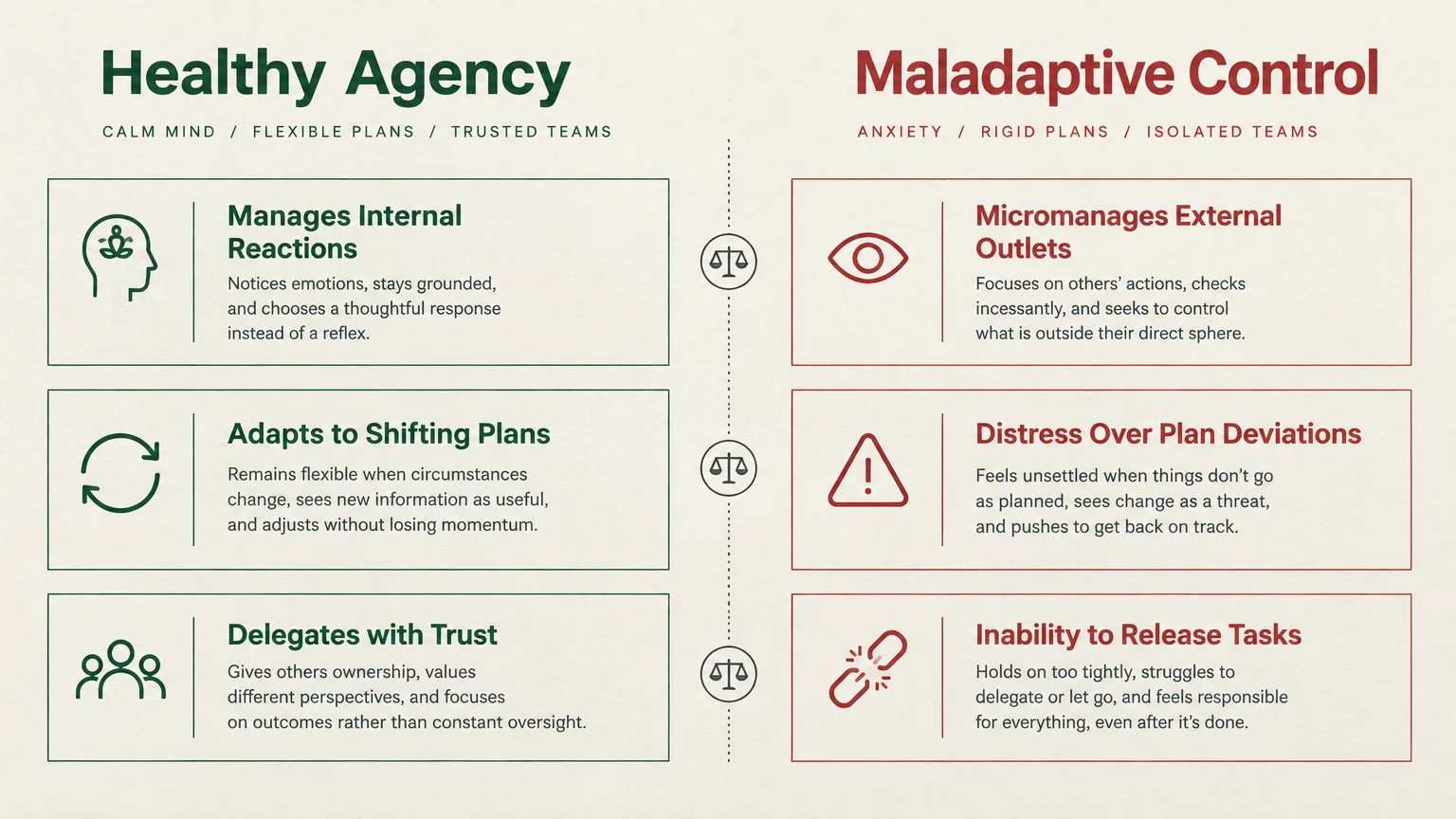
Wanting influence over your circumstances is a healthy human drive. The psychological damage occurs when personal agency transforms into rigid external manipulation.
| Dimension | Healthy Agency | Maladaptive Control |
|---|---|---|
| Core Motivation | Pursuing positive growth and maintaining values. | Suppressing terror, dread, and uncertainty. |
| Flexibility | Adapts to surprises and negotiates solutions. | Collapses into anger or panic when routines alter. |
| Focus of Attention | Directs energy toward personal actions and choices. | Directs energy toward managing other people’s behaviors. |
| Emotional Climate | Cultivates collaboration, curiosity, and calm. | Produces resentment, hypervigilance, and burnout. |

The Vulnerability Connection
The compulsion to regulate your surroundings almost always reflects an aversion to vulnerability. When you cannot tolerate emotional exposure, micromanagement becomes your shield.
“Vulnerability is not winning or losing; it’s having the courage to show up and be seen when we have no control over the outcome.” — Brené Brown, Ph.D., LMSW
True resilience does not mean engineering an existence devoid of surprises. As Harvard Health notes, cultivating emotional flexibility improves cardiovascular health and lowers depressive symptoms far more effectively than hypervigilance.
When you surrender the need to curate every outcome, you free up tremendous psychological energy. You can redirect that vitality into creative risks, honest conversations, and restful recovery.
Myths Worth Debunking
Misunderstandings surround the psychology of control, often preventing individuals from seeking appropriate self-compassion and help. Here are three common misconceptions.
Myth 1: Controlling individuals are inherently narcissistic or malicious. While control can turn abusive, everyday controlling habits usually reflect an overactive threat system trying desperately to feel safe.
Myth 2: Being organized and having boundaries makes you controlling. Structuring your time and enforcing boundaries reflects personal agency; control only begins when you impose your will onto the autonomy of others.
Myth 3: You can cure a control compulsion by simply “relaxing.” Telling an anxious person to relax ignores the neurobiological alarm driving their behavior. Meaningful change requires somatic safety and cognitive restructuring, not superficial willpower.

Actionable Strategies to Ease the Need for Control
Unwinding entrenched control habits takes deliberate, incremental practice. Try these four targeted techniques to build psychological flexibility.
- Map the Dichotomy of Control: Draw two concentric circles. Place factors you directly own (your effort, reactions, ethics) inside; leave external factors (other people’s moods, traffic, market shifts) outside.
- Practice Micro-Surrenders: Deliberately relinquish authority over low-stakes decisions. Let someone else select the dinner venue or load the dishwasher without intervening afterward.
- Delay the “Fix-It” Impulse: When an acquaintance vents, ask: “Do you want actionable advice right now, or do you just want to feel heard?”
- Soothe Your Somatic Alarm: Notice when your shoulders tense during unexpected changes. Use extended exhalations to signal physical safety to your nervous system before responding.
By repeatedly exposing yourself to tiny uncertainties, your brain learns that unpredictable moments are endurable. Over time, peace replaces the exhausting impulse to manage everything.

Signs It’s Time to Talk to a Therapist
Sometimes self-regulation strategies are not enough to dislodge deep survival habits. Clinical support becomes vital when control patterns impair your health or relationships.
- Relationship Erosion: Family members, friends, or coworkers express fear, distance, or intense resentment regarding your demands and criticism.
- Somatic Burnout: You suffer chronic headaches, digestive flare-ups, or insomnia because your nervous system remains in perpetual vigilance.
- Intrusive Panic: Small alterations to daily plans trigger heart palpitations, rage spirals, or full panic responses.
- Compulsive Rituals: You spend hours repeating organizational behaviors to quiet persistent obsessive thoughts, a pattern typical of conditions documented by the National Institute of Mental Health.
Evidence-based modalities like Cognitive Behavioral Therapy (CBT) and Acceptance and Commitment Therapy (ACT) can help you rebuild trust in yourself and the world.
Frequently Asked Questions
What is the root cause of a deep need for control?
The need for control psychology frequently traces back to childhood instability, trauma, or unaddressed anxiety disorders. When early environments feel chaotic, hypervigilance develops as a necessary survival mechanism to maintain emotional and physical safety.
Can a controlling person change their behavior?
Yes, change is entirely possible when you cultivate self-awareness and address the underlying fears driving your actions. Modalities like therapy, mindfulness training, and nervous system regulation help you replace rigid patterns with healthy personal agency.
How does a deep need for control impact physical health?
Constant hypervigilance keeps your sympathetic nervous system continuously active, flooding your body with cortisol and adrenaline. The Cleveland Clinic links chronic stress to weakened immunity, cardiovascular strain, muscle tension, and chronic gastrointestinal issues.
How should you address controlling behavior in a relationship?
Address the pattern during calm moments using clear, non-blaming language focused on your own boundaries. Highlight how specific policing behaviors affect your feelings, and encourage mutual collaboration rather than compliance.
Learning to release control is not a sign of weakness; it represents the ultimate act of self-trust. When you accept uncertainty, you build real resilience and make room for deeper connection.
This article provides general educational information about psychology and relationships. It is not a substitute for professional therapy or medical advice. Everyone’s situation is unique—if you’re struggling, please reach out to a licensed mental health professional.
Last updated: February 2026. Psychology research evolves continuously—verify current findings with professional sources.









Leave a Reply