

When painful feelings surface, your nervous system frequently defaults to subtle protective habits. Identifying these covert signs of emotional avoidance empowers you to dismantle internal barriers and build lasting psychological resilience.
Avoidant coping rarely looks like overt panic or dramatic retreat. In daily life, it often disguises itself as admirable productivity, witty humor, or fierce personal independence.
Over time, chronic emotional detachment strains close relationships and amplifies hidden physical stress. Spotting these patterns early allows you to confront distress cleanly and reclaim genuine connection.
Understanding Emotional Avoidance and the Avoidant Coping Trap
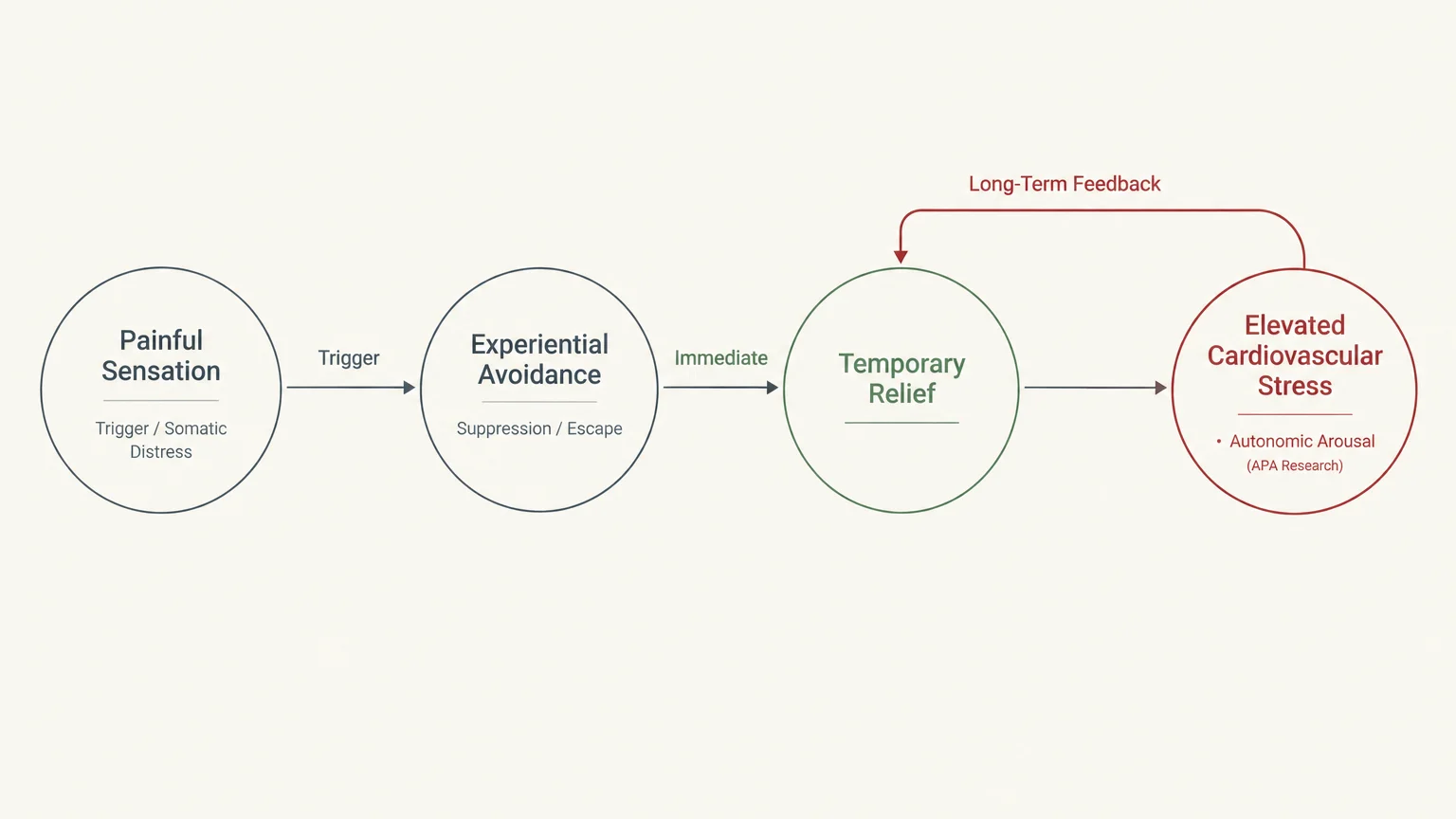
In clinical psychology, researchers describe avoidant coping through the concept of experiential avoidance. This pattern involves an unwillingness to remain in contact with painful thoughts, emotions, or somatic sensations.
When you push distress away, your brain experiences temporary relief. However, this fleeting comfort conditions your nervous system to fear and evade emotional discomfort even more intensely.
According to research published by the American Psychological Association, habitual emotion suppression does not resolve distress; it elevates internal cardiovascular stress and chronic autonomic arousal.
Understanding avoiding feelings psychology requires examining how your defense mechanisms operate. You likely adopted these behaviors early in life as necessary adaptations to preserve emotional safety.

12 Hidden Behaviors That Reveal Emotional Avoidance
Recognizing avoidance requires looking past obvious signs like running away. The following twelve behavioral patterns illustrate how emotional evasion operates in subtle, everyday routines.
1. Chronic Busyness and Over-Scheduling
Filling every hour of your calendar provides a socially praised escape hatch. By staying constantly occupied with tasks and projects, you eliminate the quiet moments where unaddressed grief, anxiety, or loneliness can emerge.
When stillness feels threatening, your packed schedule functions as an emotional fortress rather than a sign of healthy ambition.
2. Intellectualizing Your Feelings
You might analyze your psychological wounds with clinical precision while feeling completely disconnected from your body. You discuss heartbreak or trauma as if reviewing an academic case study.
Treating your emotions as intellectual puzzles to solve prevents you from actually experiencing their raw, necessary sensations.
3. Deflective Humor and Persistent Sarcasm
Humor builds social bonds, but reflexive joking frequently masks deeper vulnerability. When conversations veer toward painful topics, you might deploy a witty remark or self-deprecating punchline to change the subject.
Using irony as armor keeps intimacy at a safe distance and prevents others from offering meaningful support.
4. Conversational Stonewalling and Sudden Withdrawal
When interpersonal friction spikes, your nervous system can become flooded with stress hormones. Rather than expressing your hurt, you might shut down completely, refuse eye contact, or physically walk out.
Research from The Gottman Institute identifies stonewalling as a primary relational hazard, noting that it reflects profound internal overwhelm rather than indifference.
5. Compulsive Micro-Numbing Through Screens
Emotional evasion often occurs in tiny micro-doses throughout the day. The instant an uncomfortable sensation—such as boredom, shame, or fatigue—arises, your fingers automatically reach for your phone.
Mindless scrolling, gaming, or streaming offers an effortless dopamine hit that drowns out quiet distress before you even identify it.
“We cannot selectively numb emotion. If we numb the dark, we numb the light.” — Brené Brown, Ph.D., LMSW
6. Enforced Toxic Positivity
Forcing a cheerful perspective onto genuine pain invalidates the natural rhythm of human sorrow. You might reflexively recite motivational platitudes or urge friends to look on the bright side during crisis.
Denying your negative feelings does not cultivate authentic optimism; it simply buries grief beneath an artificial veneer.
7. Rigid Hyper-Independence
Believing that you must handle every challenge alone shields you from interpersonal vulnerability. You reject offers of assistance, manage heavy emotional loads in secret, and pride yourself on never needing anyone.
This stubborn self-reliance eliminates the risk of disappointment or betrayal, but it simultaneously produces deep, chronic isolation.
8. Premature Forgiveness and False Closure
Offering a quick apology or granting immediate forgiveness before processing a breach circumvents messy conversations. You rush toward closure simply to extinguish the discomfort of ongoing interpersonal tension.
Skipping the uncomfortable work of setting boundaries leaves core issues unresolved, allowing quiet resentment to accumulate over time.
9. Somatization and Unexplained Physical Tension
When you suppress emotional pain, your physical body frequently carries the unspoken burden. Chronic tension headaches, digestive discomfort, and muscle tightness often arise when you refuse to acknowledge emotional distress.
According to specialists at the Cleveland Clinic, unprocessed psychological stress routinely translates into tangible physical symptoms through autonomic nervous system strain.
10. Chronic Restlessness and Frequent Relocations
You might frequently switch apartments, change jobs, or ditch social circles whenever emotional roots begin to form. Chasing the high of a fresh start creates the illusion of personal growth.
In reality, constantly seeking a geographic cure reflects a flight from the emotional baggage that follows you everywhere.
11. Cynicism and Preemptive Emotional Detachment
Cultivating a cynical attitude toward love or trust provides an effective defense mechanism. If you assume that partners will leave or that people are inherently selfish, you never risk getting hurt.
Preemptive emotional detachment creates a self-fulfilling prophecy, keeping you guarded while starving you of meaningful connection.
12. Reflexive People-Pleasing
Accommodating everyone around you can function as an active avoidance strategy. By monitoring and appeasing other people’s emotional states, you preempt conflict, criticism, and anger.
Focusing entirely on the comfort of others allows you to neglect your own uncomfortable needs, boundaries, and lingering resentments.
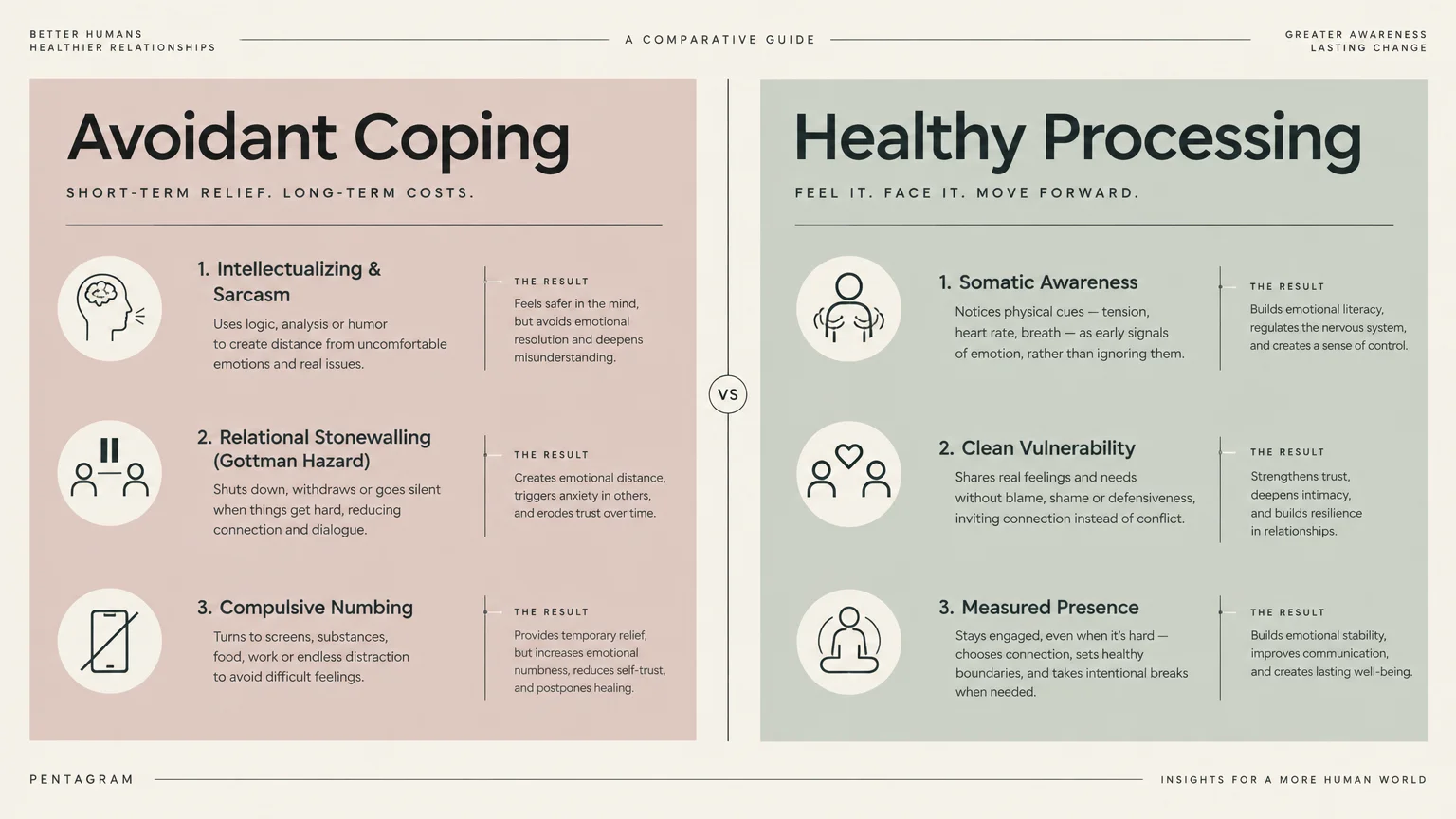
Avoidant Coping vs. Healthy Emotional Processing
Differentiating between avoidant coping and intentional emotional processing clarifies how your reactions shape your well-being. The comparison below illustrates these distinct psychological paths.
| Dimension | Avoidant Coping Pattern | Healthy Processing Pattern |
|---|---|---|
| Immediate Response | Distraction, suppression, denial, or numbing | Mindful awareness and somatic acknowledgment |
| Internal Narrative | “I shouldn’t feel this way; I must fix this now.” | “This feeling is uncomfortable, but it is safe to feel.” |
| Body Sensation | Muscle bracing, shallow breathing, tension | Softened breath, body scans, grounding contact |
| Relational Impact | Stonewalling, surface harmony, isolation | Clear boundary-setting and vulnerable honesty |
| Long-Term Outcome | Chronic anxiety, resentment, emotional exhaustion | Emotional resilience, self-trust, deep intimacy |

What Can Go Wrong: The Hidden Costs of Emotional Detachment
Relying on emotional avoidance provides immediate relief, but it carries steep long-term psychological and physical costs. Evasion does not neutralize painful feelings; it leaves them unexamined to fester.
According to research reviewed by Harvard Health Publishing, chronic suppression of emotions directly correlates with heightened cardiovascular strain and compromised immune function.
In interpersonal relationships, persistent avoidance creates an insurmountable gulf. Partners eventually burn out from trying to connect with someone who repeatedly deflects or retreats into silence.
Furthermore, experiential avoidance shrinks your life over time. You stop pursuing rewarding opportunities, relationships, and creative pursuits simply because they carry the risk of emotional discomfort.

Actionable Steps to Break the Cycle of Avoidance
Dismantling avoidant patterns requires intentional practice and nervous system retraining. You can cultivate emotional courage by using practical, incremental adjustments.
- Label somatic sensations: Identify where an emotion lives in your physical body rather than immediately analyzing it mentally.
- Ride the ninety-second wave: Neurochemical emotional surges naturally peak and dissipate within ninety seconds if you refrain from feeding them avoidant narratives.
- Practice micro-vulnerability: Share one honest, unpolished thought with a safe friend each week without masking it behind humor.
- Implement a deliberate pause: When you feel the urge to scroll, clean, or withdraw during conflict, pause for sixty seconds and breathe.
Therapists practicing Acceptance and Commitment Therapy emphasize that psychological freedom comes from welcoming discomfort rather than fighting it.
“The curious paradox is that when I accept myself just as I am, then I can change.” — Carl Rogers, Ph.D.

When to Seek Professional Support
Self-help strategies provide valuable foundations, but long-standing avoidance patterns often require guided clinical intervention. Professional guidance helps you navigate deep-seated defenses in a secure environment.
Consider working with a licensed mental health professional if you experience any of the following challenges:
- You rely on alcohol, substances, or restrictive eating habits to suppress distressing feelings.
- Your intimate partnerships repeatedly end due to unresolved emotional detachment or stonewalling.
- Suppressed feelings routinely break through as unexpected panic attacks or explosive anger episodes.
- Physical ailments like tension migraines or stomach distress persist after medical doctors find no physical cause.
Therapeutic approaches like Acceptance and Commitment Therapy (ACT), Somatic Experiencing, and Emotion-Focused Therapy provide proven structures for processing suppressed emotions.
Frequently Asked Questions
Is emotional avoidance the same as emotional numbness?
Emotional avoidance is an active behavioral strategy used to evade distress. Numbness is often the downstream physiological consequence of chronic avoidance, wherein your nervous system temporarily shuts down sensation.
What causes someone to develop avoidant coping mechanisms?
Avoidant coping typically originates in childhood environments where emotional expression was punished, dismissed, or unsafe. Children adopt emotional detachment to protect themselves from overwhelming relational distress.
Can someone with an avoidant style become secure?
Yes, you can develop earned security over time. By practicing emotional tolerance, engaging in therapy, and building safe relationships, your nervous system learns that vulnerability is survivable.
How should I respond when a partner shows signs of emotional avoidance?
Avoid pursuing them aggressively or demanding immediate emotional disclosure during moments of stress. Offer calm reassurance, express your own feelings clearly, and give them structured space to regulate before talking.
Cultivating Emotional Courage
Learning to feel what hurts is not a surrender to weakness; it represents the ultimate form of psychological strength. When you stop fleeing discomfort, you reclaim the immense energy spent maintaining your defenses.
Start small by sitting with an uncomfortable sensation for just two minutes today without reaching for a distraction. True intimacy with yourself and others begins the moment you decide to stay present.
The information in this article is meant for educational purposes and general guidance. It does not replace individual therapy, counseling, or medical treatment.
If you or someone you know is in crisis, contact the 988 Suicide & Crisis Lifeline by calling or texting 988.
Last updated: February 2026. Psychology research evolves continuously—verify current findings with professional sources.







Leave a Reply