

Chronic stress does not announce its breaking point with loud warnings; it quietly drains your cognitive reserves until ordinary routines feel insurmountable. Spotting the early signs of a nervous breakdown gives you the power to intervene before exhaustion immobilizes you.
When continuous demands trap your nervous system in survival mode, your brain dials back non-essential operations. While you might dismiss this state as routine fatigue, severe overload requires immediate and decisive de-escalation.
Recognizing the symptoms of a mental breakdown allows you to protect your long-term psychological health. The following biological and behavioral signals indicate that your mind and body have reached their absolute threshold.
The Essentials: What You Need to Know
A mental health crisis rarely happens overnight. Recognizing your body’s stress response early gives you the best chance to recover quickly.
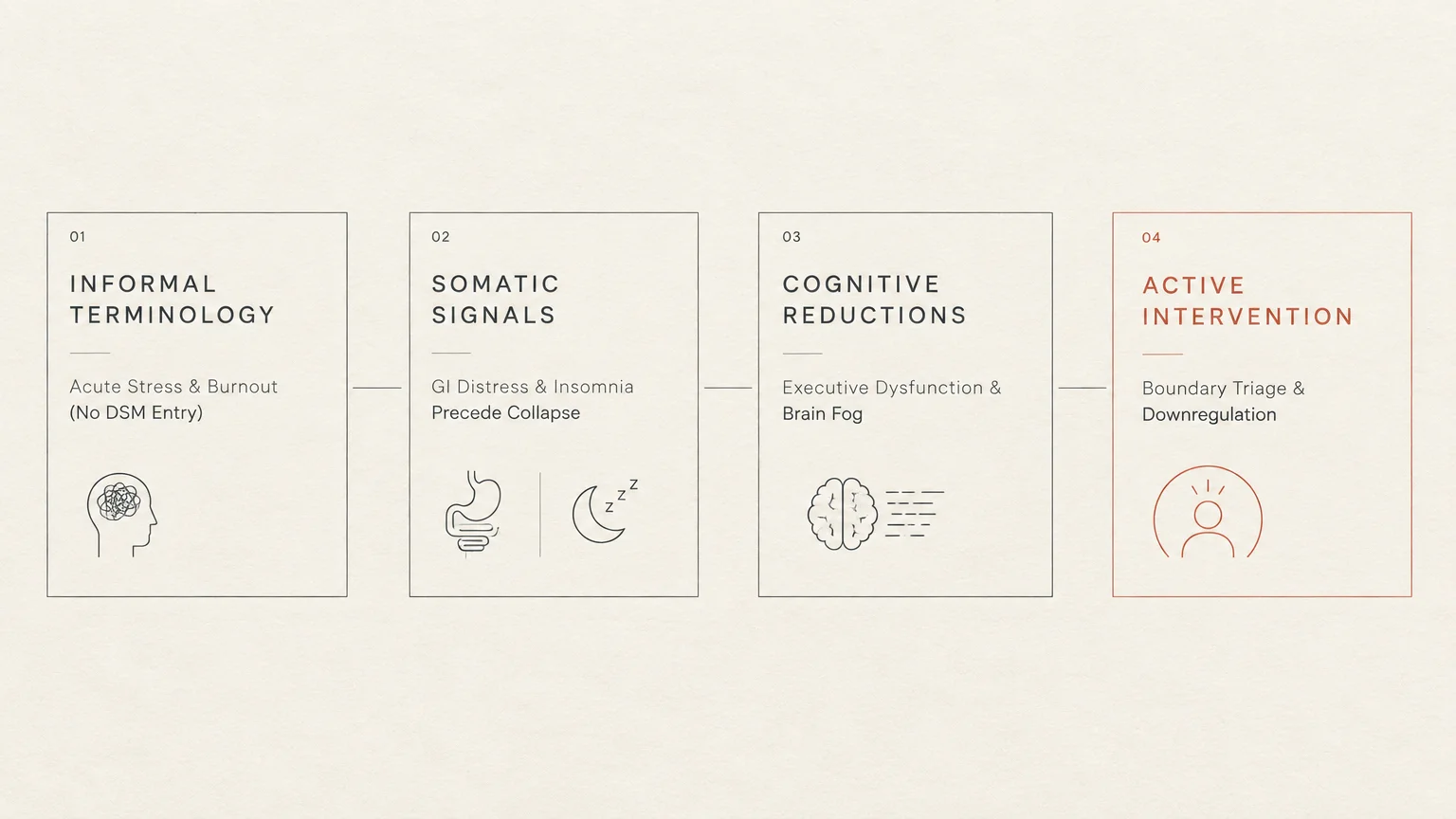
- Informal Terminology: Clinicians do not diagnose a “breakdown”; they treat underlying conditions like acute stress reaction, major depression, or severe burnout.
- Somatic Signals: Physical distress, including gastrointestinal trouble and unyielding insomnia, usually precedes psychological collapse.
- Cognitive Reductions: Executive dysfunction, brain fog, and decision paralysis indicate prefrontal cortex fatigue.
- Active Intervention: Immediate boundary triage, physiological downregulation, and clinical support can stop acute overwhelm from worsening.
Demystifying the “Breakdown”: What Clinical Psychology Tells Us
People frequently use terms like “mental breakdown” or “nervous collapse” to describe moments of total incapacitation. However, neither phrase appears as an independent condition in the American Psychiatric Association’s DSM-5-TR or the World Health Organization’s ICD-11.
Instead, clinical professionals view a breakdown as an acute, severe manifestation of untreated psychological strain. It marks the point where your psychological coping mechanisms buckle under cumulative load.
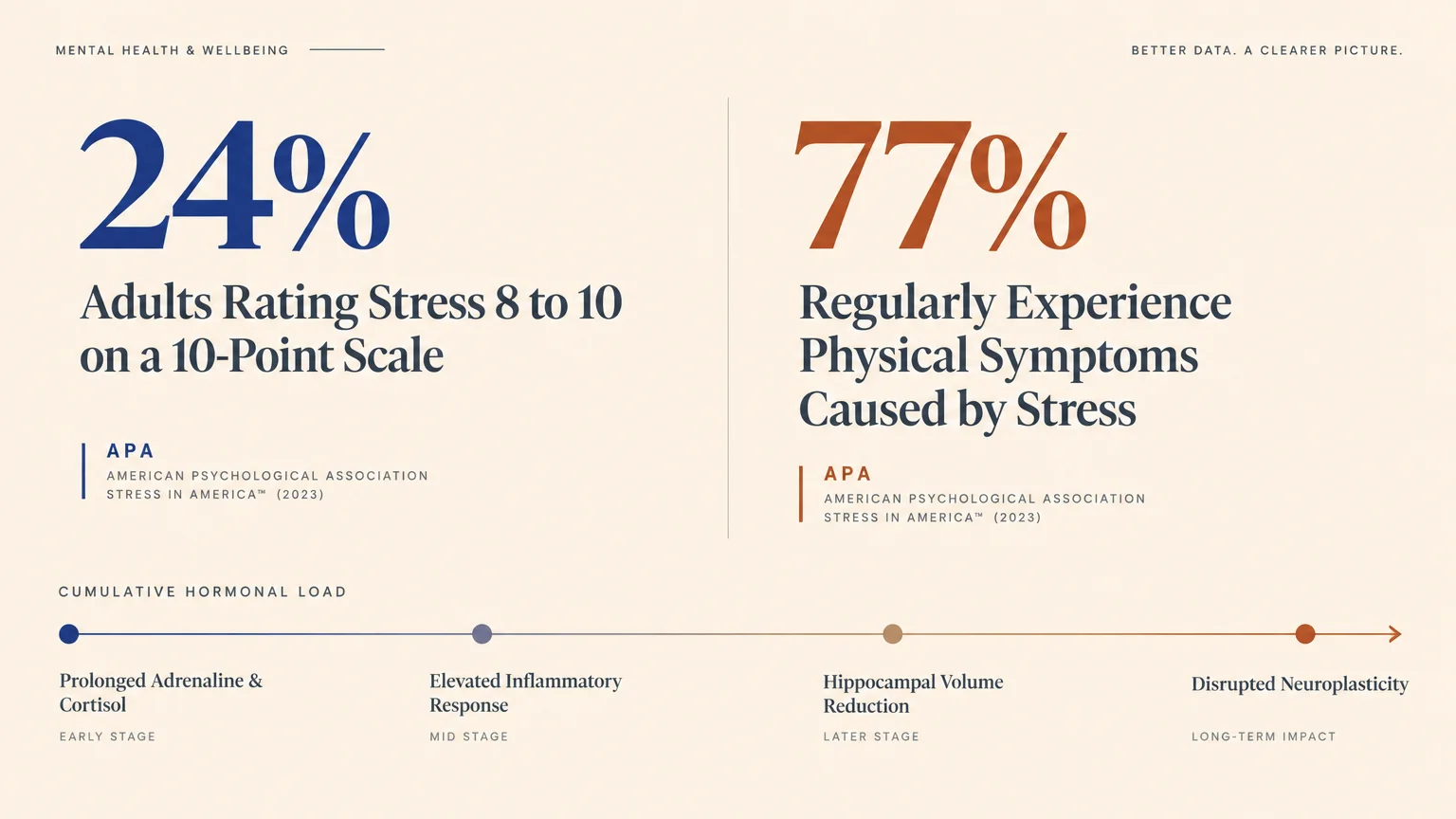
According to research from the American Psychological Association (APA), approximately 24% of adults rate their average stress between 8 and 10 on a 10-point scale. Furthermore, roughly 77% of adults regularly experience physical symptoms caused by stress.
When stress stays at peak levels, your brain floods your bloodstream with cortisol and adrenaline. Over time, this hormonal deluge disrupts neuroplasticity and alters executive control, producing the functional collapse commonly termed a breakdown.
Sign 1: Cognitive Paralysis and Executive Dysfunction
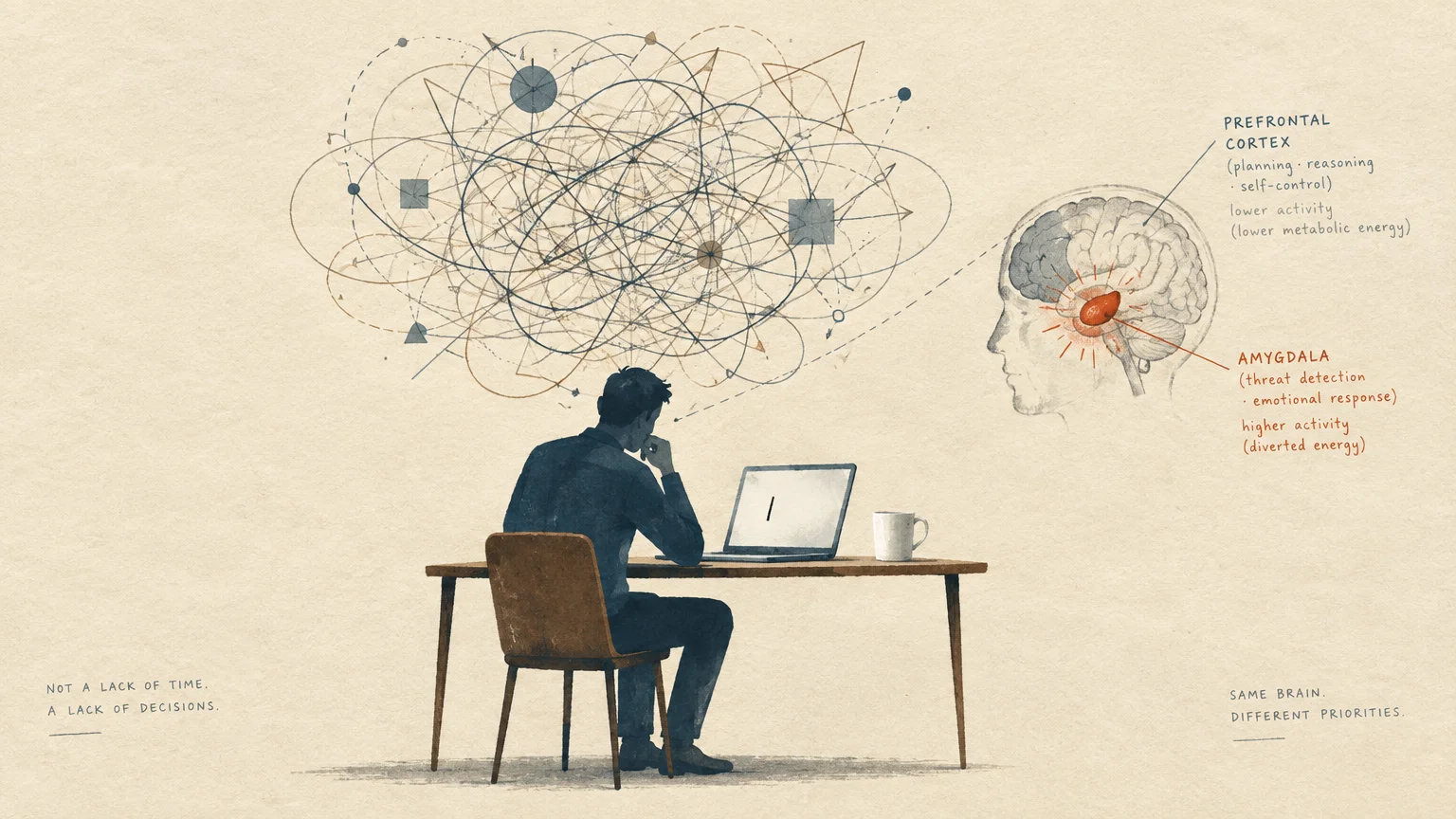
When your brain reaches absolute capacity, working memory deteriorates rapidly. You might find yourself staring blankly at simple emails, unable to organize basic thoughts or sequence everyday tasks.
Executive dysfunction manifests as severe decision paralysis. Even micro-decisions, such as choosing what to eat for lunch or selecting an outfit, trigger intense dread.
Neuroimaging demonstrates that sustained emotional strain reduces grey matter volume in the prefrontal cortex while enlarging the amygdala. This neurological shift diverts metabolic energy away from reasoning and toward primitive survival circuits.
If you experience persistent mental disorientation or find yourself repeatedly losing track of simple conversations, your central nervous system is signaling critical overload. Do not mistake this neurological fatigue for personal failure.

Sign 2: Uncharacteristic Emotional Volatility or Total Numbness
Impending psychological collapse alters emotional regulation in one of two distinct directions: extreme reactivity or complete emotional blunting. Both states signal an overwhelmed regulatory apparatus.
You might weep over minor inconveniences, such as spilling water, or react with sudden irritability toward friends and colleagues. These explosive reactions indicate that your emotional reserve has hit zero.
Alternatively, you may experience profound emotional detachment. You might care for family or complete work duties like an automaton, completely separated from joy, sadness, or empathy.
Psychologists classify this deadened sensation as depersonalization or emotional blunting. It serves as a biological defense mechanism; your brain shuts down emotional processing to protect itself from unbearable stimulation.
“The curious paradox is that when I accept myself just as I am, then I can change.” — Carl Rogers, Ph.D.

Sign 3: Relentless Somatic Distress That Rest Fails to Relieve
Your body frequently registers psychological peril long before your conscious mind acknowledges it. Chronic physiological activation produces tangible physical distress across multiple organ systems.
You may encounter recurring tension headaches, persistent neck stiffness, or unexplained gastrointestinal disruptions. The gut-brain axis reacts directly to psychological strain, often triggering nausea, cramping, or severe digestive irregularities.
Sleep architecture also deteriorates under acute strain. You may struggle with sleep-onset insomnia, lie awake due to racing thoughts, or wake up repeatedly at 3:00 a.m. bathed in cold sweat.
According to the National Institute of Mental Health (NIMH), chronic sleep disruption acts as both an early symptom and an accelerant of psychiatric vulnerability. Waking up exhausted after eight hours in bed indicates high physiological stress.

Sign 4: Radical Social Withdrawal and Isolation
When you approach a breakdown, social interaction transforms from a source of connection into an unbearable chore. An unanswered text message or an incoming phone call can trigger intense panic.
You begin canceling obligations, withdrawing from close relationships, and inventing excuses to remain secluded. This defensive behavior stems from an intuitive drive to eliminate incoming stimuli.
Unfortunately, radical withdrawal deprives you of social co-regulation, a vital biological buffer against psychological collapse. Humans depend on safe interpersonal relationships to calm autonomic arousal.
Cutting yourself off from loved ones traps you inside your own ruminative thoughts. While carving out quiet time aids recovery, prolonged isolation accelerates your downward slide.

Sign 5: Deterioration of Basic Daily Functioning
One of the clearest symptoms of a mental breakdown involves losing the ability to handle baseline self-care routines. Activities you once performed effortlessly begin demanding immense physical and mental effort.
Dishes accumulate in the sink, personal hygiene slips, bills remain unopened, and your living space falls into disarray. You might skip meals entirely or rely exclusively on processed convenience foods.
This functional decline reflects severe motivational depletion rather than laziness. Your brain lacks the dopamine and energy needed to execute multi-step motor behaviors.
Clinical professionals evaluate functional capacity when diagnosing conditions such as major depressive disorder or acute stress reactions. When everyday chores feel impossible, your system needs immediate rest.
Sign 6: Sympathetic Overdrive and Persistent Dread
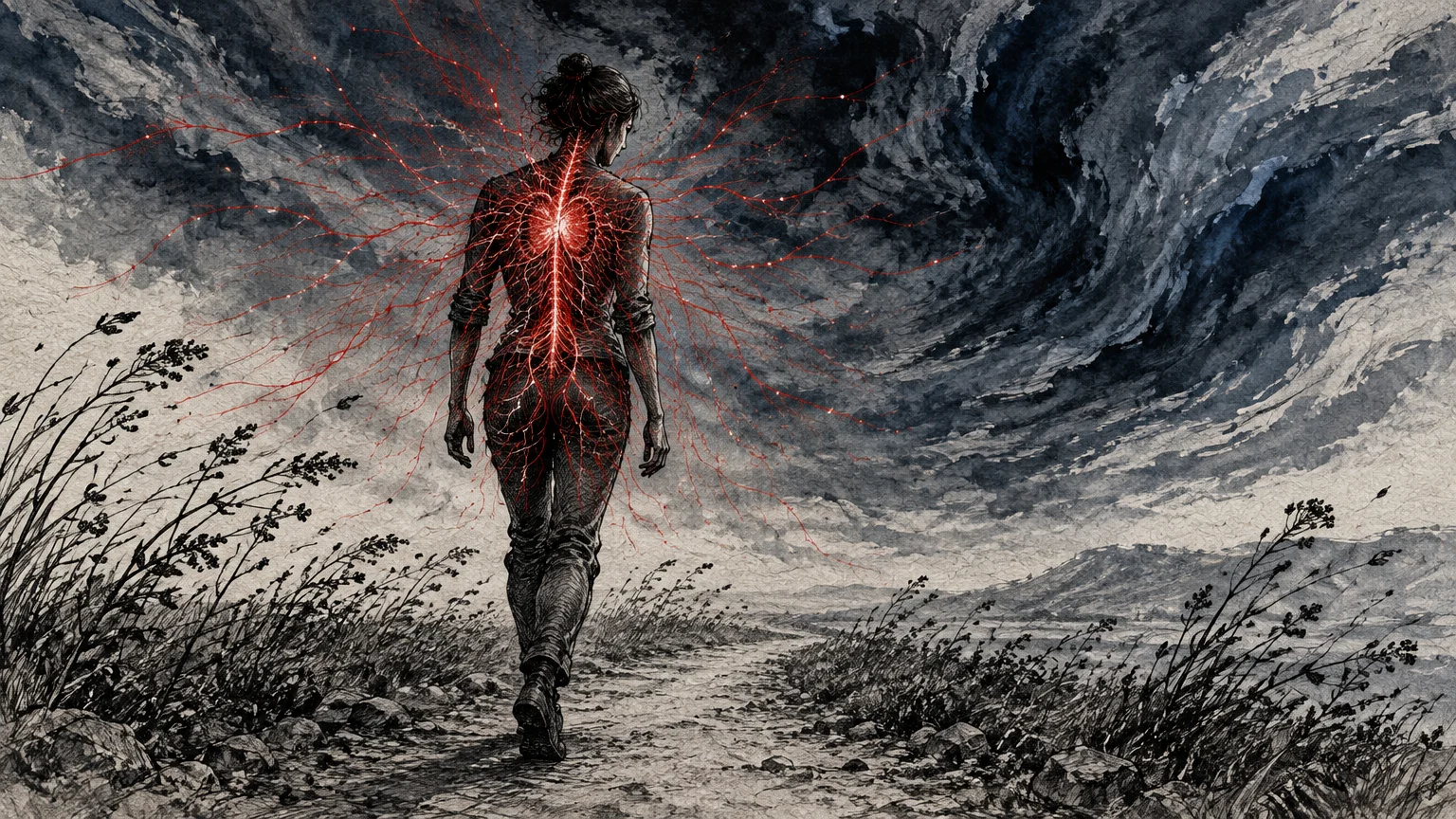
Under sustainable conditions, your sympathetic nervous system activates during threats and powers down once safety returns. Approaching a breakdown locks that system in the “on” position indefinitely.
You live in a state of hypervigilance, anticipating catastrophe at every turn. Your heart races without clear cause, your breathing stays shallow, and your muscles remain permanently contracted.
Data from public health studies show that millions of adults experience chronic hyperarousal due to modern stressors. The 2024 U.S. Surgeon General Advisory highlighted that 48% of parents describe their daily stress levels as completely overwhelming.
This perpetual state of alarm can manifest as spontaneous panic attacks. If you regularly experience a tight chest, trembling, or terror without a clear cause, your autonomic system is struggling to regulate itself.

Sign 7: Loss of Efficacy and Deep Cynicism (Severe Burnout)
Severe occupational exhaustion frequently serves as the launchpad for a full psychological crisis. When work pressures outpace personal resources over months, chronic stress hardens into clinical burnout.
In the World Health Organization’s ICD-11 classification (Code QD85), burnout is defined by energy depletion, increased mental distance or cynicism, and reduced professional efficacy. When these dimensions spill into personal life, a breakdown often follows.
You may view your career, creative interests, and personal relationships with bitter resentment. You feel convinced that no matter how hard you work, your efforts change nothing.
This profound helplessness damages psychological resilience. When your sense of purpose dissolves, your psychological defenses collapse alongside it.
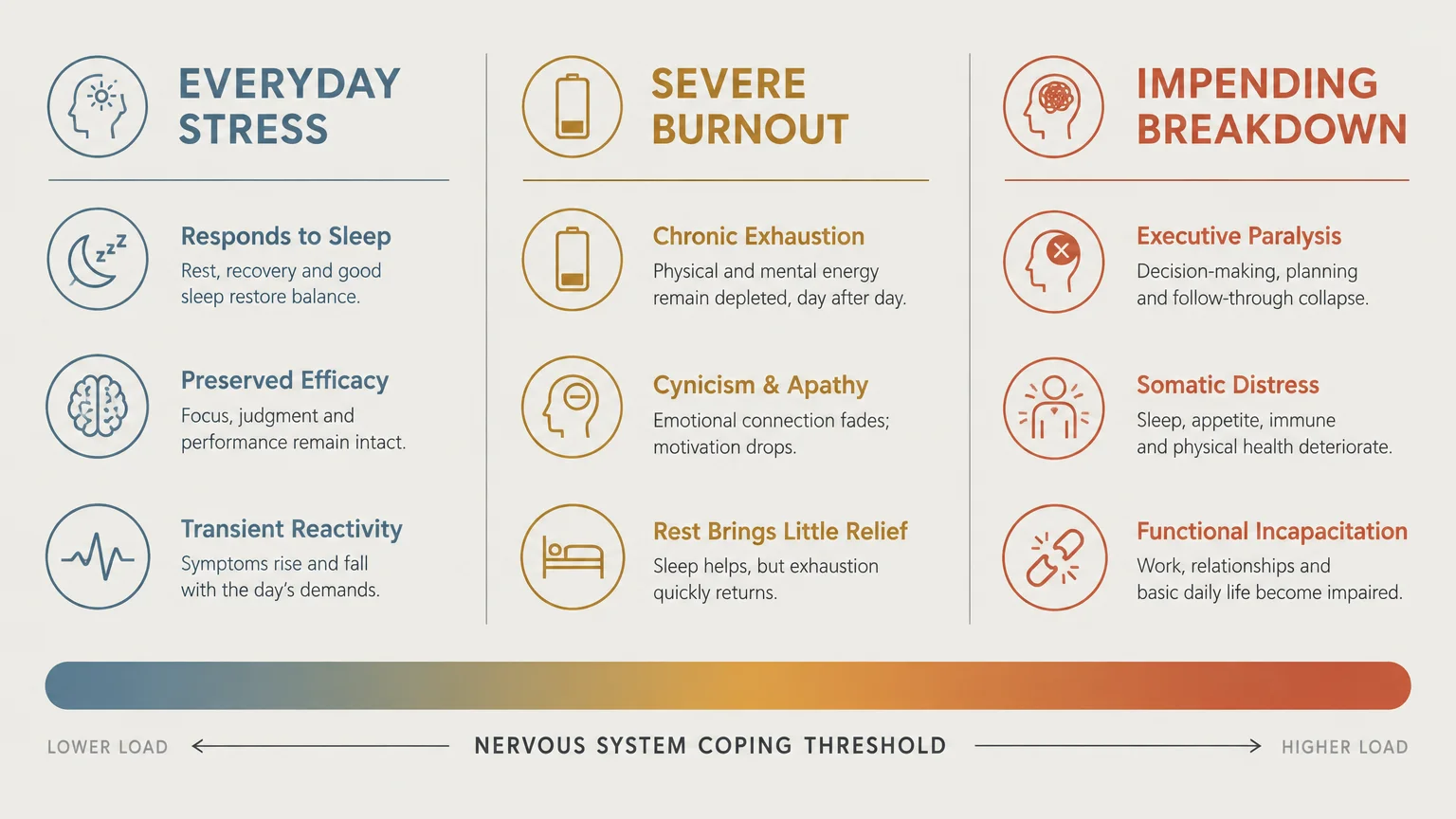
Everyday Stress vs. Severe Burnout vs. Impending Breakdown
Differentiating between ordinary fatigue, occupational burnout, and an impending psychological breakdown helps you select the correct intervention. The following comparison highlights key differences across these three states.
| Dimension | Everyday Stress | Severe Burnout (ICD-11 QD85) | Impending Breakdown |
|---|---|---|---|
| Core Experience | Temporary pressure tied to specific external demands. | Chronic emotional exhaustion and detachment from work. | Acute inability to function across multiple areas of life. |
| Response to Rest | Energy returns after a restful weekend or a few good nights of sleep. | Weekend breaks fail to restore vitality; exhaustion returns immediately. | Rest feels impossible; sleep is broken and hyperarousal persists. |
| Cognitive Capacity | Intact; minor forgetfulness during peak deadlines. | Cynicism, reduced focus, and slower creative problem-solving. | Severe executive dysfunction, confusion, and decision paralysis. |
| Emotional State | Transient worry, frustration, or temporary irritability. | Numbness, loss of motivation, and persistent apathy. | Extreme emotional swings, uncontrollable weeping, or complete detachment. |
| Immediate Needs | Time management, brief rest, and everyday boundaries. | Workplace restructuring, workload cuts, and lifestyle changes. | Immediate crisis support, medical evaluation, and radical rest. |
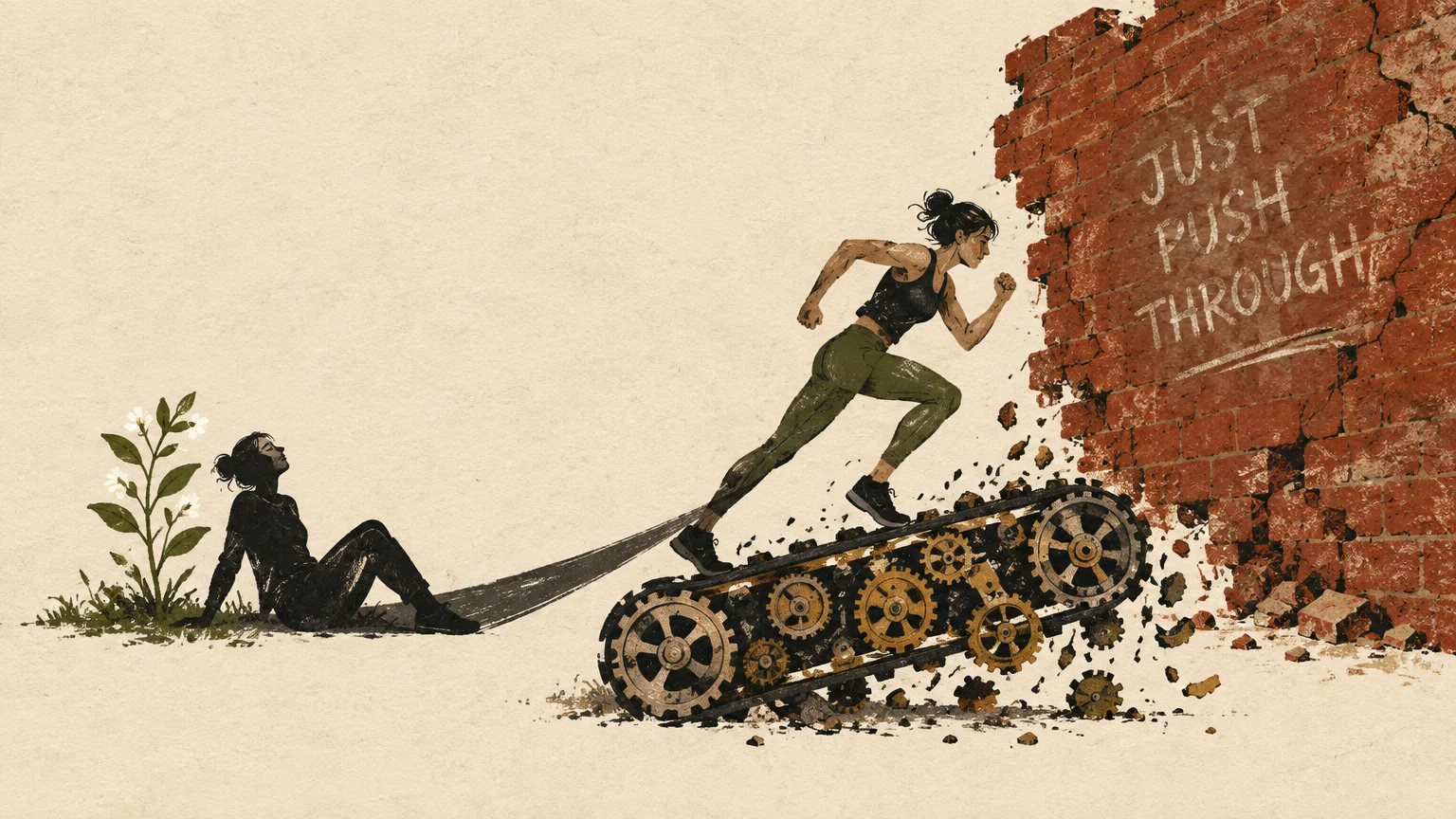
What Can Go Wrong: Misconceptions That Delay Recovery
Misunderstandings surrounding mental health crises frequently prevent people from seeking help early. Deconstructing these myths protects you from harmful self-judgment.
Many believe that breakdowns occur suddenly without warning. In reality, breakdowns represent the final phase of months or years of unresolved stress.
Another dangerous misconception is that pushing through high stress builds character. Forcing an overloaded nervous system to keep producing causes deeper biological exhaustion and lengthens eventual recovery times.
People also mistakenly associate breakdowns with emotional weakness. Human biology has physiological limits, and systemic overload impacts biology regardless of willpower or discipline.

Actionable Strategies: How to De-Escalate Acute Overwhelm
If you recognize the early signs of a nervous breakdown in your life, you must act intentionally. You cannot think your way out of nervous system dysregulation; you must use biological interventions.
- Engage the Physiological Sigh: Take two quick inhales through your nose, followed by a long, slow exhale through your mouth. Repeating this cycle for two minutes slows your heart rate and reduces autonomic arousal.
- Perform a Ruthless Boundary Triage: Strip your schedule down to essential survival tasks. Cancel non-essential meetings, step away from volunteer projects, and decline social invitations for the next two weeks.
- Anchor Through Proprioception: Sit on the floor with your back against a wall, place your hands flat on your thighs, and focus on physical contact points. Physical grounding tells your brain stem that you are safe in the present moment.
- Delegate Micro-Decisions: Eliminate daily choices by eating repetitive simple meals and wearing the same comfortable clothes. Freeing up cognitive bandwidth allows your prefrontal cortex to recover.
Implement these practices immediately when you spot early warning signs. Halting cognitive drain preserves the biological resources you need to heal.

When to Seek Professional Support
Self-regulation techniques offer vital relief, but acute crises often demand structured clinical care. Professional support provides a safe, objective framework for recovery.
You should contact a mental health professional or physician immediately if you experience any of the following scenarios:
- Loss of Functional Independence: You can no longer dress yourself, maintain basic hygiene, or prepare meals.
- Persistent Dissociation or Reality Distortion: You feel completely disconnected from your physical body, experience memory gaps, or struggle to track time.
- Intractable Somatic Symptoms: Severe chest tightness, persistent heart palpitations, or total insomnia that resist relaxation techniques.
- Thoughts of Self-Harm or Hopelessness: Believing that your loved ones would be better off without you, or wishing you would not wake up.
Organizations like the National Alliance on Mental Illness (NAMI) offer extensive resources and support groups to help you find qualified care. Reaching out for professional help is a proactive, life-saving decision.
If you or someone you know is experiencing acute psychiatric distress or thoughts of self-harm, call or text the 988 Suicide & Crisis Lifeline by dialing 988 in the United States. This service provides free, confidential support 24 hours a day, 7 days a week.
If you reside in the United Kingdom, you can call 111 to reach the NHS mental health services or contact the Samaritans at 116 123. International readers can access immediate, confidential crisis hotlines through local emergency services or regional crisis centers.
Frequently Asked Questions
Is a nervous breakdown a medical diagnosis?
No. The terms “nervous breakdown” and “mental breakdown” are everyday phrases rather than official medical diagnoses in the DSM-5-TR or ICD-11. Clinicians use these terms to describe an acute crisis where extreme psychological strain disrupts a person’s ability to function.
How long does it take to recover from a breakdown?
Recovery timelines depend on the severity of the crisis, individual resilience, and your access to support. Acute overwhelm can settle in days with rest, but deep recovery from chronic burnout and depression usually takes several months of intentional care.
Can you stop a breakdown while it is happening?
Yes. You can interrupt rising overwhelm by cutting back sensory inputs, using deep breathing techniques, and removing immediate cognitive demands. Grounding yourself and asking for practical help can keep emotional strain from turning into total collapse.
What physical conditions can mimic a mental breakdown?
Several medical conditions can produce symptoms that mirror psychiatric crises. Thyroid dysfunction, severe vitamin B12 or D deficiencies, Lyme disease, and autoimmune disorders can all cause sudden panic, brain fog, and intense physical exhaustion.
Reclaiming Your Foundation
Your mind and body possess a remarkable capacity to heal when you provide the rest, safety, and support they require. Acknowledging your limits does not mean you have failed; it shows that your system has carried unsustainable weight for too long.
Begin by making small, manageable adjustments: cancel an unnecessary commitment today, set a firm boundary at work, and prioritize uninterrupted sleep tonight. Healing begins the moment you stop demanding that your body run on empty.
This article provides general educational information about psychology and relationships. It is not a substitute for professional therapy or medical advice. Everyone’s situation is unique—if you’re struggling, please reach out to a licensed mental health professional.
Last updated: February 2026. Psychology research evolves continuously—verify current findings with professional sources.







Leave a Reply