
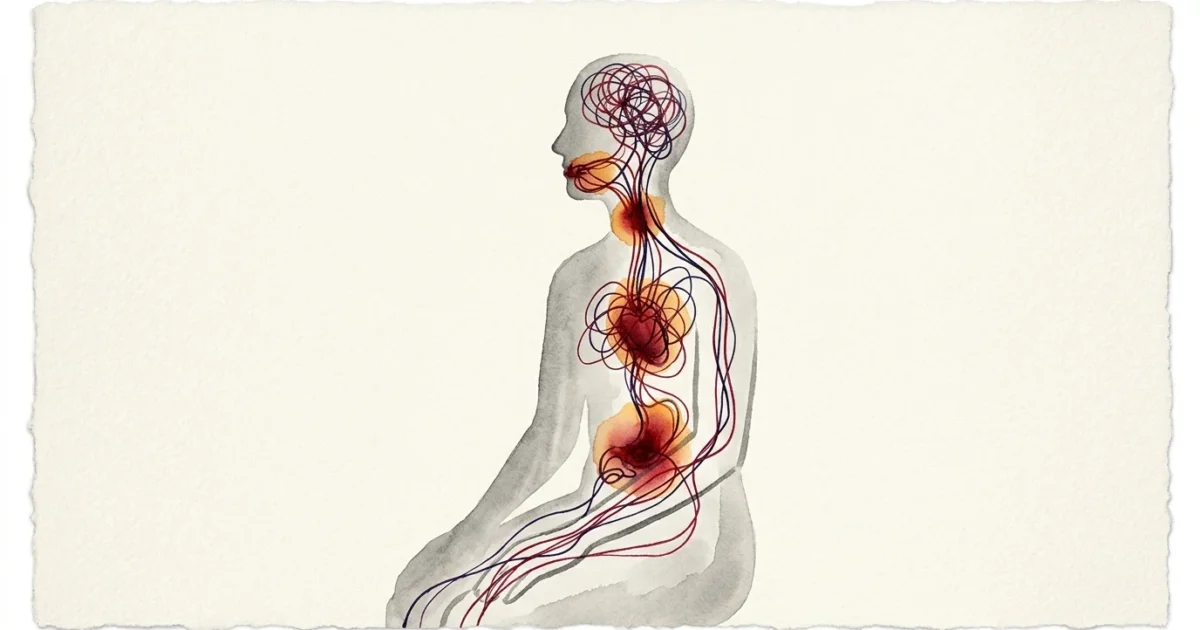
Your body often acts as an early warning radar, signaling overload long before your conscious mind acknowledges feeling overwhelmed. When strange physical aches, digestive flare-ups, or skin breakouts occur exclusively during high-pressure work deadlines or personal conflicts, you are witnessing physical symptoms triggered by stress. Your autonomic nervous system shifts into fight-or-flight mode, flooding your system with cortisol and adrenaline that disrupt baseline biological functions. Understanding these transient warning signs allows you to intervene before temporary physiological strain transforms into long-term systemic dysfunction. Recognizing these stress-induced symptoms explained by neurobiology empowers you to protect your long-term physical and psychological health.
How Stress Translates Into Physical Symptoms
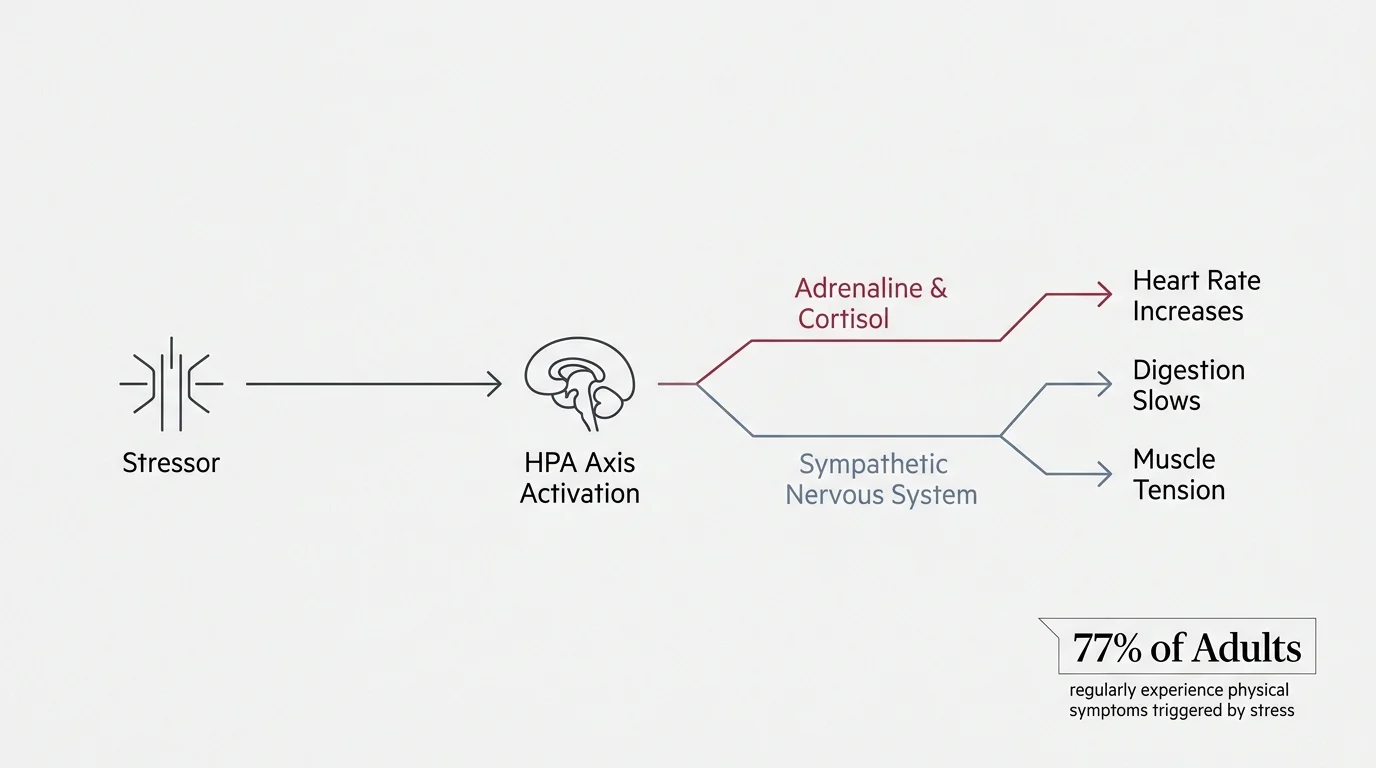
When you encounter a perceived threat—whether a demanding employer, financial strain, or emotional turbulence—your brain activates the Hypothalamic-Pituitary-Adrenal (HPA) axis. This cascade triggers the sympathetic nervous system to prepare your body for sudden action. Your heart rate increases, blood vessels in non-essential areas constrict, muscle groups tighten, and digestion slows down dramatically.
In evolutionary terms, this physiological shift preserved human life when facing acute physical danger. However, modern psychological stressors often remain active for days, weeks, or months. When your body sustains this high-alert state without a physical outlet, biological mechanisms begin to falter. The systemic friction creates real, measurable physical changes throughout your organs and muscular framework. According to research published by the American Psychological Association, 77% of adults regularly experience physical symptoms triggered by stress, demonstrating how deeply connected emotional strain is to bodily physiology.
Understanding these biological pathways explains why symptoms do not appear randomly; they target your body’s most vulnerable systems. Cortisol alters immune system responses and suppresses digestive function; adrenaline forces blood pressure higher and increases muscle tension; and inflammatory cytokines flood your bloodstream. Once the psychological pressure drops, these biochemical cascades retreat, causing the physical distress to vanish just as suddenly as it arrived.
Recognizing Physical Symptoms Triggered by Stress
Stress-related health warning signs can manifest across multiple organ systems. Because these issues often vanish during periods of rest or vacation, you might dismiss them as coincidences. However, tracking their appearance offers critical insights into your baseline resilience and nervous system regulation.
- Gastrointestinal Disturbances: Sudden bouts of irritable bowel syndrome (IBS), sharp stomach cramping, sudden acid reflux, or acute nausea during high-stress weeks. The gut-brain axis communicates stress instantly through the enteric nervous system.
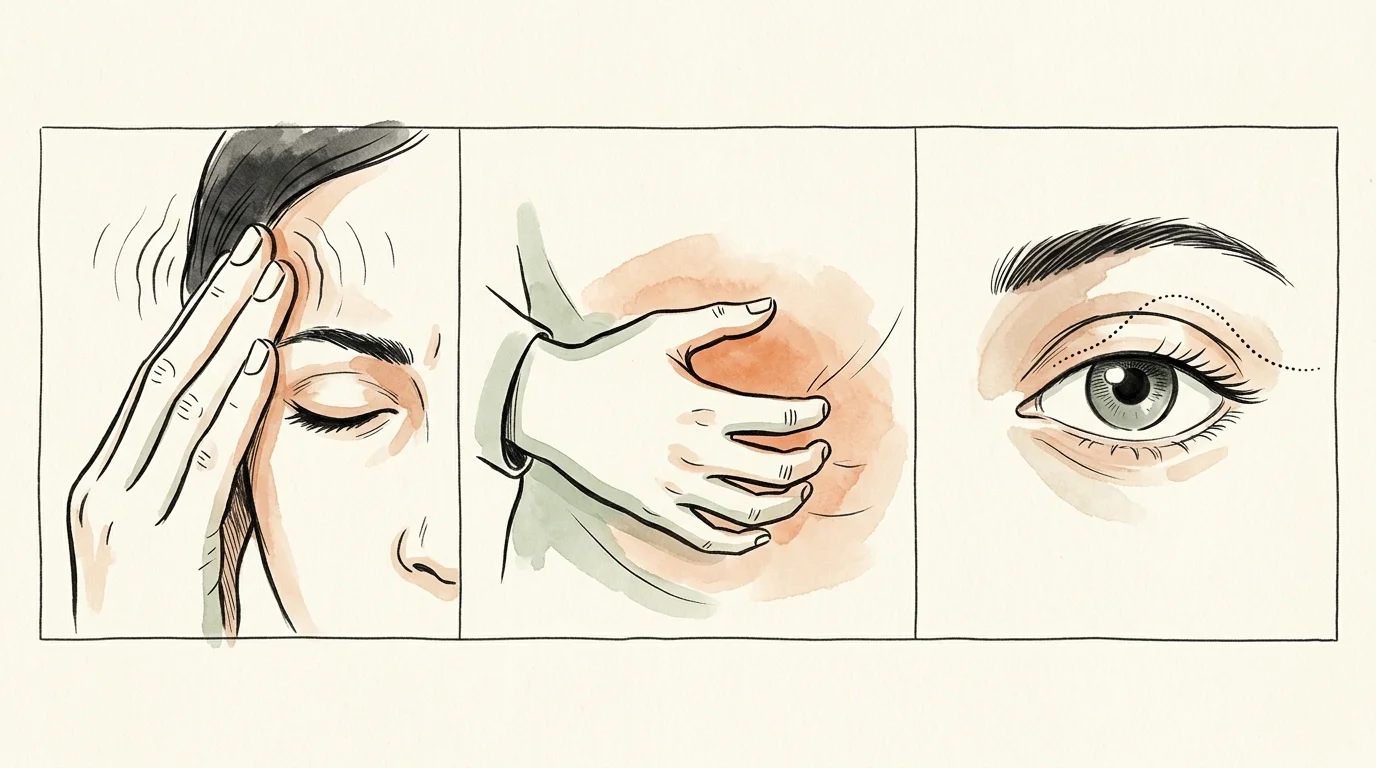
- Musculoskeletal Tension and Spasms: Involuntary jaw clenching (bruxism), unexplained neck stiffness, acute upper back spasms, or tension-type headaches that peak late in the workday.
- Dermatological Flare-ups: Sudden outbreaks of hives, eczema flares, adult acne, or uncharacteristic skin itching that clear up once a project or personal crisis ends.
- Cardiovascular and Respiratory Reactions: Transient heart palpitations, feeling unable to take a deep breath, intermittent chest tightness, or mild hyperventilation when facing emotional confrontation.
- Neurological and Sensory Twitching: Persistent eye twitching (myokymia), sudden ringing in the ears (tinnitus), or short episodes of tension-related dizziness.
Data from the Harvard Health publishing group and the Cleveland Clinic indicate that persistent stress hormone release damages peripheral blood vessels and alters gut microbiome diversity. Furthermore, the American Heart Association reports that 76% of adults experience at least one physical stress symptom monthly, with chronic stress hormone release directly increasing the risk of high blood pressure and digestive disorders over time.
The Allostatic Load: Why Symptoms Only Appear Under Pressure
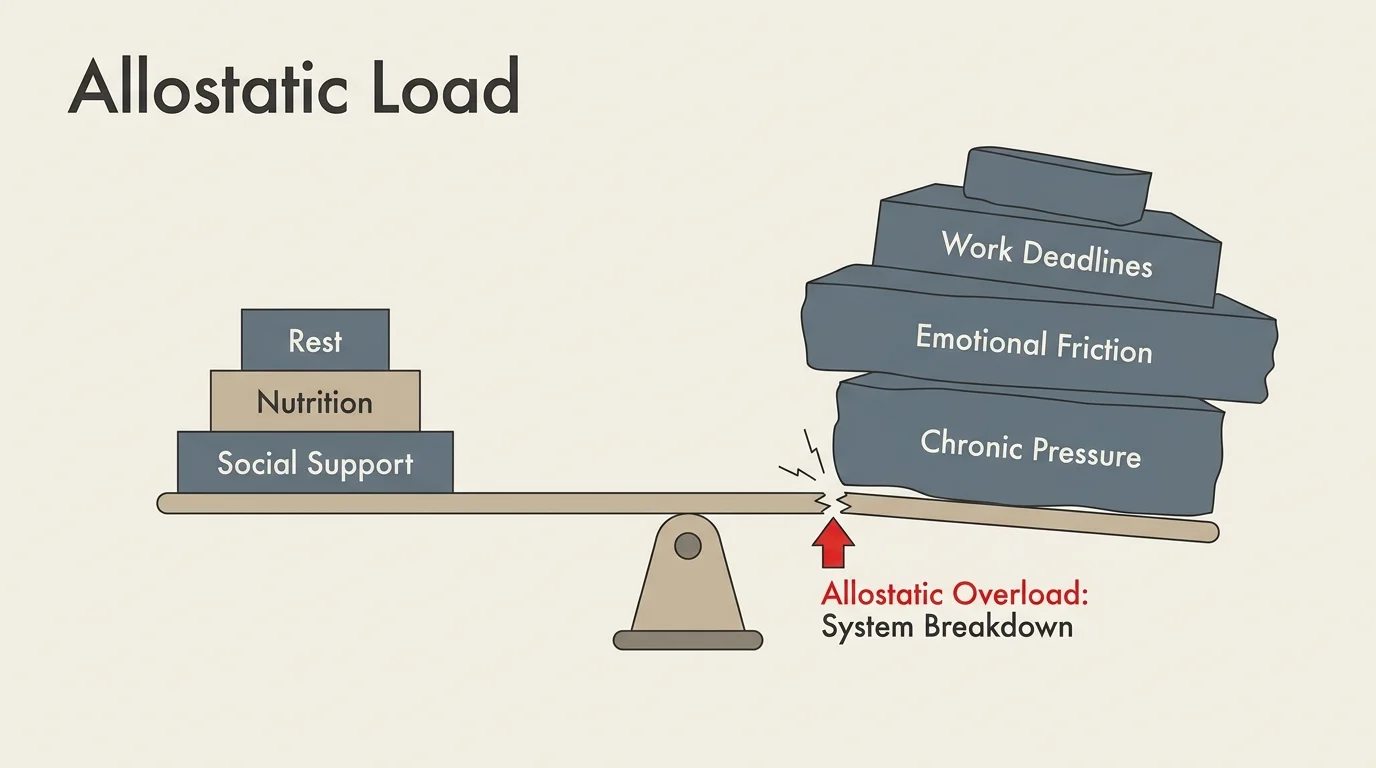
You might wonder why a particular symptom appears only when pressure mounts, rather than remaining present continuously. Neuroscientists explain this through the concept of allostatic load—the cumulative wear and tear on tissues and organs when the body repeatedly adapts to stress.
Your body possesses dynamic baseline tolerance. Under normal conditions, your physiological reserve absorbs minor irritations without displaying outward distress. However, intense psychological pressure consumes this reserve. When your total strain exceeds your threshold, your biological “weak link” reveals itself through somatic symptoms.
For one person, this weak link might be the vascular bed in the scalp, resulting in tension headaches; for another, it might be the microflora in the gut, causing sharp stomach distress. When the stressful event concludes, your body recovers its physiological reserve, dropping your strain back below the symptom threshold.
Isolation and emotional disconnection significantly exacerbate this physiological vulnerability. Data from national mental health surveys indicates that 94% of adults reporting severe emotional disconnection or chronic loneliness experience at least one physical stress symptom, proving that social and emotional safety directly shield your physical health.
“The curious paradox is that when I accept myself just as I am, then I can change.” — Carl Rogers, Psychologist
Accepting that your body has biological limits forms the foundation of somatic recovery. Pushing past these physical warning signals forces your autonomic nervous system to generate increasingly severe symptoms to grab your attention.

Differentiating Stress-Induced Symptoms from Underlying Medical Conditions
Distinguishing between stress-induced symptoms and underlying organic conditions requires careful observation and diagnostic clarity. While stress-related symptoms produce real physical suffering, their onset, duration, and resolution patterns differ markedly from progressive, structural diseases.
| Feature | Stress-Induced Symptoms | Organic / Structural Conditions |
|---|---|---|
| Onset Pattern | Correlates directly with psychological stressors, busy deadlines, or emotional conflict. | Follows an independent schedule; persists regardless of emotional or lifestyle state. |
| Resolution | Fades or disappears completely during periods of relaxation, weekends, or vacations. | Requires medical treatment, pharmaceuticals, or structural intervention to resolve. |
| Diagnostic Testing | Lab work, imaging, and endoscopies usually return completely normal or unremarkable results. | Diagnostic tests reveal clear biomarkers, tissue inflammation, structural abnormalities, or infection. |
| Symptom Mobility | Symptoms may shift across different body systems (e.g., headache one week, IBS the next). | Symptoms remain localized to specific organ systems or progress along known disease pathways. |
| Response to Calm | Somatic tracking, deep breathing, and restorative sleep measurably reduce symptom intensity. | Mindfulness or relaxation provides mental coping support but does not fix underlying structural issues. |
Never assume a physical symptom is solely stress-related without proper medical evaluation. A thorough workup by a physician ensures you do not overlook structural or autoimmune conditions that require immediate pharmacological or surgical care.
Common Misconceptions About Stress-Related Health Warning Signs
Misunderstandings surrounding how the body responds to emotional strain often prevent people from seeking proper help or applying effective recovery techniques.
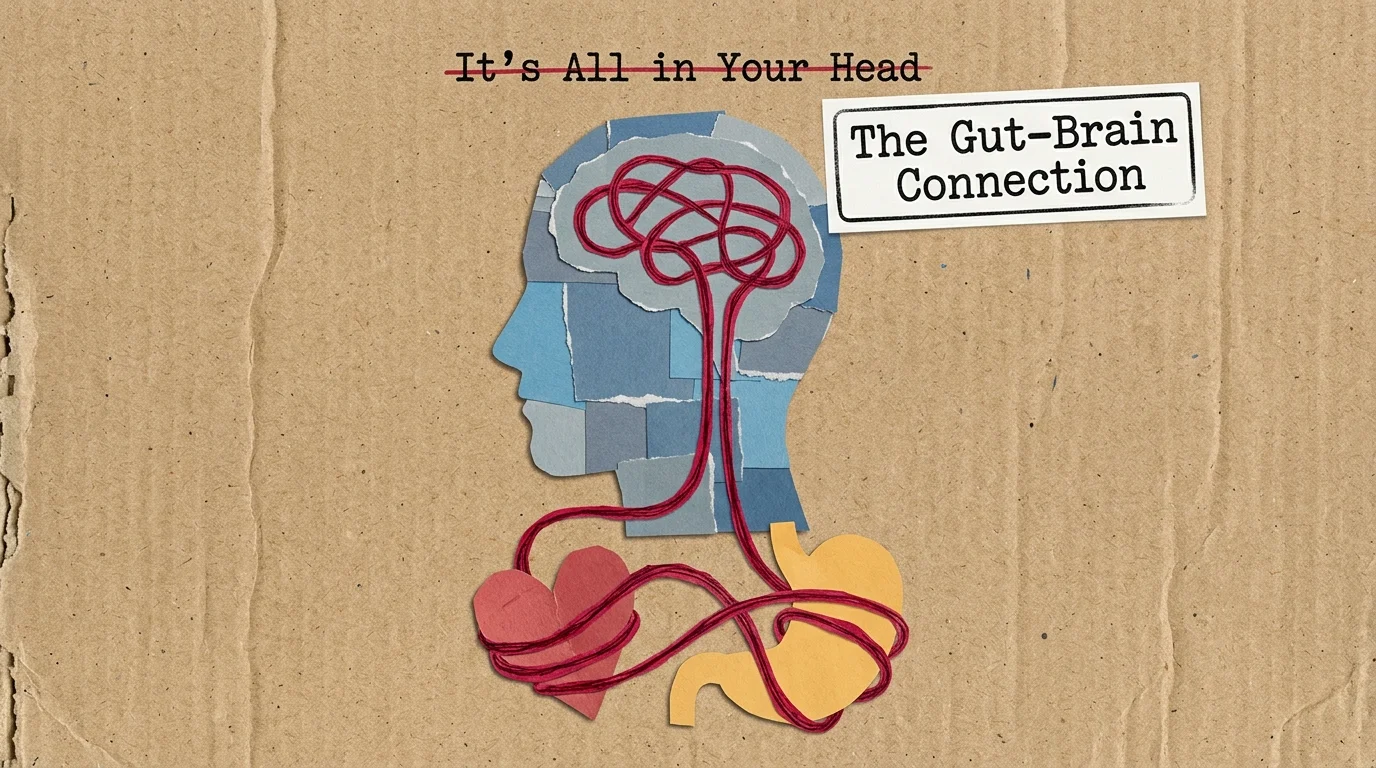
Misconception 1: “Stress symptoms are imaginary or ‘all in your head.'”
Stress-induced physical reactions involve concrete biological changes. Stomach acid production increases, muscle fibers contract tightly, microvascular vessels constrict, and inflammatory compounds release into blood tissue. The pain, discomfort, and physiological disruption are real physical events triggered by nervous system signals.
Misconception 2: “If a symptom disappears after stress ends, no real bodily damage occurred.”
Repeated spike cycles of adrenaline and cortisol cause micro-wear across cardiovascular tissue, disrupt long-term metabolic health, and alter gut lining integrity. While acute symptoms may vanish when pressure drops, chronic repetition increases long-term risk for hypertension, metabolic dysfunction, and persistent inflammatory disorders.
Misconception 3: “Real physical conditions never react to psychological stress.”
Almost every underlying organic medical condition—from rheumatoid arthritis to type 2 diabetes—worsens under severe psychological strain. The presence of stress-induced exacerbation does not rule out organic disease; rather, it highlights how emotional states influence general biological resilience.

When Stress Symptoms Need Medical Attention
While learning to manage your nervous system is vital, certain physical warning signs require immediate clinical assessment. You must never assume acute or severe symptoms stem purely from psychological strain without ruling out underlying medical emergencies.
Consult a physician or visit an urgent care facility immediately if you experience any of the following red flag warning signs:
- Sudden, Severe Chest Pain: Any chest pain, especially pain radiating into your jaw, neck, shoulder, or arm, accompanied by shortness of breath or cold sweats.
- Unexplained Shortness of Breath: Acute respiratory difficulty that does not resolve quickly with quiet breathing exercises.
- Unintended Weight Loss: Losing significant weight rapidly without changing your dietary habits or physical activity levels.
- Gastrointestinal Bleeding: Blood in your stool, dark tarry stools, or vomiting material that looks like dark coffee grounds.
- Neurological Deficits: Sudden weakness or numbness on one side of your face or body, slurred speech, or sudden loss of vision.
- Persistent High Fever or Night Sweats: Systemic symptoms that indicate underlying active infection or structural disease.
A 2024 study published in Nature Mental Health examining large-scale healthcare data revealed that 1 in 9 primary care encounters (11.7%) stem directly from mental health or stress-related concerns. Broader national healthcare statistics indicate that 60% to 80% of routine primary care visits feature an underlying stress component. Primary care physicians regularly evaluate stress-related conditions and can help differentiate physiological responses from organic disease.

Evidence-Based Coping Strategies to Regulate Your Nervous System
If clinical evaluations confirm your transient physical symptoms stem from high stress levels, you can apply several evidence-based behavioral strategies to calm your autonomic nervous system.
- Practice Somatic Tracking: When a non-emergency physical symptom arises (such as mild stress headache or stomach tightness), observe the physical sensation neutrally without panicking. Panic sends danger signals back to your brain, magnifying the physical reaction. Objective observation lowers threat perception in the amygdala.
- Utilize the Physiological Sigh: Perform two quick inhales through your nose, followed by one long, slow exhale through your mouth. Repeating this pattern 3 to 5 times stimulates the vagus nerve, lowering heart rate and activating the parasympathetic nervous system within seconds.
- Implement Progressive Muscle Relaxation (PMR): Systematically tense specific muscle groups for 5 seconds and release them completely for 10 seconds, starting from your feet up to your jaw. PMR breaks the muscular feedback loop that tells your brain to remain in high-alert fight-or-flight mode.
- Establish Clear Environmental Boundaries: Identify recurring situational triggers that cause your physical symptoms to flare up. Set explicit boundaries around working hours, digital communication, and personal commitments to prevent system overload.

Finding the Right Professional Help
Managing physiological stress reactions often requires structured guidance from healthcare providers. Consider seeking professional mental health or medical support under the following specific scenarios:
Scenario 1: Persistent Gastrointestinal or Cardiovascular Disruption
If you experience repeated digestive distress or rapid heart rate spikes during high-stress situations, schedule an evaluation with a primary care doctor. They can run necessary laboratory tests and connect you with a somatic therapist or health psychologist specializing in gut-brain interactions.
Scenario 2: Chronic Sleep Fragmentation and Physical Exhaustion
When stress-induced physical symptoms interrupt your sleep architecture—causing nighttime panic, jaw clenching, or early morning awakening—a licensed therapist specializing in Cognitive Behavioral Therapy for Insomnia (CBT-I) can help restore normal sleep routines.
Scenario 3: Severe Health Anxiety and Body Checking
If physical symptoms trigger intense health anxiety, leading you to spend hours researching diseases or constantly checking your pulse, work with a cognitive-behavioral therapist. CBT helps break the cycle between bodily sensations, catastrophizing thoughts, and heightened stress responses.
Scenario 4: Emotional Burnout and Overwhelming Isolation
When physical symptoms accompany chronic feelings of detachment, severe loneliness, or emotional exhaustion, professional counseling offers a safe environment to process underlying stressors and rebuild supportive social connection.
To find qualified providers, explore credentialed directories provided by the National Institute of Mental Health or the Mayo Clinic.
Reclaiming Balance in Your Body
Your physical body communicates continuously with your brain, offering real-time feedback about your emotional and environmental state. Physical symptoms triggered by stress are not signs of weakness or personal failure; they are protective signals urging you to slow down, evaluate your circumstances, and make necessary adjustments.
By learning to recognize these stress-related health warning signs early, ruling out organic pathology with a medical professional, and adopting proactive nervous system regulation practices, you can break the stress-symptom cycle and rebuild long-term physiological resilience.
This is educational content based on psychological research and general principles. Individual experiences vary significantly. For personalized guidance, consult a licensed therapist, psychologist, or counselor.
Last updated: February 2026. Psychology research evolves continuously—verify current findings with professional sources.








Leave a Reply