Psychology Diary

The First Step Toward Change Is Awareness

  • Home
  • Relationships
  • Mental Health
  • Expert Tips
  • Life
  • Family
  • Marriage

The Complete Guide to Understanding and Managing Anxiety After 50

August 31, 2025 · Mental Health

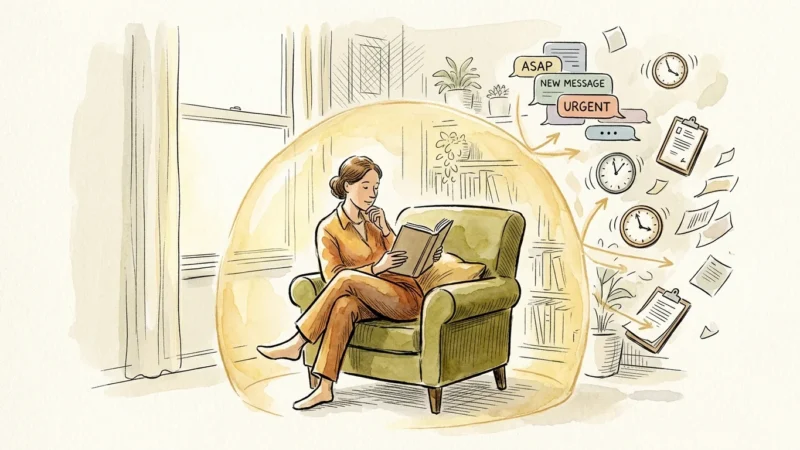
Woman journaling in home office.

Changing Your Thoughts: A Gentle Introduction to CBT

Our thoughts are not always facts. When we’re anxious, our minds have a tendency to create stories that are often distorted, negative, and focused on potential threats. Cognitive Behavioral Therapy (CBT) is a highly effective, evidence-based type of psychotherapy that helps people learn to identify, question, and change these unhelpful thought patterns. While working with a therapist is the best way to learn CBT, you can start practicing some of the basic principles at home.

Identifying Unhelpful Thinking Patterns

The first step is to become a curious observer of your own mind. Notice when your thoughts fall into common anxiety-fueling traps. Here are a couple of examples:

Catastrophizing: This is the “what if” game on overdrive. You take a small concern and your mind immediately blows it up into the worst possible outcome. A friend doesn’t text back, and you immediately think, “They must be angry with me, and our friendship is over.”

All-or-Nothing Thinking (also called Black-and-White Thinking): You see things in absolute terms. If a situation is anything less than perfect, you see it as a total failure. “I forgot one item at the grocery store. I’m so forgetful and can’t do anything right anymore.”

Just noticing these patterns without judgment is a huge step. You can say to yourself, “Ah, there’s that catastrophic thinking again.” This creates a little bit of space between you and the thought, reminding you that a thought is just a thought, not a reality.

The Three-Column Thought Record: A Mini-Example

A simple thought record is a powerful tool for challenging these automatic negative thoughts. It helps you slow down and look for a more balanced and realistic perspective. All you need is a piece of paper and a pen. Draw three columns.

Here is a worked mini-example to show you how it works:

Column 1: The Situation (Just the facts)

My doctor’s office called to schedule a follow-up appointment to review my lab results.

Column 2: My Automatic Thought & Feeling (The first thing that popped into my head)

Thought: “Oh no, they must have found something terrible. It’s bad news. I’m sure it’s cancer.”
Feeling: Panic, fear (rated 9 out of 10).

Column 3: A More Balanced & Realistic Thought (Looking for other possibilities)

“It is standard procedure to schedule a follow-up to discuss any lab results, good or bad. My doctor is thorough. It could be about my cholesterol, or a minor vitamin deficiency we discussed. There are many possibilities other than the worst-case scenario. I cannot know for sure until I go to the appointment. Worrying now will not change the result, it will only make me feel sick.”
New Feeling: Concerned, but less panicked (rated 5 out of 10).

The goal is not to pretend everything is fine or to engage in forced “positive thinking.” The goal is to see the situation more clearly and reduce the emotional intensity by considering other, more likely explanations. Practicing this gently over time can help retrain your brain to be less reactive and more balanced.


Pages: 1 2 3 4 5 6 7 8 9 10 11

Share this article

Facebook Twitter Pinterest LinkedIn Email

Leave a Reply Cancel reply

Your email address will not be published. Required fields are marked *

Search

Latest Posts

  • An ink and watercolor illustration of a parent at a table, looking at a phone from which a thorny vine grows. 10 Hidden Signs Your Adult Child Is Toxic
  • A conceptual paper collage showing a silhouette framed by overlapping paper layers, symbolizing a shrinking world. 10 Signs Your Spouse Is Controlling You
  • An adult in a knit sweater sits on a window sill on a gray day, looking out over a misty city with a steaming mug. 10 Subtle Signs You're Just Existing, Not Truly Living
  • Editorial illustration of a person surrounded by a protective warm watercolor aura, deflecting dark droplets on textured paper. 10 Common Psychological Defense Mechanisms - Which One Do You Use?
  • A mixed-media collage silhouette of a person made from torn paper, charcoal sketches, and ink washes, representing fragmented self-trust. 9 Signs of an Emotionally Abusive Relationship
  • A mixed media collage of a human silhouette with layered torn paper in indigo and gold, symbolizing trapped physical energy and healing. 10 Signs Your Body is Holding Trauma
  • An illustration of an adult walking forward, casting a shadow that reveals a towering parental figure behind them. 10 Signs You Were Raised by a Narcissist
  • An editorial gouache illustration of a woman's profile transitioning from concrete architecture to elegant fashion lines. Who Was Melania Before She Met Donald Trump? (A Psychological Portrait)
  • An ink and watercolor illustration of a person holding a large ceramic vase with glowing gold cracks, symbolizing hidden internal pressure. The Psychology of the Person Who Is Always Fine Until They Absolutely Aren't
  • A woman sits in a sunlit home library, looking thoughtfully out a window with an open book on her lap. 12 Signs of a High IQ

Newsletter

Get the latest posts delivered to your inbox.

Related Articles

mental illness

7 Early Signs of Mental Illness Only Seniors May Feel

5. Confusion or disorientation Contrary to popular belief, confusion or disorientation in elderly persons can…

Read More →
phrases that may indicate depression

Identify Signs of Depression Through Words

Support those in need! These are phrases that may indicate depression:  A notable increase in…

Read More →
An elderly man sits alone at a kitchen table in soft afternoon light while his adult daughter watches from the doorway with concern.

Why Some People Become More Difficult With Age—According to Psychologists

Discover the psychological, neurological, and emotional reasons why some people become more difficult with age,…

Read More →
borderline personality disorder

10 Ways to Cope With Borderline Personality Disorder

Here’s how To Cope with Borderline Personality Disorder! If you suffer from borderline personality disorder…

Read More →
cope with health anxiety

Hypochondria: 7 Tips on How to Cope With Health Anxiety

5. Track your concerns Next on our list of ways to cope with health anxiety…

Read More →
Paranoid Disorder

10 Silent Signs of Paranoid Personality Disorder

Paranoid Personality Disorder, or PPD, is one of those mental health conditions that often flies…

Read More →
Lonely1, feel depression

10 Therapist-Approved Tips for When You’re Feeling Lonely

9. Practice Self-Compassion Instead of Self-Criticism People experiencing loneliness frequently blame themselves. They may think:…

Read More →
anxiety

10 Subtle Signs of Anxiety You Shouldn’t Ignore

When you think of anxiety, you probably have an idea of some of its most…

Read More →
True Crime

9 Reasons Why We Like True Crime

Isn’t it crazy that we love true crime? Why do life-threatening situations entertain us? We…

Read More →

Psychology Diary

The First Step Toward Change Is Awareness

Inedit Agency S.R.L.
Bucharest, Romania

contact@psychologydiary.com

Explore

  • About Us
  • Advertiser Disclosure
  • Contact Us
  • Disclaimer
  • Do not sell my personal information
  • Editorial Policy
  • Frequently Asked Questions
  • Privacy Policy
  • Terms and Conditions
  • Subscribe
  • Unsubscribe

Categories

  • Expert Tips
  • Family
  • Life
  • Marriage
  • Mental Health

© 2026 Psychology Diary. All rights reserved.